A field guide for chicken keepers

Who’s visiting
your coop?

Follow the tracks. Read the clues. Make a better plan to protect your flock.

The coop has clues. Let’s take a closer look.

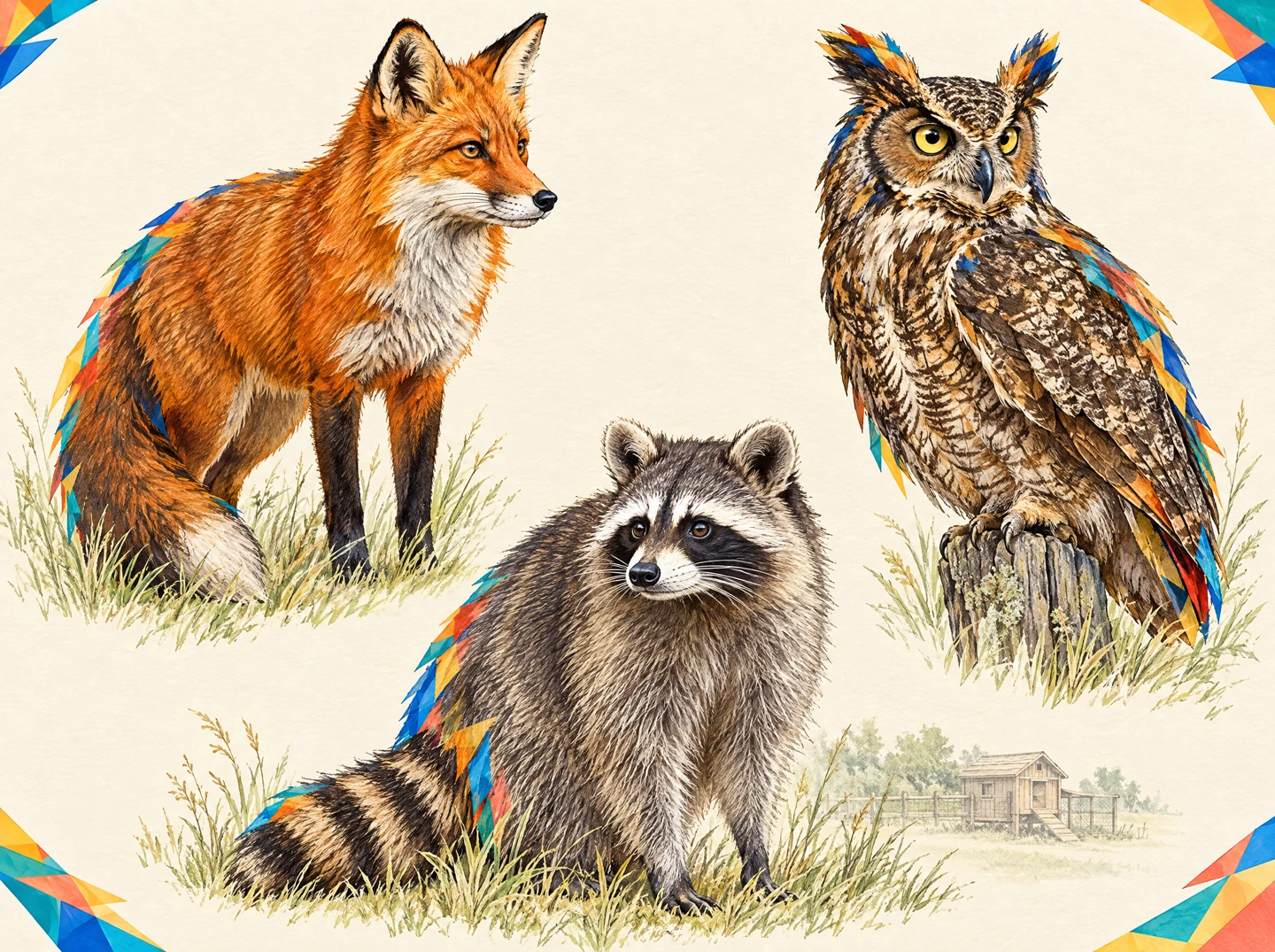
Natural-history illustrations of a red fox, raccoon and great horned owl, with bright geometric accents.
Teaching artwork · Created with Higgsfield

Start with what you actually found

Put the clues together.

Choose what you know. “Not sure” is useful too.
This creates a shortlist to investigate, not a verdict.

Look closely · 11 mammal references

The track atlas.

Count toes. Check the pad. Measure the print.
Then look for the same features in several tracks.

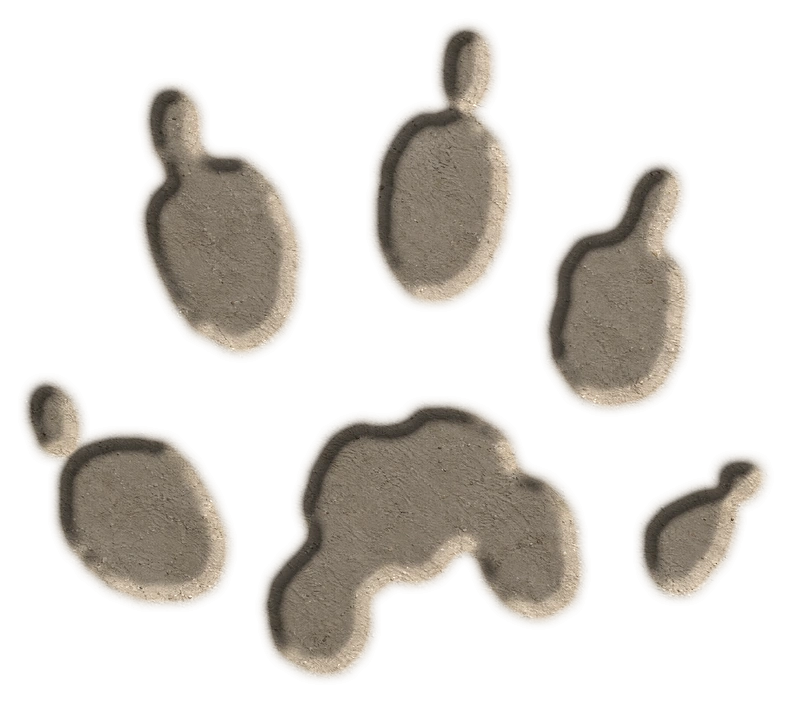
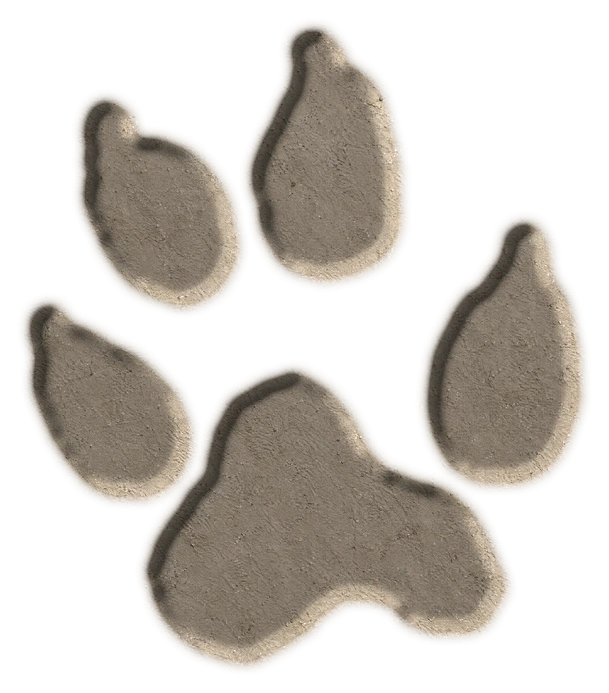
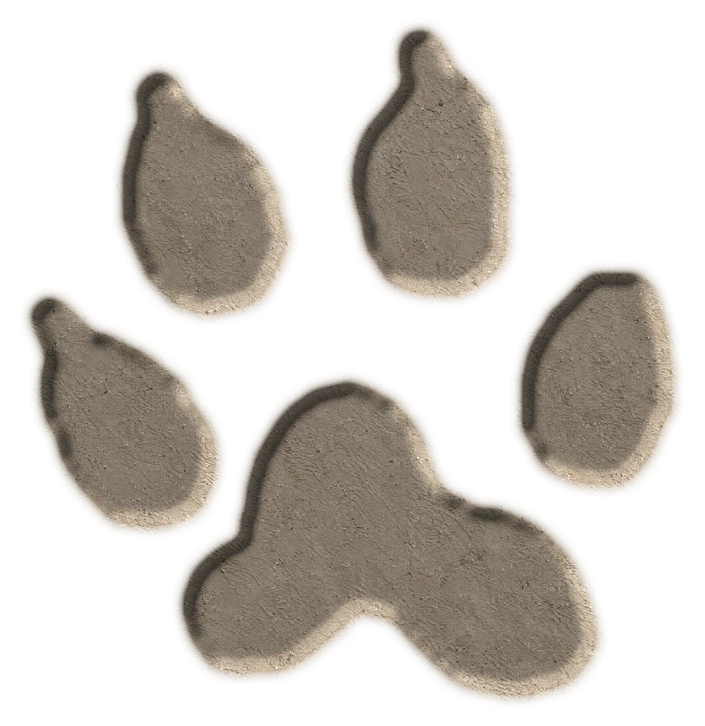
USGS OUTLINE · CLAY-STYLE ILLUSTRATIONFRONT + HIND
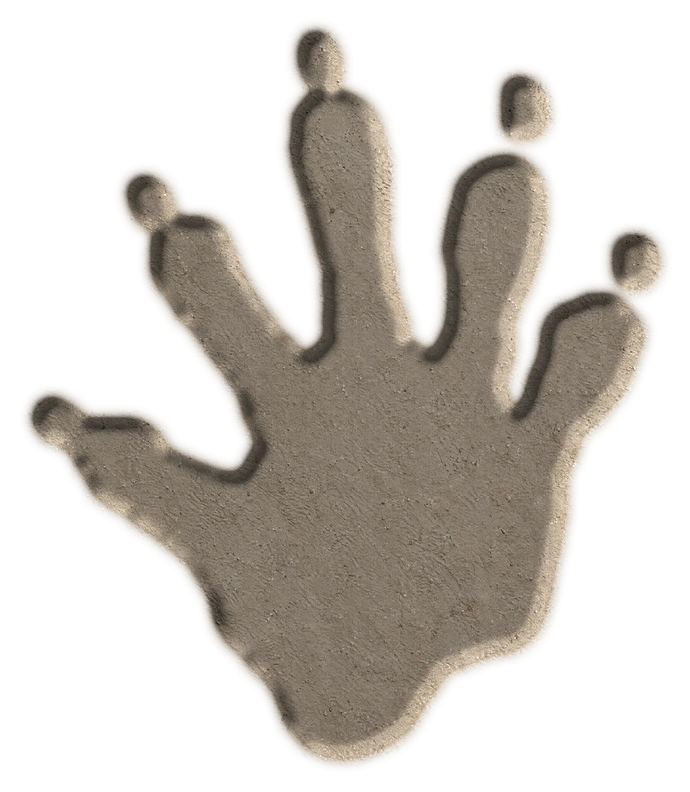
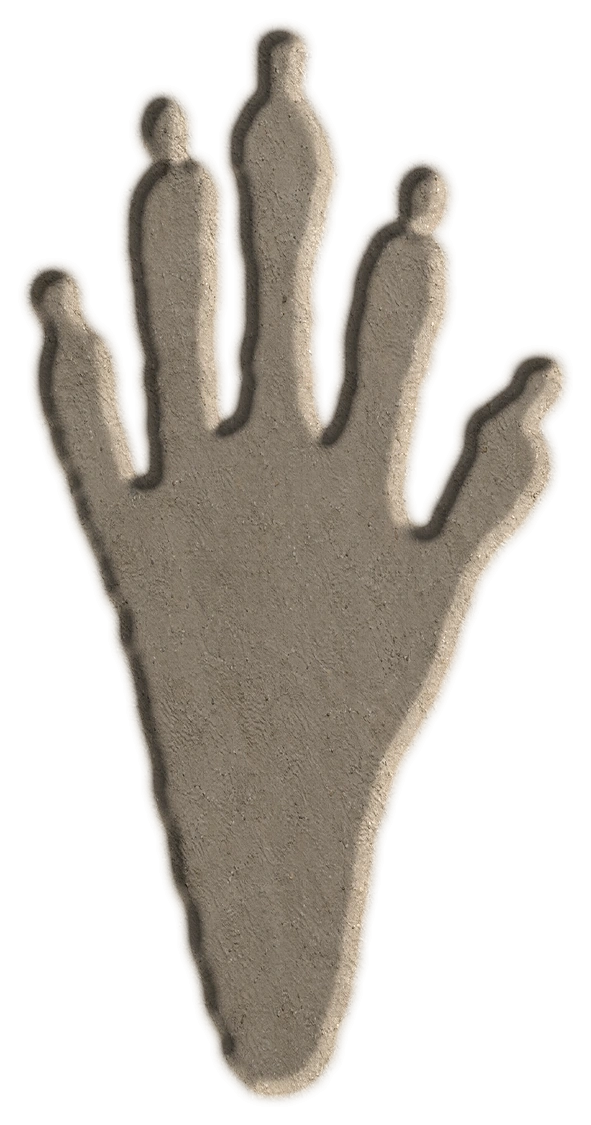
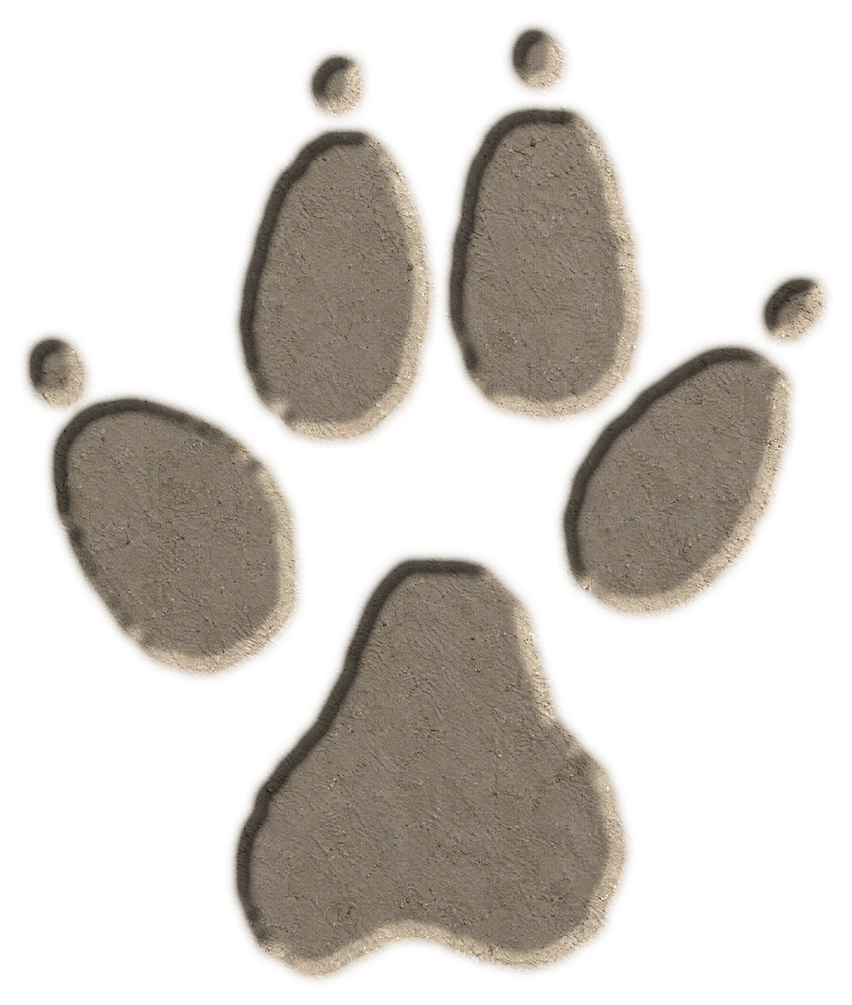
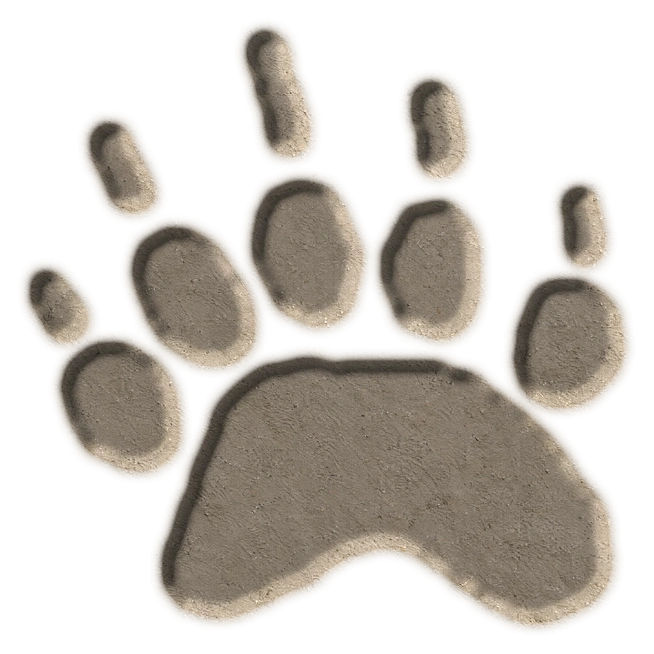
Raccoon front footprint, adapted from the USGS published outline; clay-style illustration.
Front footExample: 2½ in / 6.4 cm

Five long fingers

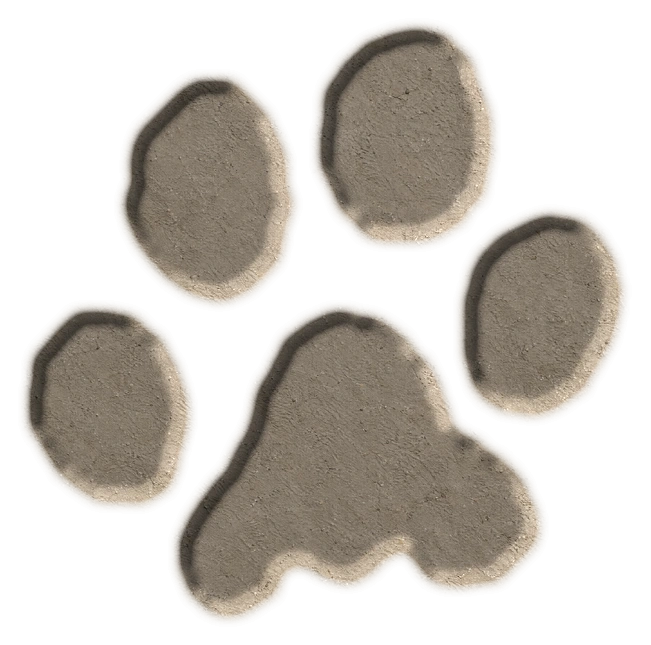
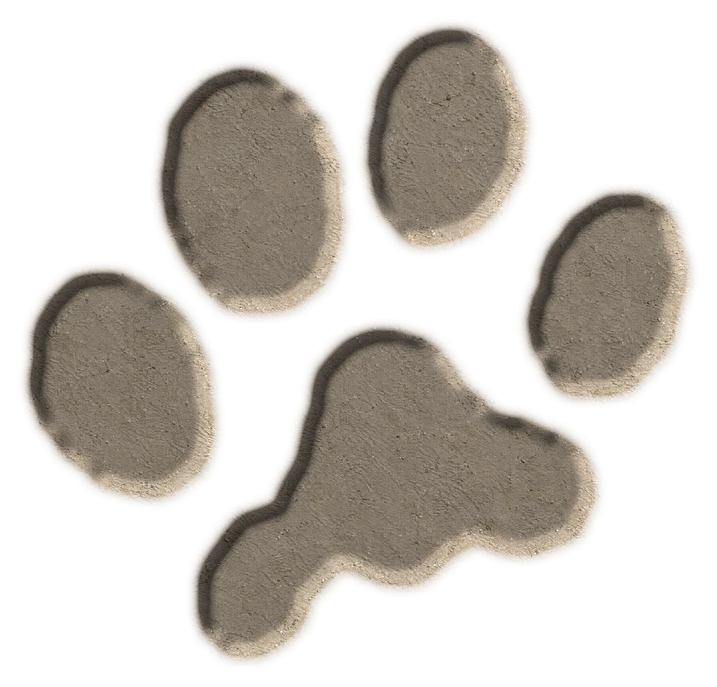
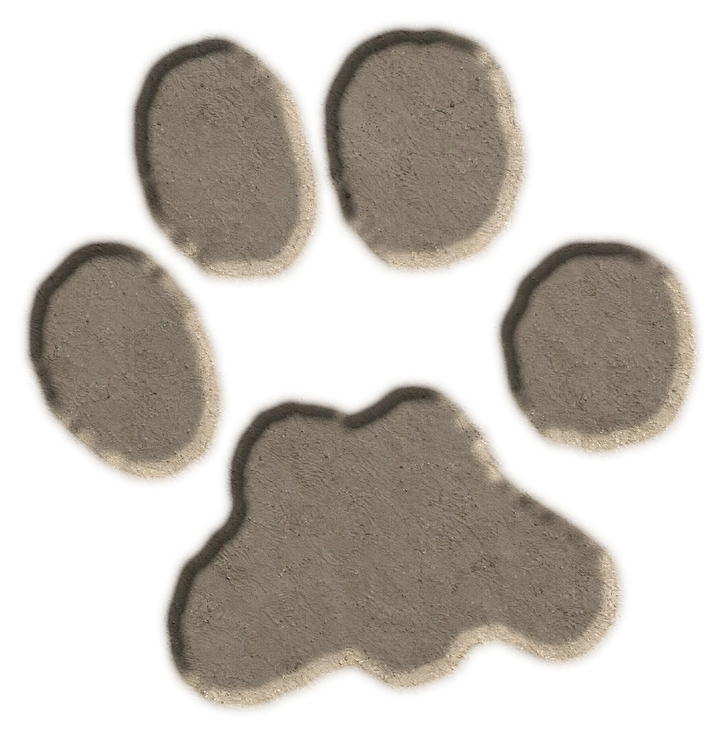
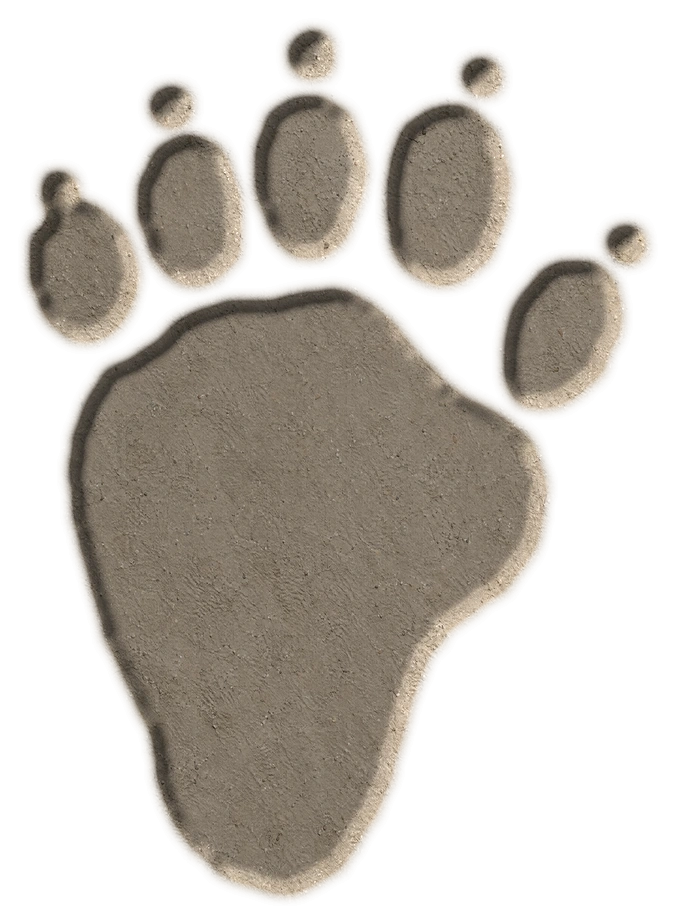
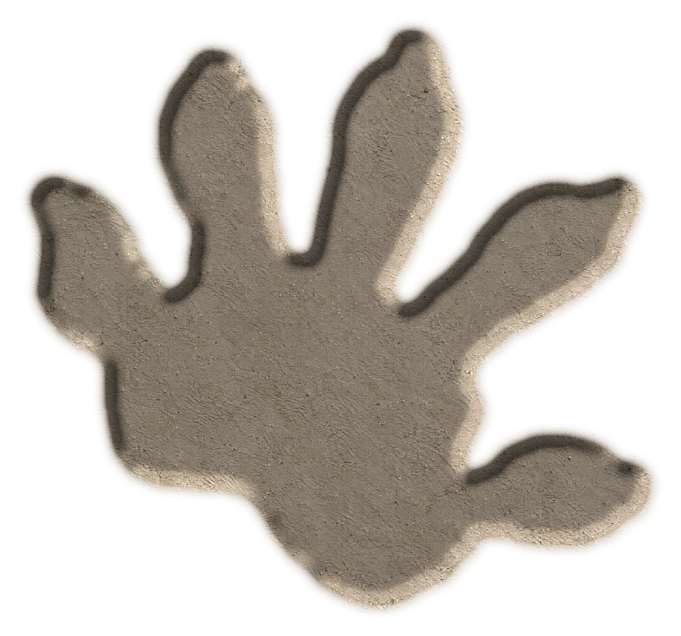
Raccoon hind footprint, adapted from the USGS published outline; clay-style illustration.
Hind footExample: 4 in / 10.2 cm

Long hind heel

Field measurements & variation

Front 2½–3 in (6.4–7.6 cm); hind 3¾–4 in (9.5–10.2 cm).

MDC reference lengths. An incomplete heel leaves a shorter-looking print.

Sizes follow the front/hind examples labeled in the USGS guide. Real tracks vary with the animal, gait and ground.

USGS public-domain track guide ↗ · Surface treatment created with Higgsfield.

5 toes · handlike

Raccoon

Five long fingers. A longer back foot.

  1. Count five slender, fingerlike toes; claws may print beyond them.
  2. The hind print has a longer heel, rather like a small bare foot.
  3. A walking trail can place a front foot beside the opposite hind foot.
What could look similar?

Opossum also has five toes. Look for the sideways, clawless hind thumb before deciding.

Get the next cluePhotograph both short and long prints, the latch, and any reach-through gap in the mesh.
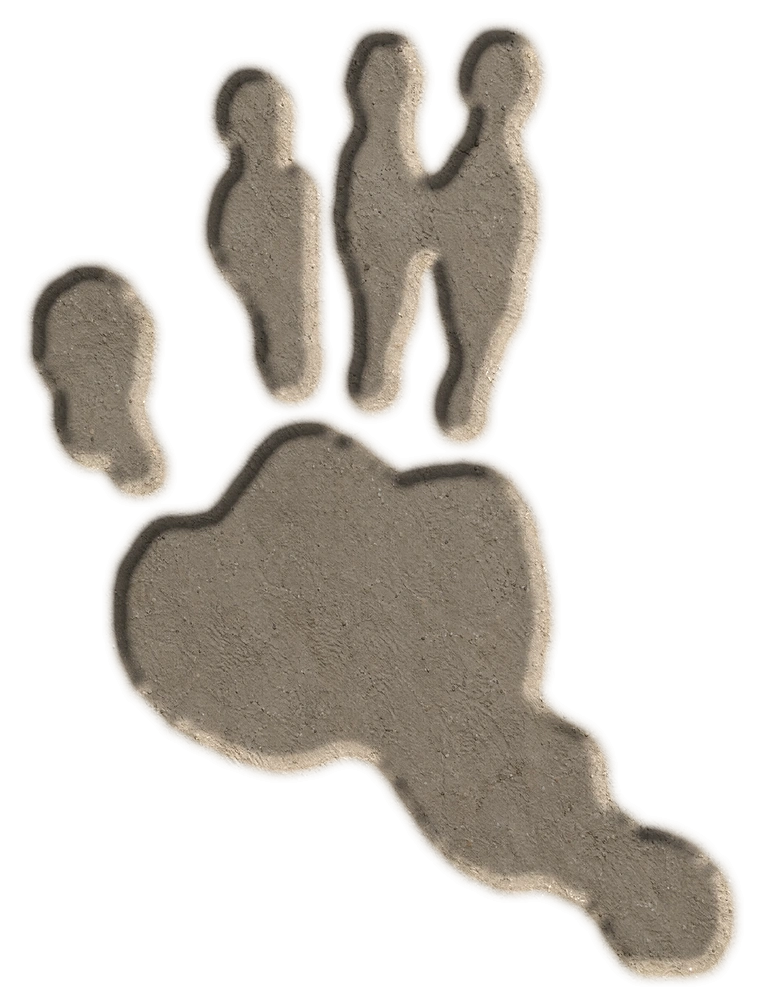
USGS OUTLINE · CLAY-STYLE ILLUSTRATIONFRONT + HIND
Opossum front footprint, adapted from the USGS published outline; clay-style illustration.
Front footExample: 1¼ in / 3.2 cm

Splayed front toes

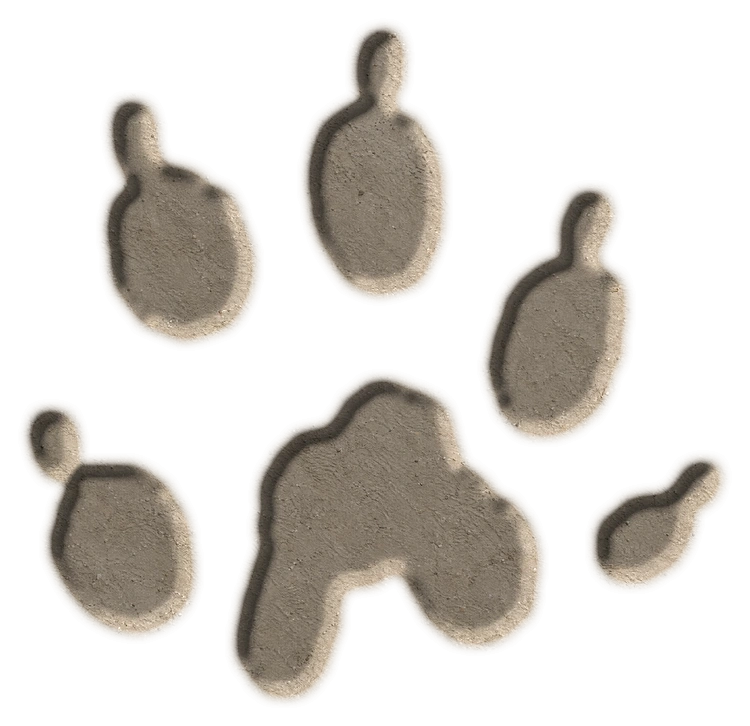
Opossum hind footprint, adapted from the USGS published outline; clay-style illustration.
Hind footExample: 2 in / 5.1 cm

Sideways, clawless thumb

Field measurements & variation

Front about 2 in (5.1 cm); hind about 2 in (5.1 cm).

MDC reference examples, not a size cutoff.

Sizes follow the front/hind examples labeled in the USGS guide. Real tracks vary with the animal, gait and ground.

USGS public-domain track guide ↗ · Surface treatment created with Higgsfield.

5 toes · handlike

Opossum

The back foot has a sideways “thumb.”

  1. Front toes spread into a star-like shape.
  2. The hind inner toe sticks sideways away from the other toes.
  3. That hind thumb has no claw; the remaining toes do.
What could look similar?

Raccoon fingers generally point forward. Opossum’s sideways hind thumb is the stronger distinction.

Get the next clueFind a complete hind print. Keep any tail drag in the wider photograph.

USGS OUTLINE · CLAY-STYLE ILLUSTRATIONFRONT + HIND
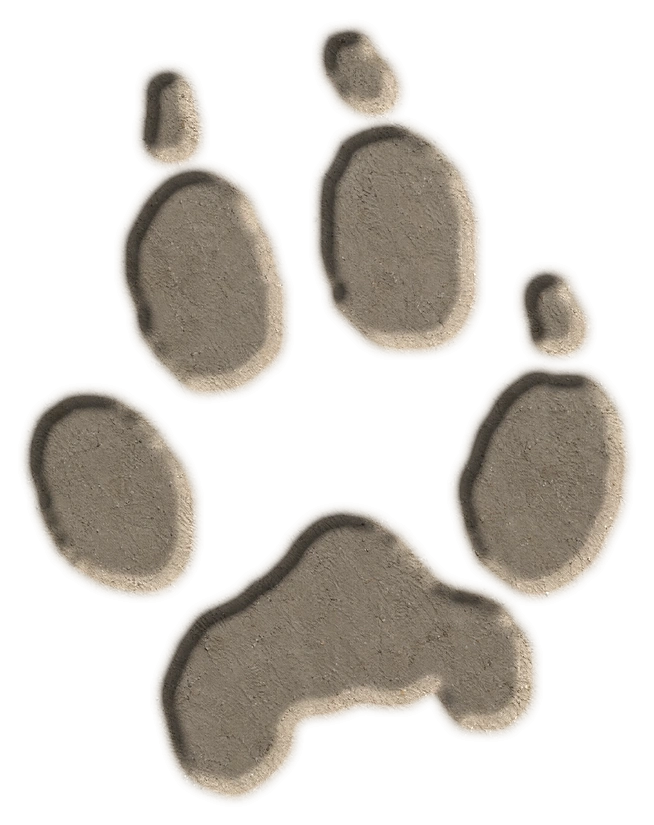
Red fox front footprint, adapted from the USGS published outline; clay-style illustration.
Front footExample: 2¼ in / 5.7 cm

Four toes + claws

Red fox hind footprint, adapted from the USGS published outline; clay-style illustration.
Hind footExample: 1¼ in / 3.2 cm

Smaller guide example

Field measurements & variation

Track length 1¾–2½ in (4.4–6.4 cm); width 1½–2 in (3.8–5.1 cm).

Maryland DNR’s general print range; it does not separate front and hind measurements.

Sizes follow the front/hind examples labeled in the USGS guide. Real tracks vary with the animal, gait and ground.

USGS public-domain track guide ↗ · Surface treatment created with Higgsfield.

4 toes · dog family

Red fox

Four toes and a compact canine print.

  1. Look for four toe impressions and visible claw marks.
  2. Fur on the sole can blur the pads or leave hair impressions.
  3. Read a sequence of prints: a single blurred oval is not enough to separate canids.
What could look similar?

Gray fox, small dogs and young coyotes overlap. Faint pads alone do not establish red fox.

Get the next cluePhotograph several prints with a ruler, the trail, and any place a bird may have been carried away.

USGS OUTLINE · CLAY-STYLE ILLUSTRATIONFRONT + HIND
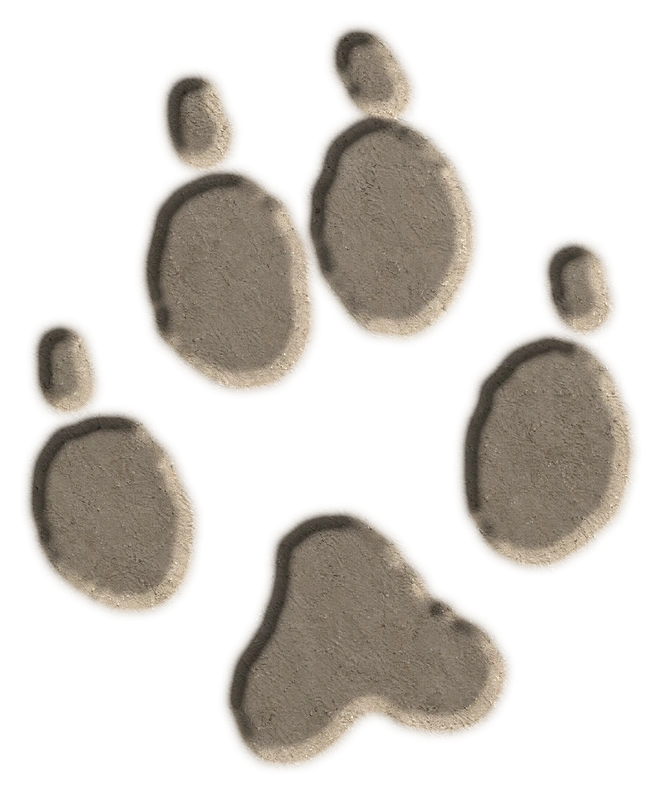
Gray fox front footprint, adapted from the USGS published outline; clay-style illustration.
Front footExample: 2 in / 5.1 cm

Four toes + claws

Gray fox hind footprint, adapted from the USGS published outline; clay-style illustration.
Hind footExample: 1¾ in / 4.4 cm

Smaller hind foot

Field measurements & variation

Front about 2 in (5.1 cm); hind about 1¾ in (4.4 cm).

MDC reference examples; other guides and individuals differ.

Sizes follow the front/hind examples labeled in the USGS guide. Real tracks vary with the animal, gait and ground.

USGS public-domain track guide ↗ · Surface treatment created with Higgsfield.

4 toes · dog family

Gray fox

A small four-toed canine print.

  1. Four toes with claw marks; impressions can look quite dainty.
  2. The hind print is usually smaller than the front print.
  3. Gray foxes can climb. A raised entry point does not rule them out.
What could look similar?

Size overlaps red fox and small dogs. A clear animal photo is much better for separating the fox species.

Get the next clueCheck ground-level and elevated routes; photograph the tail if a camera records the animal.

USGS OUTLINE · CLAY-STYLE ILLUSTRATIONFRONT + HIND
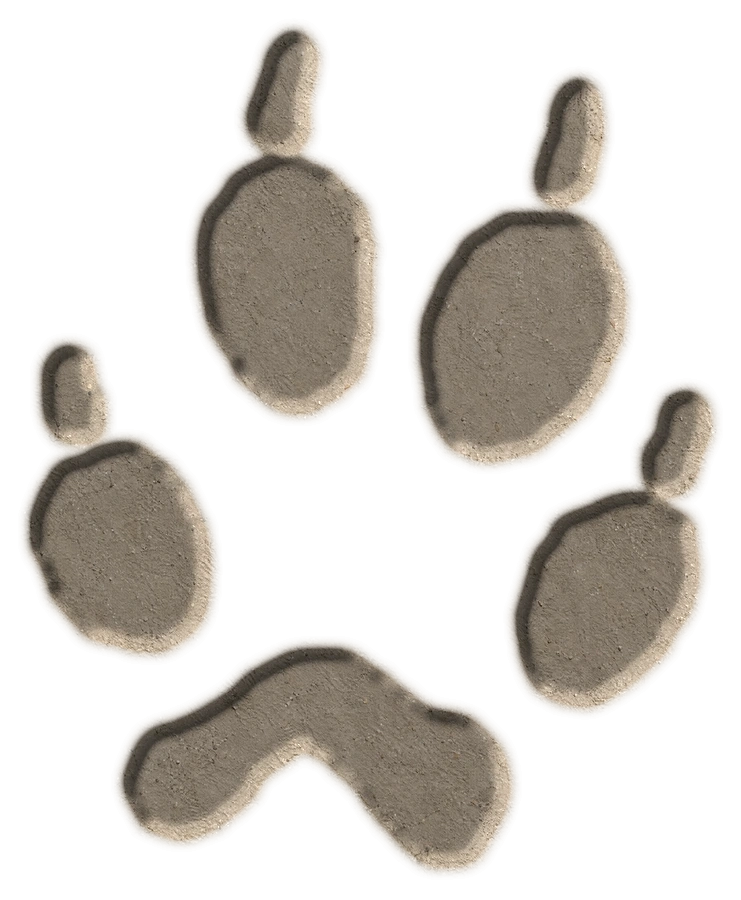
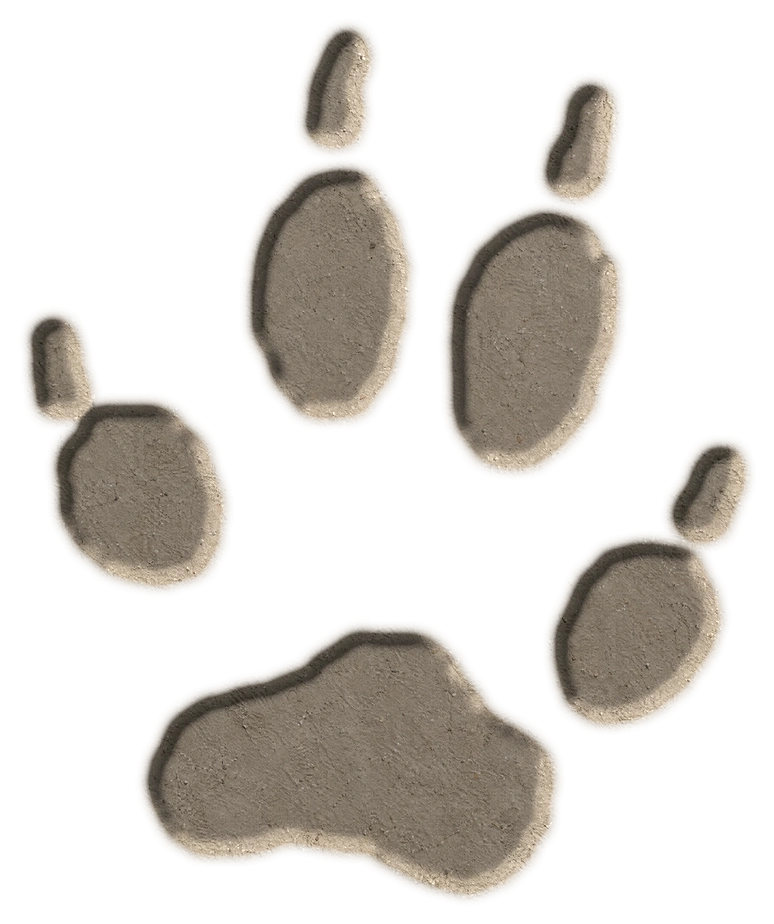
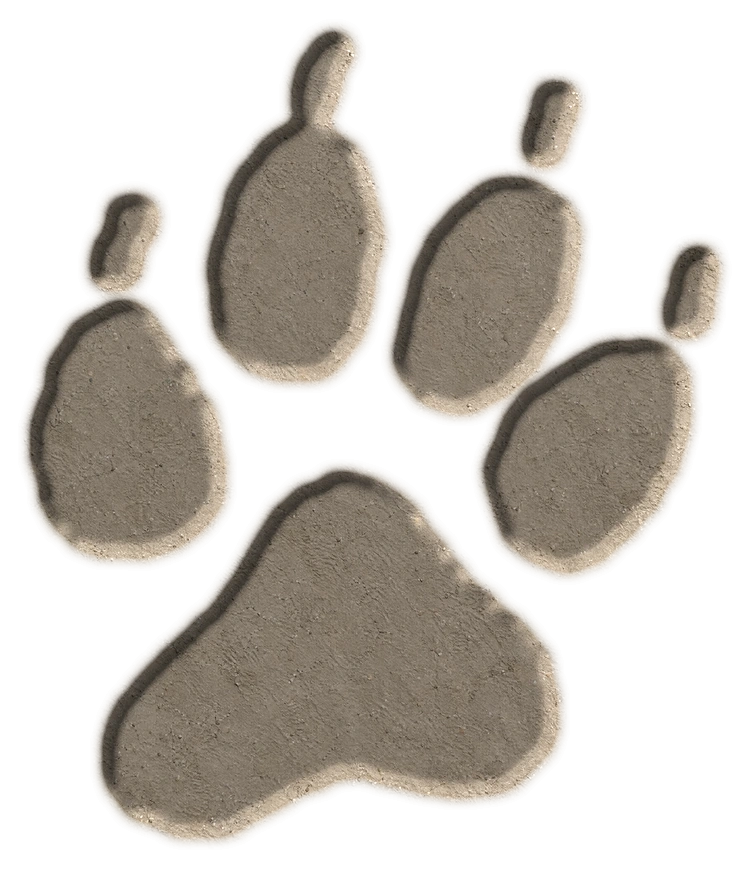
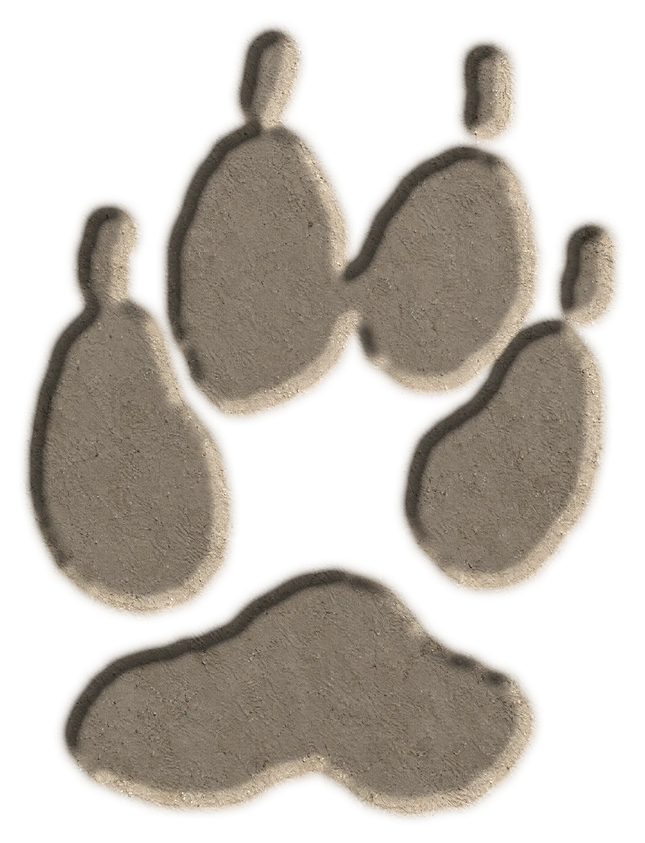
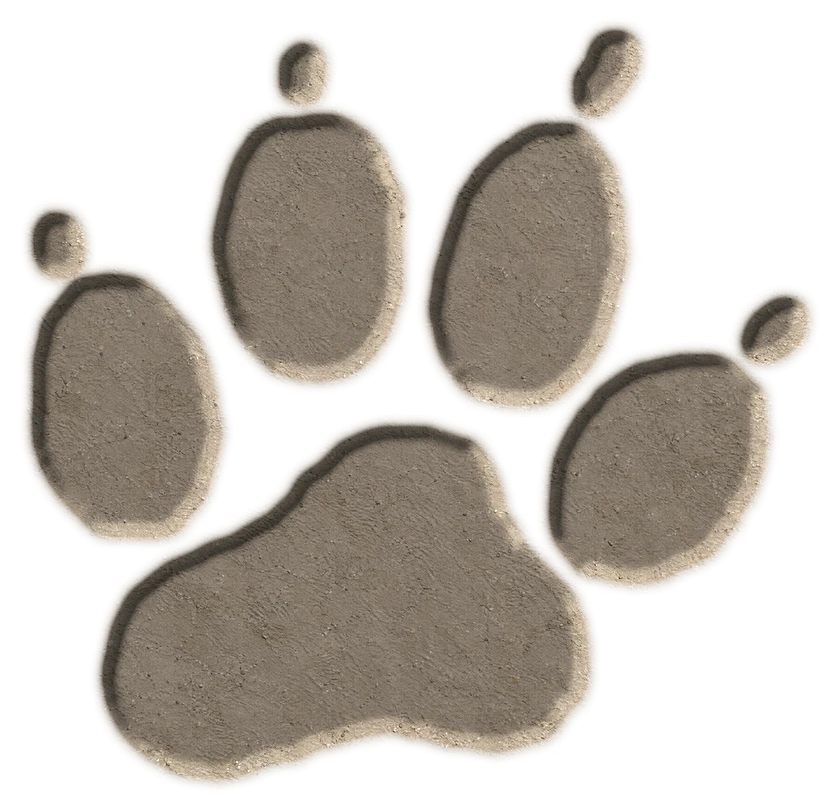
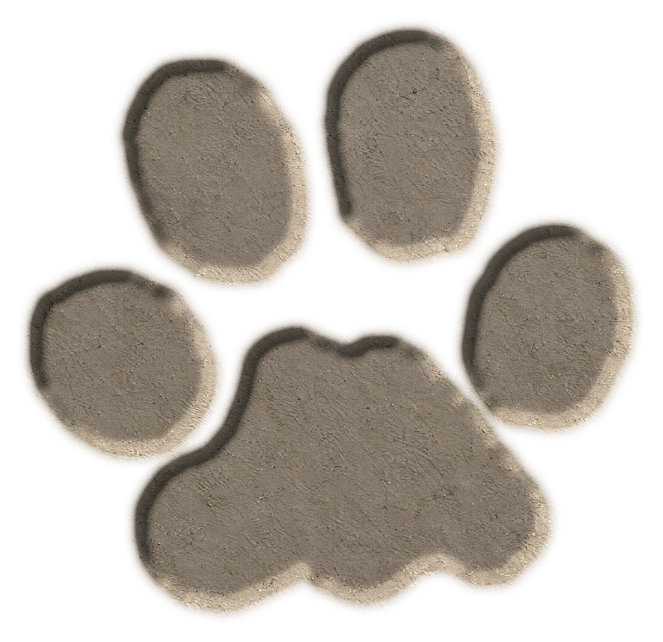
Coyote front footprint, adapted from the USGS published outline; clay-style illustration.
Front footExample: 2½ in / 6.4 cm

Four toes + claws

Coyote hind footprint, adapted from the USGS published outline; clay-style illustration.
Hind footExample: 2¼ in / 5.7 cm

Compact canine pad

Field measurements & variation

Front about 2½ in (6.4 cm); hind about 2¼ in (5.7 cm).

MDC reference examples; Maryland’s example is roughly 2½ × 2 in (6.4 × 5.1 cm).

Sizes follow the front/hind examples labeled in the USGS guide. Real tracks vary with the animal, gait and ground.

USGS public-domain track guide ↗ · Surface treatment created with Higgsfield.

4 toes · dog family

Coyote

An oval print with tight middle toes.

  1. Four toes surround a relatively small canine heel pad.
  2. The two middle toes often sit close together; their claws commonly register.
  3. The outer claws may be faint or absent, even when the track is canine.
What could look similar?

A dog can leave a very similar print. Size and a straight trail do not reliably rule out a dog.

Get the next clueMeasure length and width, photograph a run of prints, and check any digging below the fence.

USGS OUTLINE · CLAY-STYLE ILLUSTRATIONFRONT + HIND
Domestic dog front footprint, adapted from the USGS published outline; clay-style illustration.
Front footExample: 3 in / 7.6 cm

Four toes + claws

Domestic dog hind footprint, adapted from the USGS published outline; clay-style illustration.
Hind footExample: 3 in / 7.6 cm

Shape varies by breed

Field measurements & variation

Highly variable: a small dog can overlap a fox; a large dog can exceed a coyote.

No single size range identifies a dog. The drawing is a shape example, not a breed or measurement.

A chosen size within the USGS guide’s general example; the guide does not give separate front/hind lengths. Real tracks vary with the animal, gait and ground.

USGS public-domain track guide ↗ · Surface treatment created with Higgsfield.

4 toes · dog family

Domestic dog

Keep dogs on the shortlist.

  1. Four toes, a canine pad and often visible claws.
  2. Toe spread and roundness vary with breed, speed and ground.
  3. Compare the whole trail and camera footage before distinguishing dog from wild canid.
What could look similar?

Broad, splayed toes can suggest a dog but are not proof. Some dog prints look compact.

Get the next clueReview cameras and possible loose-dog access. Record the entire pattern of damage.

USGS OUTLINE · CLAY-STYLE ILLUSTRATIONFRONT + HIND
Domestic cat front footprint, adapted from the USGS published outline; clay-style illustration.
Front footExample: 1½ in / 3.8 cm

Four toes, lobed pad

Domestic cat hind footprint, adapted from the USGS published outline; clay-style illustration.
Hind footExample: 1½ in / 3.8 cm

Claws usually absent

Field measurements & variation

Maryland key: front no more than 1½ in long × 1⅜ in wide (3.8 × 3.5 cm).

A field-key guide, not an absolute limit; young bobcat tracks can overlap.

A chosen size within the USGS guide’s general example; the guide does not give separate front/hind lengths. Real tracks vary with the animal, gait and ground.

USGS public-domain track guide ↗ · Surface treatment created with Higgsfield.

4 toes · cat family

Domestic cat

Four toes. A broad, lobed heel pad.

  1. The heel pad has two leading lobes and usually three along the rear edge.
  2. Toes are slightly asymmetric; one middle toe leads the other.
  3. Claws usually do not show, but absence of claws alone is not enough.
What could look similar?

Young bobcats can leave housecat-sized tracks. Small mink prints can also appear four-toed.

Get the next cluePhotograph the pad edges sharply and note whether chicks or small juveniles were accessible.

USGS OUTLINE · CLAY-STYLE ILLUSTRATIONFRONT + HIND
Bobcat front footprint, adapted from the USGS published outline; clay-style illustration.
Front footExample: 1⅞ in / 4.8 cm

Four toes, broad pad

Bobcat hind footprint, adapted from the USGS published outline; clay-style illustration.
Hind footExample: 1⅞ in / 4.8 cm

Claws usually absent

Field measurements & variation

Front and hind about 2 in (5.1 cm) in MDC’s reference example.

Adult size varies; small/young bobcat prints overlap domestic cats.

A chosen size within the USGS guide’s general example; the guide does not give separate front/hind lengths. Real tracks vary with the animal, gait and ground.

USGS public-domain track guide ↗ · Surface treatment created with Higgsfield.

4 toes · cat family

Bobcat

Cat-family pads in a larger example.

  1. Four toes and a broad heel pad; claws are usually absent.
  2. Two leading pad lobes and three rear lobes help identify the cat family.
  3. A walking hind foot may land in the front print and obscure details.
What could look similar?

A large cat-like print is not automatically a bobcat; use several undistorted prints and local context.

Get the next clueDocument the best separate print, then seek camera footage of the short tail and body pattern.

USGS OUTLINE · CLAY-STYLE ILLUSTRATIONFRONT + HIND
Striped skunk front footprint, adapted from the USGS published outline; clay-style illustration.
Front footExample: 2 in / 5.1 cm

Long front claws

Striped skunk hind footprint, adapted from the USGS published outline; clay-style illustration.
Hind footExample: 2 in / 5.1 cm

Elongated heel

Field measurements & variation

Front about 1¾ in (4.4 cm); hind about 2¾ in (7.0 cm).

MDC examples. The hind heel often fails to register, shortening the visible print.

Sizes follow the front/hind examples labeled in the USGS guide. Real tracks vary with the animal, gait and ground.

USGS public-domain track guide ↗ · Surface treatment created with Higgsfield.

5 toes · small paws

Striped skunk

Five toes. Long front claw marks.

  1. Front claws can mark well ahead of the five toes.
  2. The hind foot is longer; hind claws and heel may not print clearly.
  3. Small foraging pits show digging activity, not necessarily a coop attack.
What could look similar?

Mink and weasels also have five toes, but their claw marks are much closer to the toes.

Get the next cluePhotograph front claws and any actual access hole. Record odor as context rather than proof.

USGS OUTLINE · CLAY-STYLE ILLUSTRATIONFRONT + HIND
American mink front footprint, adapted from the USGS published outline; clay-style illustration.
Front footExample: 1 in / 2.5 cm

Five toes may register

American mink hind footprint, adapted from the USGS published outline; clay-style illustration.
Hind footExample: 1 in / 2.5 cm

Inner toe can be faint

Field measurements & variation

Front about 1 in (2.5 cm); hind 1–2 in (2.5–5.1 cm).

MDC measurements. Published keys differ; size alone cannot settle mink versus weasel.

A chosen size within the USGS guide’s general example; the guide does not give separate front/hind lengths. Real tracks vary with the animal, gait and ground.

USGS public-domain track guide ↗ · Surface treatment created with Higgsfield.

5 toes · small paws

American mink

Small five-toed prints; often only four show.

  1. The inner toe may fail to register, so count across multiple prints.
  2. Claws sit close to the toe pads and can merge with them.
  3. Look for paired or clustered prints from a bounding or loping animal.
What could look similar?

Mink and weasel prints overlap, especially when incomplete. Nearby water adds context, not a verdict.

Get the next cluePhotograph the whole cluster, measure the opening and record nearby water or wet habitat.

USGS OUTLINE · CLAY-STYLE ILLUSTRATIONFRONT + HIND
Weasel-family example front footprint, adapted from the USGS published outline; clay-style illustration.
Front footExample: ¾ in / 1.9 cm

Four of five toes shown

Weasel-family example hind footprint, adapted from the USGS published outline; clay-style illustration.
Hind footExample: ¾ in / 1.9 cm

Four of five toes shown

Field measurements & variation

Front ¼–¾ in (0.6–1.9 cm); hind ½–1 in (1.3–2.5 cm).

MDC ranges for long-tailed weasel, not every species called a weasel.

A chosen size within the USGS guide’s general example; the guide does not give separate front/hind lengths. The artwork represents a generic weasel print, not a species-specific long-tailed weasel template. Real tracks vary with the animal, gait and ground.

USGS public-domain track guide ↗ · Surface treatment created with Higgsfield.

5 toes · small paws

Long-tailed weasel

Tiny prints, often grouped in bounds.

  1. Five toes are present, though only four may show.
  2. Toe details can be indistinct in such small prints.
  3. Bounding tracks can form compact groups rather than a simple walking line.
What could look similar?

Tiny rodent prints and incomplete mink prints are easy lookalikes. Avoid naming a species from one smudge.

Get the next clueInclude a millimeter ruler, several print groups and the smallest access gap you find.

Official track key (PDF) ↗
How to read the scale and illustrations

Compare examples, not limits. Every print uses the same on-screen scale in Shared scale mode. The grid is in half-inch steps; captions also show centimeters. Screen and printer sizes vary, so this is not a life-size ruler.

Published shapes, illustrated surface. Front/hind outlines come from the public-domain USGS track key (pages 6–8). Higgsfield supplied the clay texture; its editing pipeline applied the surface without inventing toes or pads. These are teaching illustrations, not photographs of real impressions.

Which sizes are shown? Separate USGS front/hind examples are used where provided. Dog uses a chosen 3-inch example from the guide’s 2½–4-inch range; cat 1½ inches from 1–2; weasel ¾ inch from ½–1. The guide labels mink 1 inch and bobcat 1⅞ inches without separating feet. These general sizes are used for both feet; they do not establish equal real foot lengths.

Read the field notes too. Other authorities publish different example lengths and ranges, retained in each animal’s notes. Incomplete heels, missing toes, fur and soft ground change the impression. The generic weasel drawing does not identify a particular weasel species. Enlarged detail mode enlarges each illustration separately and turns size comparison off.

The useful lookalikes

Side by side beats a guess.

Switch the two animals to compare their details.
Use Shared scale for size; Enlarged detail for shape.

Shared reference scale · compare the example sizes. Not life-size on your screen.

Look at toe layout, pad shape and the heel—not size alone.

Shared scale compares selected example lengths, not the full size range of each species. Use Enlarged detail to inspect tiny toes. A ruler beside several real prints and a wider trail photo will tell you more than one impression.

Beyond the footprint

Read the whole scene.

These clues guide the next question.
They do not identify one predator by themselves.

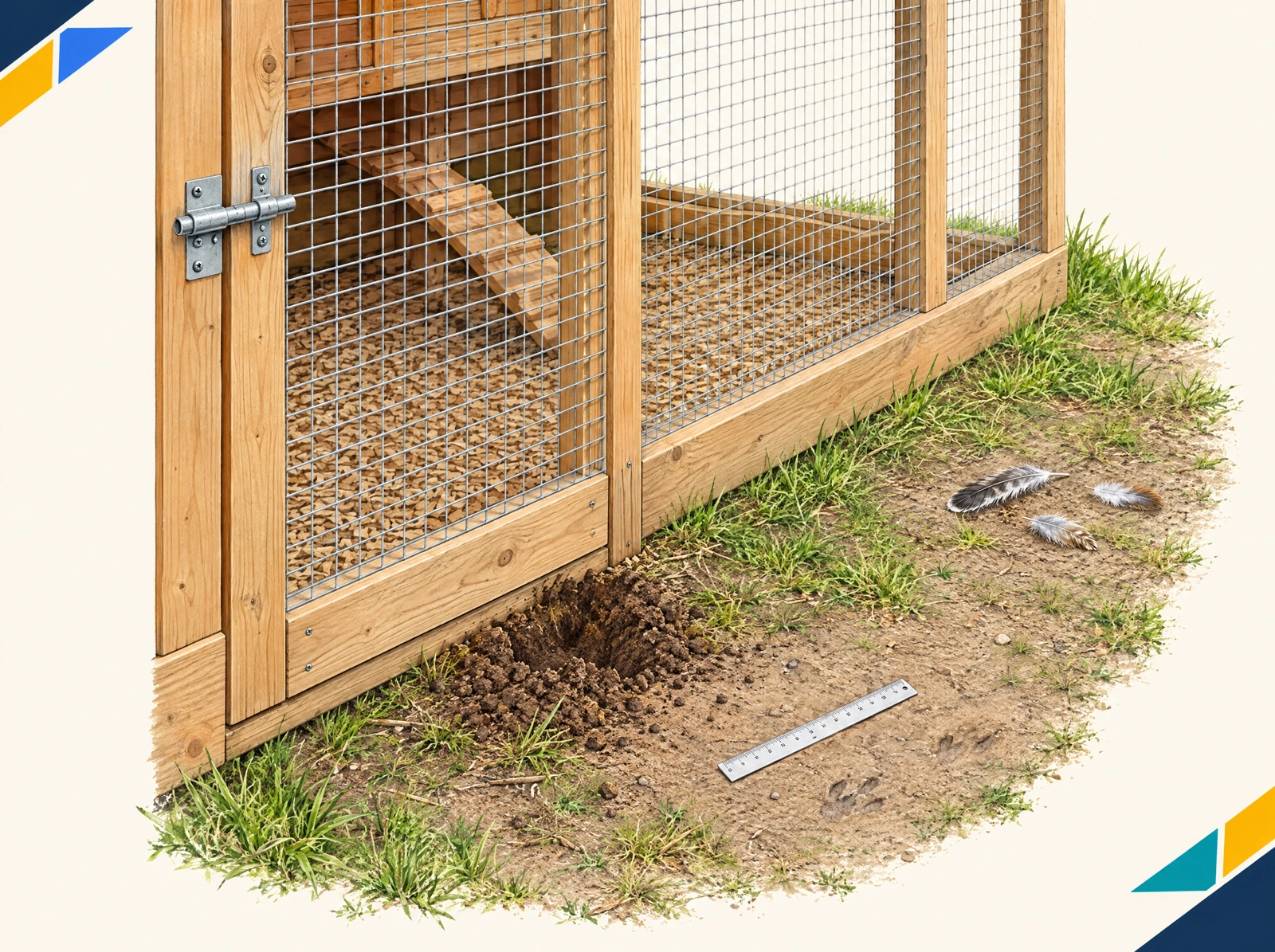
Teaching illustration of a coop latch, disturbed ground, loose feathers and generic impressions beside a ruler.
Teaching illustration · Impressions are generic, not species identifiers.
Whole adult bird missing

Fox, coyote, dog, bobcat or a bird of prey are possibilities. A hidden nest, escape or missing bird should also be checked.

Check next: Trace the perimeter and the last known location. Look for a trail, entry point and camera evidence.

Poultry Extension · Predator management

Several birds dead or mauled

Dogs and members of the weasel family are among the possibilities. The number lost does not identify one animal.

Check next: Document access, tracks and timing before cleanup. Check surviving birds for injuries.

Maryland Extension · Poultry predators (PDF)

Injury beside the mesh

A reach-through event is worth investigating; raccoons are one possibility. Injury location alone is not an identification.

Check next: Check mesh openings and how close the roost sits to the perimeter.

Poultry Extension · Predator management

Eggs or chicks missing

Rats, snakes, raccoons, skunks, opossums and cats may be relevant depending on what disappeared. Egg eating or hidden nests can confuse the picture.

Check next: Record the age of missing chicks, shell fragments, gaps and feeding activity.

Poultry Extension · Predator management

Digging, a lifted latch or a gap

These clues explain an access route. Several animals dig, climb or use an existing opening.

Check next: Photograph and measure the opening. Connect the route to a fresh trail or camera clip.

Virginia Cooperative Extension · Free-ranging poultry predators

No useful tracks?

Some visitors leave little ground evidence. Others leave prints that rain, bedding or hard ground quickly conceal.

Usually daylight

Hawks

An exposed run or free-ranging flock can be approached from above. Feathers or a bird eaten on site can fit several predators.

What to check next

Look for camera footage, overhead access and nearby perches. No ground track is required.

Usually dusk, night or dawn

Owls

An open top or unsecured nighttime roost can leave birds accessible. Missing heads are not specific to owls.

What to check next

Check when birds were last seen alive and whether the roost or run was covered.

Timing varies

Snakes

Eggs and very young chicks can disappear without shell fragments. Other animals and hidden laying spots can explain missing eggs too.

What to check next

Check small gaps and camera footage; absence of shells does not identify a snake.

Often after dark

Rats

Eggs or young chicks may be affected. Tiny prints, gnawing, burrows and spilled feed can add context.

What to check next

Look for multiple signs together. Rodents often show four front toes and five hind toes.

Context: Poultry Extension · Predator management · Virginia Cooperative Extension · Free-ranging poultry predators

A feather pile is a clue, not a species. A scavenger may also arrive after the original event. Match fresh tracks to the entry route and time window; camera footage can help connect the pieces.

Compare the drawing with the dirt

Real ground. Real tracks.

Documented photographs with source credits.
Enlarge a photo to examine the details.

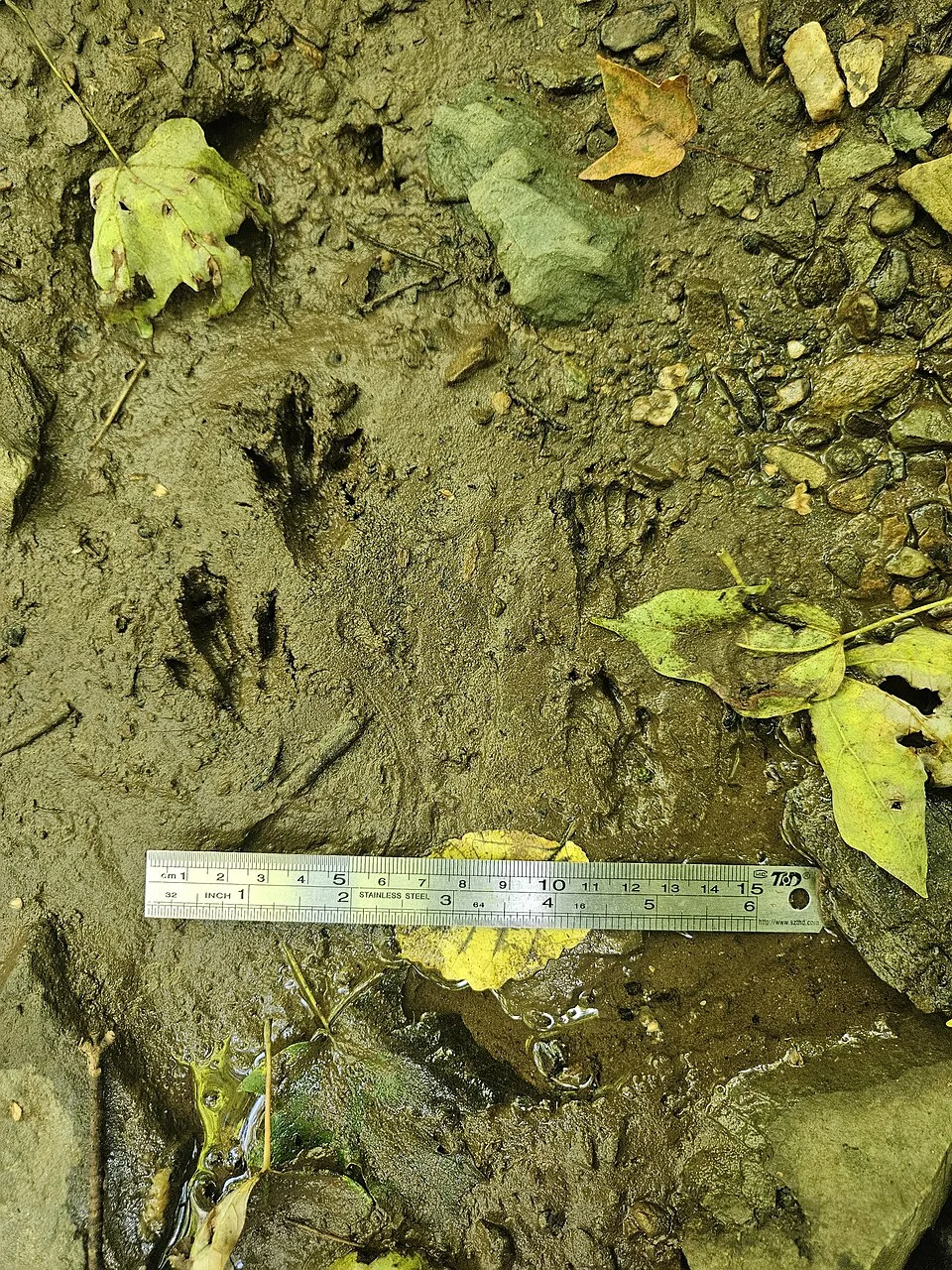
Real raccoon tracks in mud photographed beside a ruler.

REAL TRACK PHOTOGRAPH

Raccoon · keep the scale in frame

1 · Long fingerlike impressions. 2 · A ruler beside the tracks. Compare more than one print before counting toes.

Alex Abair · CC BY 4.0 · resized; labels added separately.

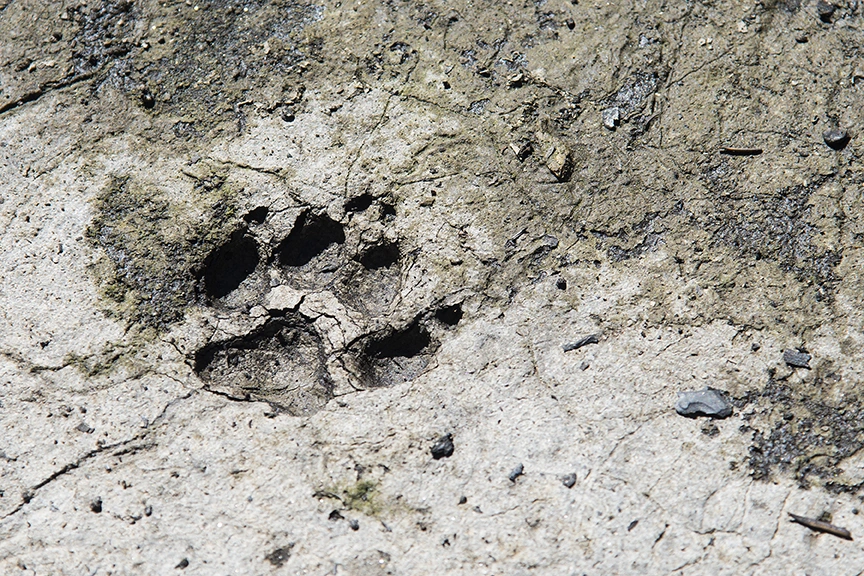
A coyote paw print in compact gray soil, documented by the US Forest Service.

REAL TRACK PHOTOGRAPH

Coyote · four toes in real ground

The source identifies this print as coyote. The four toes are clearer than the partial pad. No ruler is present, so this image cannot establish size.

Daniel Torok / USFS, San Bernardino National Forest · Public domain (U.S. federal work) · resized; no AI alteration.

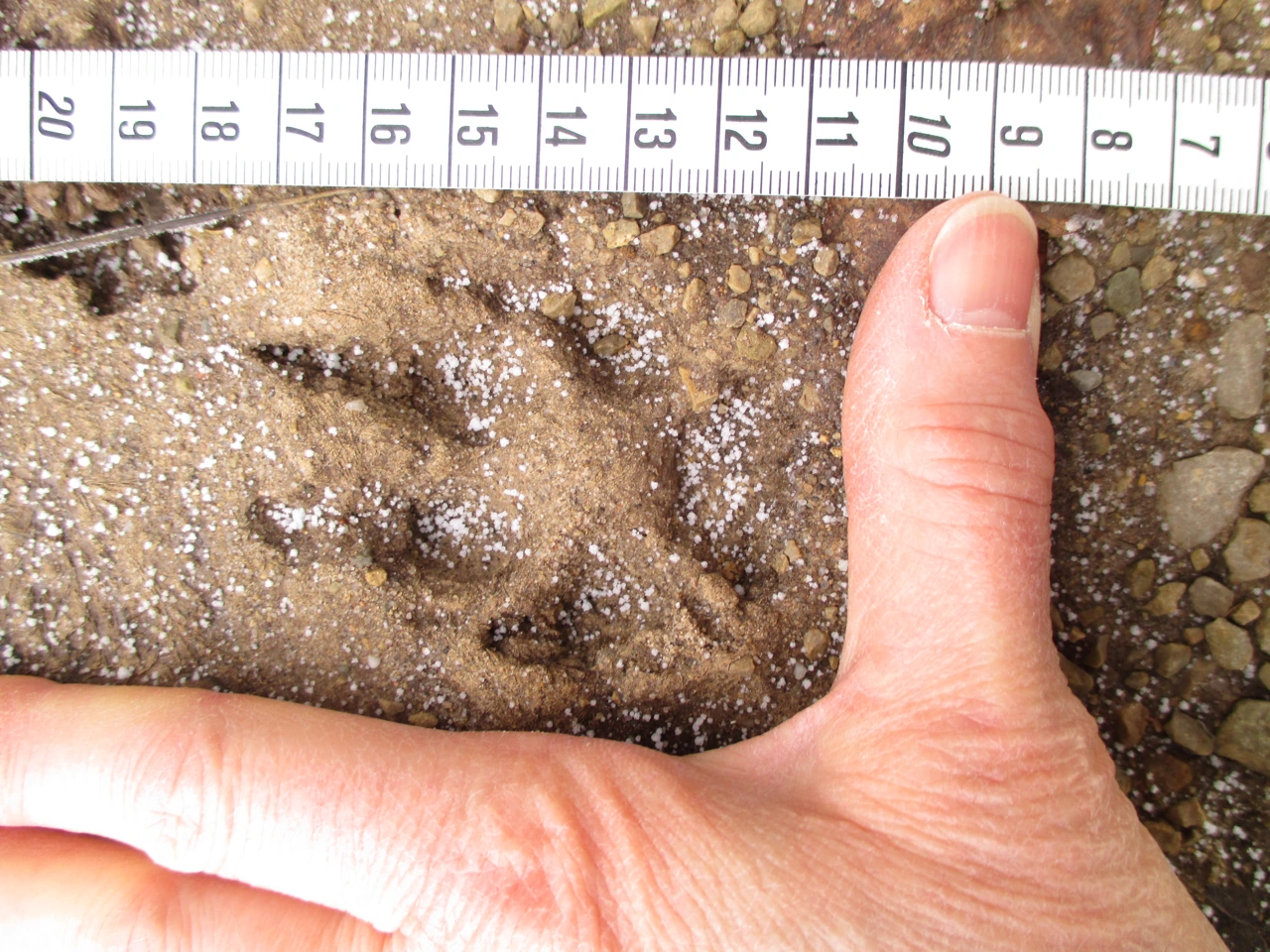
A red fox print in damp ground with a measuring tape and a hand beside it.

REAL TRACK PHOTOGRAPH

Red fox · measure the whole print

Four toe impressions sit above a smaller pad. Keep fingers away from the print and include the ruler’s units and enough ticks to read the measurement.

K.Khedrup · CC BY-SA 4.0 · resized; no AI alteration. This resized image remains under the same license.

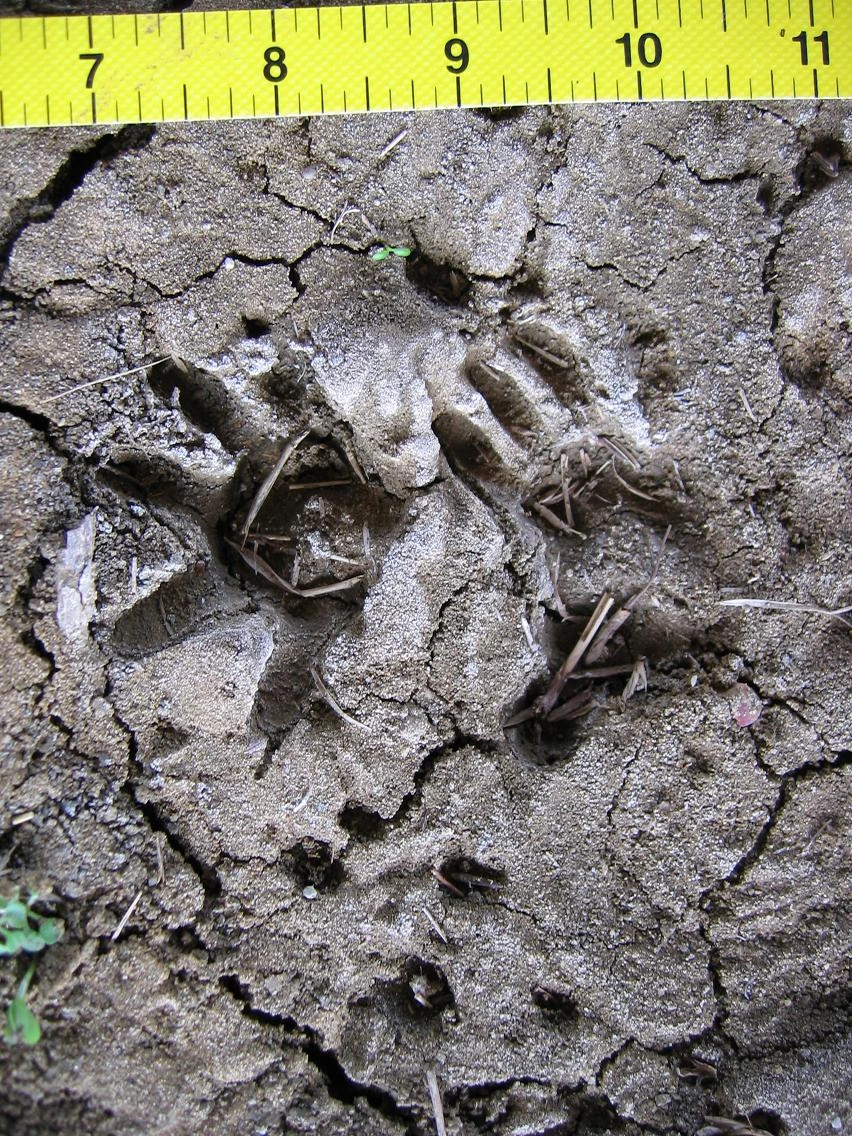
Opossum impressions in cracked mud with a yellow measuring tape above and smaller vole tracks below.

REAL TRACK PHOTOGRAPH

Opossum · real tracks can be messy

The source records opossum tracks in the upper/central area and vole tracks below. Broken mud and mixed trails hide details; this is not a perfect single-print template.

Michael Lensi · CC BY-SA 3.0 · resized; no AI alteration. This resized image remains under the same license.

Make your next group post easier to answer

Collect the clues that count.

A clear photo and a few specifics help the flock help you.

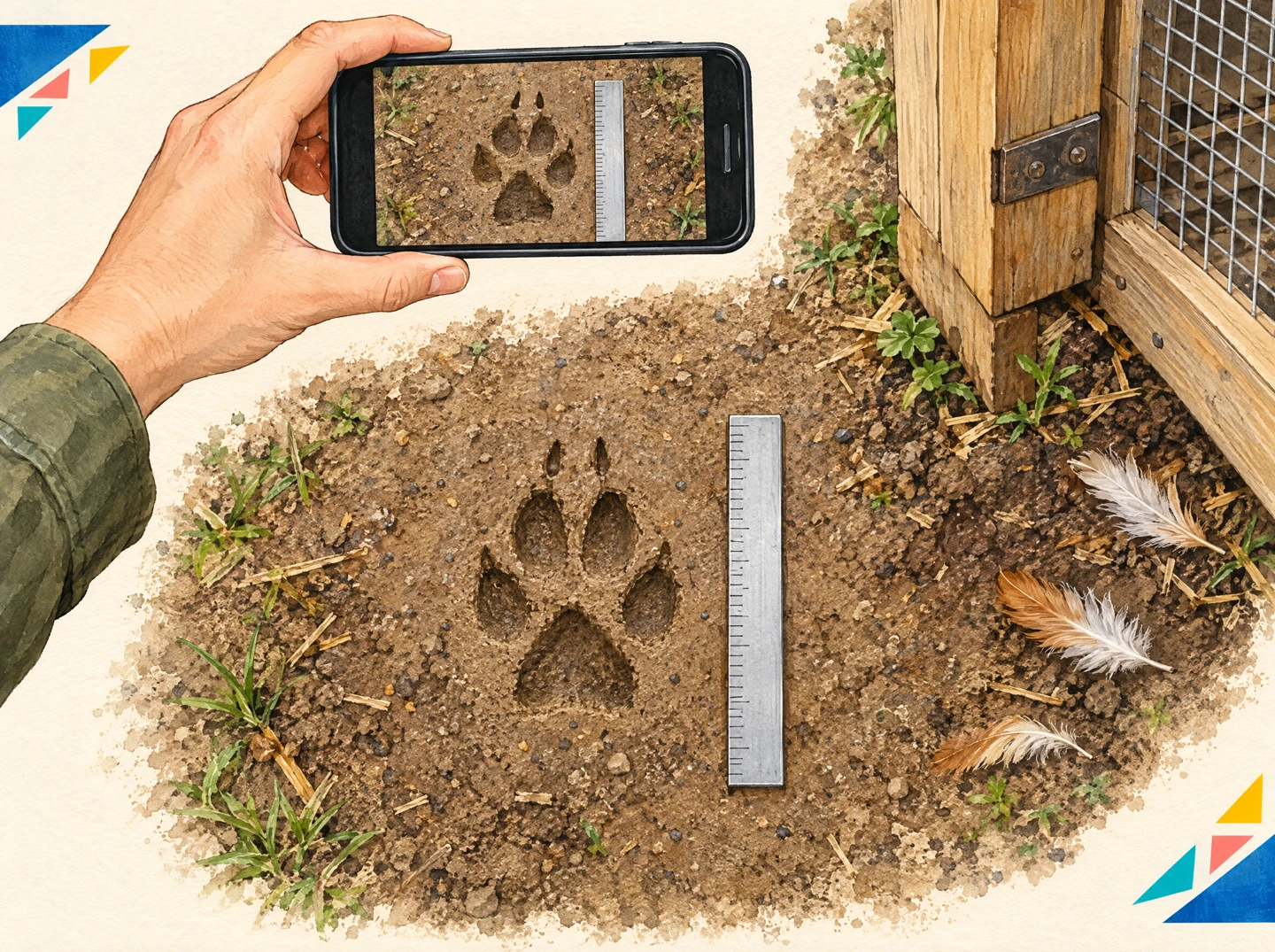
Teaching illustration of a smartphone held above a generic canine print and a ruler beside a coop.
Teaching artwork · Camera angle and scale, not an identification photo.
  1. One close-upSharp, straight down, ruler beside the best print. Include the units.
  2. One wider viewSeveral prints, their direction, and the entry point in context.
  3. One useful accountYour location, time window, what was affected and the opening size.

Your coop evidence notes

Record it while it’s fresh.

Notes stay on this page until you leave. Download or copy them to keep a record.

Ask The Flock →

Copy your notes, then attach the original photos to your post.

While you investigate

Make tonight more secure.

You can improve the vulnerable access point before you know the visitor’s name.

  • Close and check the coop before dusk; inspect doors and fastening.
  • Repair gaps and weak mesh; use a secure covered run where needed.
  • Check below the perimeter for digging and protect that route.
  • Remove spilled feed and secure feed storage; collect eggs regularly.
  • Use a camera aimed at the access route to gather another clue.

Virginia Cooperative Extension · Free-ranging poultry predators · Oklahoma State Extension · Protecting small flocks

Explore coop & predator-prevention guides →
Sources, measurements & image credits

Prepared October 8, 2026. Focus: common poultry visitors and mammal lookalikes in eastern North America, including North Carolina. This is a practical starting point, not an exhaustive local wildlife key.

The track plates adapt the published front/hind silhouettes in the public-domain USGS Animal Tracks guide, pages 6–8. Higgsfield generated the clay surface and composited the source-based outlines into recessed teaching illustrations. It also created the supporting artwork. The four documented track photographs remain unchanged.

Shared scale uses the USGS reference examples or clearly labeled chosen sizes within its general ranges, as explained above. Each animal’s field notes retain measurements from additional wildlife authorities. Neither the artwork nor size alone establishes an identification. A fixed percentage confidence is not assigned to the evidence helper.

Photo authors and licenses are shown beside each image and in the enlargement view. Photo conversion and visible labels do not change the photographed evidence. No new photo permission is required for the four included, credited photographs.