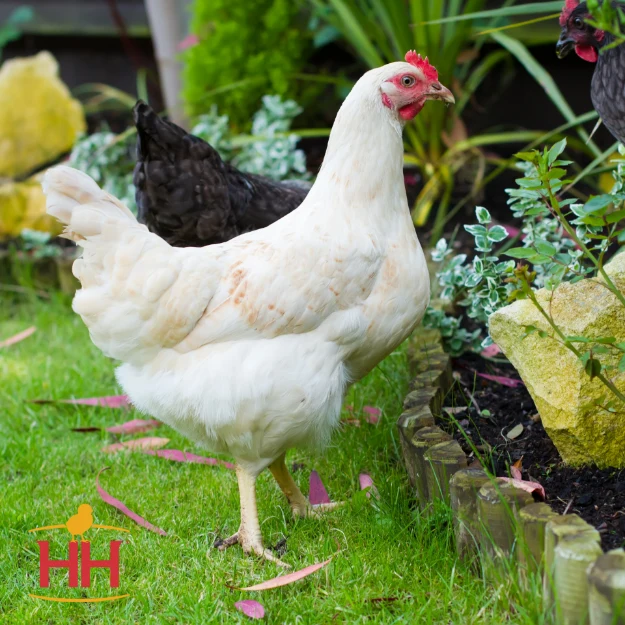
White and amber feathers, brown eggs and a mellow supplier description. This named hybrid deserves a clear identity of its own within the commercial laying family.
Egg color
Brown
Annual eggs
300
Adult size
Supplier mature range 5–6 lb; sexes not separated
Broodiness
Rarely in Hoover's stock
Have Amberlink in your flock?Your everyday experience could help someone choose their next chickens.
Clean-legged in the supplier's pictured hen; the fact table does not specify leg color [1]
Size forms
Commercial large-fowl stock; no established bantam standard in these sources [1]
Development
The supplier describes production stock but does not publish a first-lay age in this product reference. [1]
A named layer within the ISA-derived family
Hoover's describes Amberlink as a white-and-amber sex-link derived from the ISA genetic line. That supports treating it as a named commercial laying hybrid, rather than a white color variety of a heritage breed. The retail reference does not disclose one complete parent-breed recipe.
Keep the name and supplier with the flock record. This is especially useful when comparing it with ISA Brown, because a shared commercial family does not make every retail target, feather pattern or maturity description interchangeable. A clear label answers more than the shorthand white chicken ever will.
The supplier identifies white and amber-colored plumage, a single comb, large brown eggs and a mature range of 5–6 lb. It does not separate that range into adult hen and rooster weights, so the fact grid does not invent that distinction.
Adult color is a description, not a day-old sexing key. Nor does white plumage imply white eggs. The source also does not specify leg feathering in its fact table. The missing details are recorded in this draft's fact review rather than silently filled from an unrelated white hybrid or a guessed photograph.
Hoover's estimates 300 large brown eggs per year and describes broodiness as rare. Its cold-weather laying description is a supplier claim; backyard age, daylight and care still affect the outcome.
Keep development separate from the annual laying figure
Hoover's supplies an annual egg estimate but does not publish a first-lay age in this product reference. The ISA Brown flock target is a different line's commercial measure and cannot be borrowed to claim a validated Amberlink first-egg date.
Keep the hatch date, age certainty, first egg and later egg size in the flock record. If buying older pullets, distinguish known dates from estimated ages. This is more useful than a countdown based on a number assigned to a different hybrid. Observe development and use your chick-care plan alongside the record.
The supplier describes docile, mellow birds, good foraging and rare broodiness. Those descriptions make Amberlink relevant to a keeper looking for an approachable laying flock, while they remain supplier tendencies rather than promises about every individual.
Use a calm, repeatable routine and observe birds around each other as well as around you. A bird that accepts handling may still be assertive at a feeder. Make introductions visible and the resources accessible to less confident flock members. The goal is an ordinary day the whole flock can manage, not a pen in which only the boldest hen eats comfortably.
Hoover's describes both cold and heat adaptability. For the practical backyard application, retain summer shade, a dry ventilated resting area and water checks appropriate to the weather. Examine the single comb during hard freezes rather than treating a hardiness label as a frostbite guarantee.
Make egg collection and closing-up straightforward. Put the feed instructions and the water locations on the sitter sheet. A small improvement to the route between these tasks can be more useful than a larger coop feature that is difficult to inspect. Plan for the real number of hens, not the annual egg estimate alone.
A commercial descriptor is not a validated chick-color key
The retail page calls Amberlink a sex-link but does not provide a validated day-old color key. That is insufficient grounds for this Almanac to invent one from the adult plumage. Keep supplier-sexed stock distinct from chicks sexed by an undocumented visual guess.
Home-hatched offspring also need their own cross description. The parents' commercial label does not establish the offspring's appearance, laying performance or reliable sexing pattern. If breeding is part of the plan, preserve parent records and allow for variable outcomes. If eggs are the main objective, replacement commercial pullets are a separate decision from maintaining a breeding flock.
Amberlink is worth comparing when you like its appearance and the supplier's mellow description and want brown eggs. The advertised 300 large eggs per year are useful line-specific context. Track the actual flock rather than turning the estimate into a minimum daily expectation.
Compare ISA Brown for the producer's published commercial context and Golden Comet for another familiar named hybrid. For a breed-maintenance project, investigate standardized breeds separately. A commercial layer can be a valued backyard bird without serving the same purpose as conservation stock or a breeding-true heritage flock.
White plumage does not identify the shell color or the parent cross. Retain the supplier and hatch date, support the flock's productive laying cycle, and treat home-hatched chicks as a new cross.
These priorities apply the breed traits above to a backyard setup. Use the chick-to-coop planner for young birds and the housing guides for your coop plan.
Questions keepers ask
Does white plumage mean Amberlinks lay white eggs?
No. The cited supplier describes large brown eggs. Plumage and shell color are separate traits. [1]
Is there a reliable chick-color chart in this profile?
The product reference does not provide a validated key, so this draft does not invent one. Adult amber markings are not a chick-sexing method. [1]
Are the 5–6 lb weights for hens or roosters?
The supplier gives an unsplit mature range. It should not be presented as two independently verified adult-sex weights. [1]
Is Amberlink a white variety of ISA Brown?
Hoover's identifies ISA-derived stock but a separately named hybrid. This profile keeps its identity and product figures distinct. [1][2]
Reviewed October 8, 2026. Breed organizations, university references and conservation histories establish breed traits; hatchery estimates describe named supplier lines. This profile identifies the source of the figures instead of treating them as one standardized trial.
Our care recommendations and suggested records apply those traits and Extension husbandry guidance to a backyard flock. They are editorial advice, not results from a controlled breed trial. A breed reputation does not establish an individual bird's behavior, health or readiness to move outdoors.
Egg-size words are source descriptions, not measured carton grades. Adult weights refer to mature birds, not market or pullet weights. Conservation categories describe U.S. populations. Examples of varieties are not a complete list of every national registry's accepted colors.