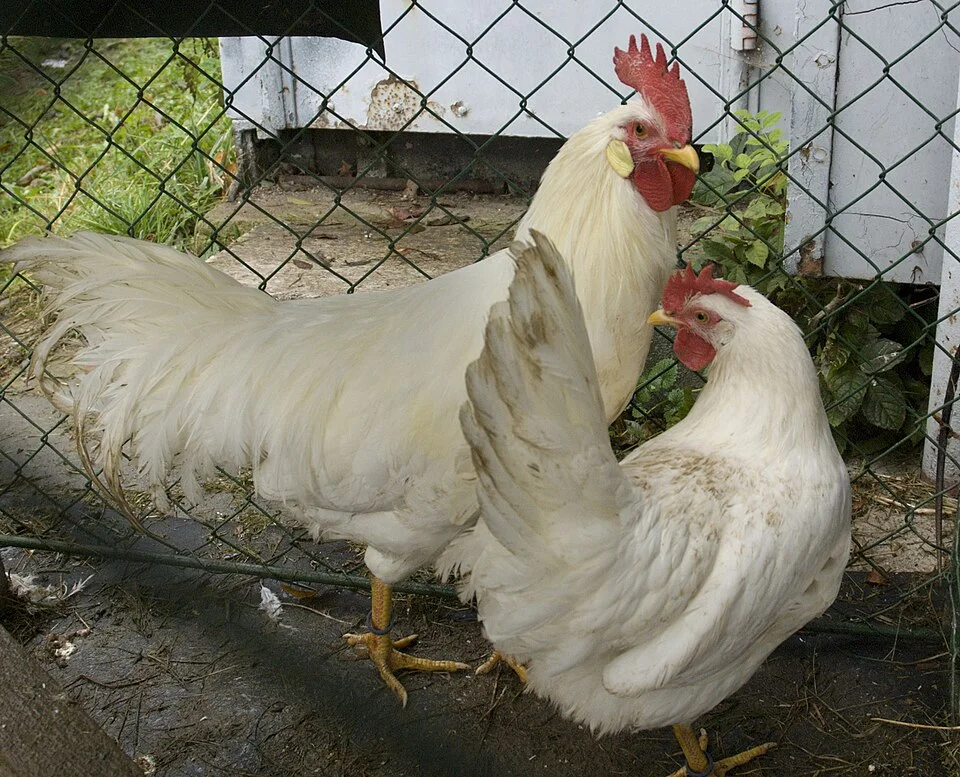
Leghorn takes its name from the Anglicized form of Livorno, the Italian port. Light, productive Italian poultry became the basis for later breed development abroad. Its lasting appeal is the combination of a relatively small body and useful white-egg output.
Traditional Leghorn varieties and specialized industrial laying lines are not the same conservation or production comparison. The Conservancy profile specifically addresses non-industrial birds. A familiar White Leghorn photograph should not cause every heritage color and strain to inherit a commercial hybrid's advertised performance.
Leghorns are comparatively light, clean-legged birds with pale earlobes. White and brown are familiar varieties, with many others under specific standards. Single and rose comb forms exist, and the single-combed hen's comb may fall to one side.
Our practical recommendation is to identify the variety, comb form and size class before comparing adults. A rose-combed Brown Leghorn and a single-combed industrial white line can differ in more than the obvious feather color. The mature weights in the grid are not juvenile or processing targets.
The wide 150–320 reference range spans very different populations. Heritage varieties and highly selected commercial White Leghorns should not be treated as one production promise. Broodiness is generally low.
Laying specialization without a universal calendar
The breed is associated with prompt feathering and strong laying ability, but exact first-egg timing depends on the source line and conditions. Record the hatch date and the first egg rather than treating every Leghorn as one development strain.
The broad annual range reflects that source variation. Our suggested record compares a defined laying year, noting season and molt, alongside mature condition. It is more useful than assuming that the highest industrial or historical figure is the normal annual result for every heritage hen.
Leghorns are active foragers and can be flighty or easily startled. They may become familiar with a keeper while remaining less interested in being held than a calm companion breed. Their activity is part of the appeal for someone who likes watching chickens explore.
Our recommendation is to establish a reliable feeding cue and secure inspection routine. Assess the actual flock's noise and handling behavior before choosing it for a close suburban yard. Small body size does not mean the bird will be unobtrusive or satisfied in a tiny bare pen.
Secure the overhead route as well as the perimeter if your flock can fly. Our suggested run gives active birds space to investigate and allows a predictable return to sheltered roosts. Foraging skill does not establish that your yard supplies a complete ration.
The single comb needs attention in freezing, damp weather; a rose comb presents a different exposed profile. All forms still require dry shelter, reliable water and summer shade. Build the seasonal plan around the actual comb and line instead of deciding from white-egg ancestry alone.
Heritage preservation versus high-output line selection
Decide whether the project is a named heritage variety, an exhibition line or a production flock. Those goals can lead to different choices. Our recommended records connect source identity, mature type, eggs and reproduction with each mating group.
Leghorns are generally non-sitters, so arrange incubation separately for replacement chicks. Keep color and comb form explicit, and do not treat mixing unrelated lines as preservation merely because every bird is called Leghorn. A useful breeding record keeps both performance and identity visible.
Leghorn suits someone who values white eggs, activity and a relatively light-bodied layer. It is less convenient when quiet cuddling or a minimal open enclosure is the main goal. Compare Ancona, Hamburg and Minorca, and distinguish heritage from industrial stock before buying. Choose the comb form with winter conditions in mind and the actual line with your handling expectations in mind.
An egg-focused, active bird that benefits from secure space. Compare like-for-like strains; a commercial White Leghorn's laying total is not automatically a heritage Brown Leghorn's result.
These priorities apply the breed traits above to a backyard setup. Use the chick-to-coop planner for young birds and the housing guides for your coop plan.
Questions keepers ask
Do all Leghorns lay the highest advertised total?
No. The breed includes varied heritage and specialized production lines. The wide reference range needs that context. Track a defined year in the particular flock instead of applying an industrial maximum to every variety. [1]
Is White Leghorn the only variety?
No. Brown and many other varieties exist, with recognition depending on the registry and size class. Single and rose comb forms also need to be identified in a useful comparison. [1][3]
Will Leghorns supply broody hens for replacement chicks?
They are generally non-broody. Plan an incubator or suitable sitter for a scheduled hatch. Strong laying selection and dependable natural incubation are different flock goals. [1]
Can a small hen still need a large activity area?
Yes. Body size and activity needs are different considerations. Leghorns are busy birds, so our recommendation is to provide secure usable space and things to investigate rather than choosing the smallest pen that physically holds them. [1]
Reviewed October 7, 2026. Breed organizations, university references and conservation histories establish breed traits; hatchery estimates describe named supplier lines. This profile identifies the source of the figures instead of treating them as one standardized trial.
Our care recommendations and suggested records apply those traits and Extension husbandry guidance to a backyard flock. They are editorial advice, not results from a controlled breed trial. A breed reputation does not establish an individual bird's behavior, health or readiness to move outdoors.
Egg-size words are source descriptions, not measured carton grades. Adult weights refer to mature birds, not market or pullet weights. Conservation categories describe U.S. populations. Examples of varieties are not a complete list of every national registry's accepted colors.