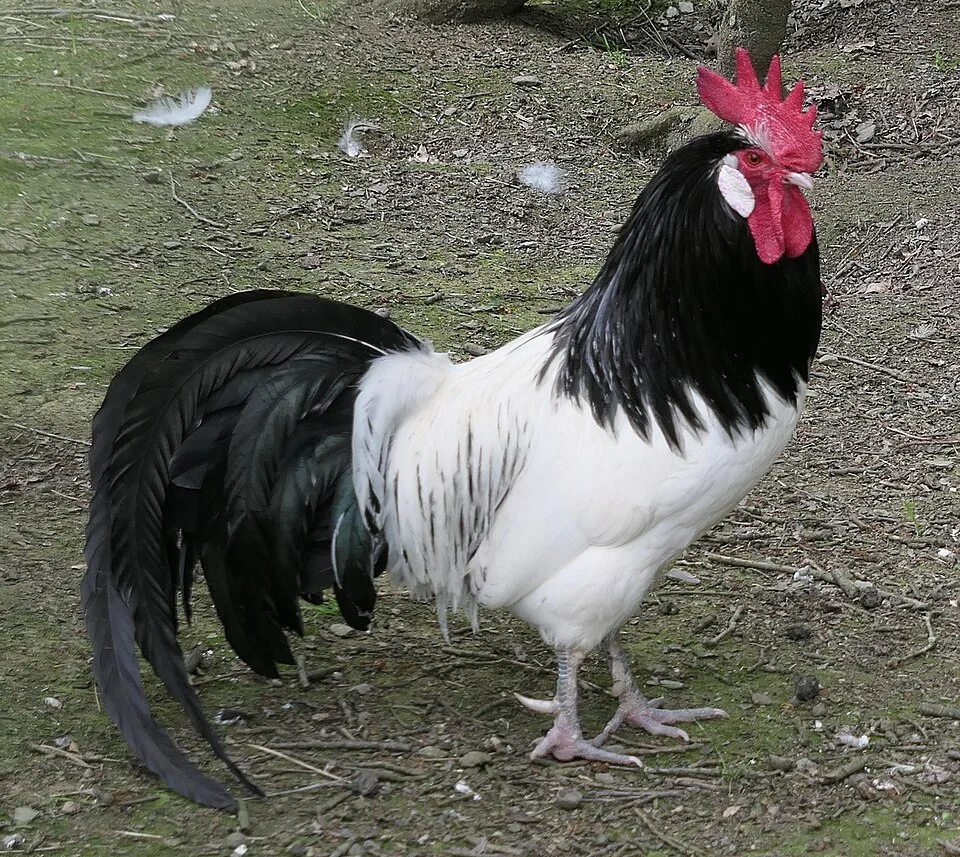
Lakenvelder is associated with the Netherlands and Germany and has a much older background than its later standardization. Some distant-origin stories are difficult to substantiate, so the documented European type is a firmer basis for a keeper's comparison.
Its modern appeal combines a striking black-and-white appearance with an active laying-breed character. The color arrangement is not the same as cuckoo barring or a white bird with a few dark neck feathers. Lakenvelder is a separate breed with its own shape and breeding history.
The familiar pattern has a dark head and neck, a largely white body and a black tail. A red single comb, pale earlobes and clean slate legs help complete the identification. The body is light compared with a heavy dual-purpose breed.
The final pattern takes time to develop. Our practical recommendation is to compare mature birds and use dated photographs of youngsters rather than rejecting a chick because it lacks the adult's crisp contrast. Leg and body details also help distinguish it from superficially similar black-and-white crosses.
The reference gives 150–200 white eggs and little sitting. A light, active bird with a striking pattern can fit a ranging-oriented flock, but it is not an obvious choice for dependable natural hatching.
The Conservancy notes that the definitive plumage can take successive molts to appear fully. That is not a first-egg timetable. Track feather development, body growth and first laying independently.
Our suggested record includes hatch date, adult-pattern photographs and eggs over a defined season. The annual laying range is a reference estimate, not a promise that each young bird will begin on a particular week. Avoid comparing a still-developing bird with an older display specimen as though both are at the same stage.
Lakenvelders are active foragers and may be flighty or independent around people. Some become familiar and approachable, but cuddling is not a dependable breed promise. They can also be more assertive than a quiet companion breed.
Our suggestion is to establish a familiar daily cue and a secure inspection area before handling becomes necessary. In mixed groups, watch for repeated displacement of gentler hens. The striking two-tone appearance is enjoyable, but the behavior should fit your keeping style and the other birds in the pen.
Secure activity space, especially during confinement
Provide usable ranging or exploration space with dependable containment. A bare small pen is a poor match for the active character. Our recommended layout includes enough room to move around shared resources and an easy route to the nighttime coop.
The single comb and less favorable response to severe cold make winter shelter important. Keep the resting space dry and drinking water available. In warmer weather, provide shade and airflow. A ranging preference should never be interpreted as a reason to leave birds without predator protection.
Assess the complete mature pattern rather than selecting solely on an early juvenile photograph. Keep the breed's light type, comb and legs in the evaluation as well. Our suggested records pair dated adult photos with weight, eggs and parent group.
Lakenvelders are generally non-broody, so a breeding project needs a separate incubation arrangement. Maintain purebred mating groups and label crosses clearly. Selecting any offspring with a black neck and tail from an unrecorded mixed flock does not maintain the original breed identity.
Lakenvelder suits a keeper who appreciates a lively white-egg bird and can provide secure space and a reliable handling routine. It is less convenient when frequent cuddling, severe exposed winters or a tiny run defines the plan. Compare Ancona and Hamburg for other active layers. Give behavior and containment as much weight as the memorable feather pattern.
Secure ranging suits an active, sometimes flighty bird. Judge mature plumage rather than rejecting every unevenly marked youngster as a different breed.
These priorities apply the breed traits above to a backyard setup. Use the chick-to-coop planner for young birds and the housing guides for your coop plan.
Questions keepers ask
Why does a youngster not have the final adult pattern?
The pattern develops over time and successive molts. Keep dated photographs and compare birds at similar stages. An early juvenile image is not the final evaluation of a Lakenvelder's adult markings. [1]
Is Lakenvelder the same pattern as Columbian plumage?
It has its own breed pattern and overall type. Similar dark neck and tail placement does not make every black-and-white bird a Lakenvelder. Consider legs, comb, body and parentage together. [1][3]
Are they a dependable sitter breed?
They are generally non-broody. Plan separate incubation if you want chicks on a predictable schedule. A historical farm background does not mean every heritage breed will provide reliable broody hens. [1]
Can they be friendly without wanting to be picked up?
Yes. Familiarity with people and tolerance of handling are different behaviors. Observe the actual birds and practice a calm routine rather than deciding that an independent hen is necessarily aggressive. [1]
Reviewed October 7, 2026. Breed organizations, university references and conservation histories establish breed traits; hatchery estimates describe named supplier lines. This profile identifies the source of the figures instead of treating them as one standardized trial.
Our care recommendations and suggested records apply those traits and Extension husbandry guidance to a backyard flock. They are editorial advice, not results from a controlled breed trial. A breed reputation does not establish an individual bird's behavior, health or readiness to move outdoors.
Egg-size words are source descriptions, not measured carton grades. Adult weights refer to mature birds, not market or pullet weights. Conservation categories describe U.S. populations. Examples of varieties are not a complete list of every national registry's accepted colors.