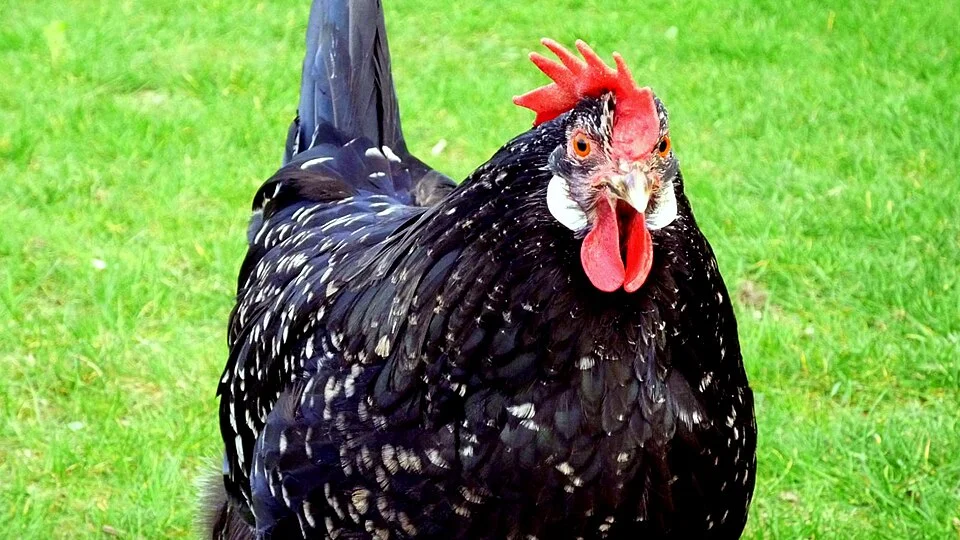
Ancona developed among the white-egg chickens of Italy's Marche region and takes its name from the Adriatic port. British importation and selection helped establish its exhibition identity before it reached American flocks in the nineteenth century. It belongs to the Mediterranean group: a comparatively light body, active habits and white eggs are part of its working background.
It is sometimes compared with a mottled Leghorn. That is a useful first visual comparison, but Ancona has its own standard and body outline. Do not identify one solely from a black-and-white photograph.
Black feathers tipped with white create the mottled pattern. Ancona can have either a single comb or a rose comb; the single-combed hen's comb may fall to one side. Yellow, clean legs and pale earlobes help complete the identification. Both comb forms need to be named when buying breeding stock.
Mottling changes as birds mature and age. More white can appear in an older bird, so compare adults with adults when assessing a flock. A chick's black-and-white down is attractive, but it is not the final adult feather pattern.
The Conservancy describes strong winter laying and relatively early maturity. Sitting is unusual, so a plan that depends on hens reliably hatching their own eggs is a poor match.
The Conservancy reports that pullets often begin around five months and that chicks feather and grow promptly. Use that as a reference point, not a deadline. Record the hatch date and first egg for your own pullets so that later purchases can be compared with the same age and season.
Ancona's relatively small body is part of its laying-breed identity. A healthy mature hen need not look as heavy as an Orpington, and rapid feathering does not remove a young chick's need for proper brooding.
Anconas are quick, watchful and capable flyers. They are enjoyable birds to watch exploring, but are a less obvious choice for a flock selected chiefly for cuddling. An alert response to unfamiliar people is different from deliberate aggression.
Our handling recommendation is to establish a familiar feeding routine and practice calm, brief contact before you need to inspect a bird. A secure catch-up area can make that easier than trying to retrieve a frightened hen from a large yard. Never rely on alertness or dark plumage as the predator plan.
Ancona is best matched to a layout that gives an active bird room to investigate. For a backyard, a roofed or otherwise securely enclosed run is a useful way to combine that activity with reliable containment. Check the top of the enclosure as well as the perimeter; a short garden fence is not a complete plan for a flying breed.
Single-combed birds need particular attention to wet, freezing conditions. A rose comb changes the exposed comb profile, not the need for dry bedding, ventilation and dependable drinking water. Inspect shelter at bird height rather than judging comfort from the doorway.
For a breeding flock, retain the Ancona's correct outline and useful laying qualities along with its mottling. Compare feather pattern at comparable ages so an aging parent is not rejected merely for having more white than a young bird. Keep the comb form identified in your mating records.
Our suggested records are first-lay date, eggs over a defined interval, mature weight, parent group and photographs after adult feathering. Those observations let you see whether selecting for a striking pattern is also retaining the active, productive bird you intended to keep.
Ancona suits someone who enjoys watching chickens forage and wants white eggs from a heritage breed. It is less suited to a tiny, uninteresting enclosure or a keeper whose first requirement is easy cuddling. Compare Leghorn for a similar laying focus and Dominique for a calmer, heavier alternative. Consider the rose-combed form if winter comb exposure is a major concern.
Plan a secure run for an alert, capable flyer. The rose-comb form offers a smaller exposed comb, while single-comb birds need particular attention during freezing weather.
These priorities apply the breed traits above to a backyard setup. Use the chick-to-coop planner for young birds and the housing guides for your coop plan.
Questions keepers ask
Is an Ancona just a black-and-white Leghorn?
No. They share a Mediterranean laying background and a similar size, but Ancona is a separate breed with its own body shape and mottled pattern. Comb, legs and overall type are more useful than feather color alone. [1][2]
Why is my older Ancona getting whiter?
Mottled birds can show larger or more numerous white tips as they age. Compare the bird's own earlier plumage and assess the mature pattern; a change in mottling alone does not mean its breed has changed. [1]
Will Anconas sit on their eggs?
They are generally non-broody. For a planned hatch, arrange an incubator or a suitable broody hen rather than counting on an Ancona to start and complete incubation. Individuals can depart from a breed tendency. [1][4]
Does dark plumage protect them from hawks?
It may make a bird less conspicuous in some surroundings, but it does not prevent predation. Ancona's alertness is useful behavior; secure shelter and an appropriate enclosure still do the protective work. [4][7]
Reviewed October 7, 2026. Breed organizations, university references and conservation histories establish breed traits; hatchery estimates describe named supplier lines. This profile identifies the source of the figures instead of treating them as one standardized trial.
Our care recommendations and suggested records apply those traits and Extension husbandry guidance to a backyard flock. They are editorial advice, not results from a controlled breed trial. A breed reputation does not establish an individual bird's behavior, health or readiness to move outdoors.
Egg-size words are source descriptions, not measured carton grades. Adult weights refer to mature birds, not market or pullet weights. Conservation categories describe U.S. populations. Examples of varieties are not a complete list of every national registry's accepted colors.