A Mediterranean layer with an uncertain early origin
The Minorca is associated with the Spanish island of the same name, although its earliest ancestry is not securely documented. It became established in Britain before nineteenth-century imports brought it to the United States. American breeders also developed rose-combed stock. Its long-standing identity centers on a substantial Mediterranean laying bird rather than a broody farm hen. That history explains an otherwise surprising combination: an imposing adult body, active ranging behavior and white eggs, with little inclination to hatch them.
A big frame, white earlobes and prominent head features
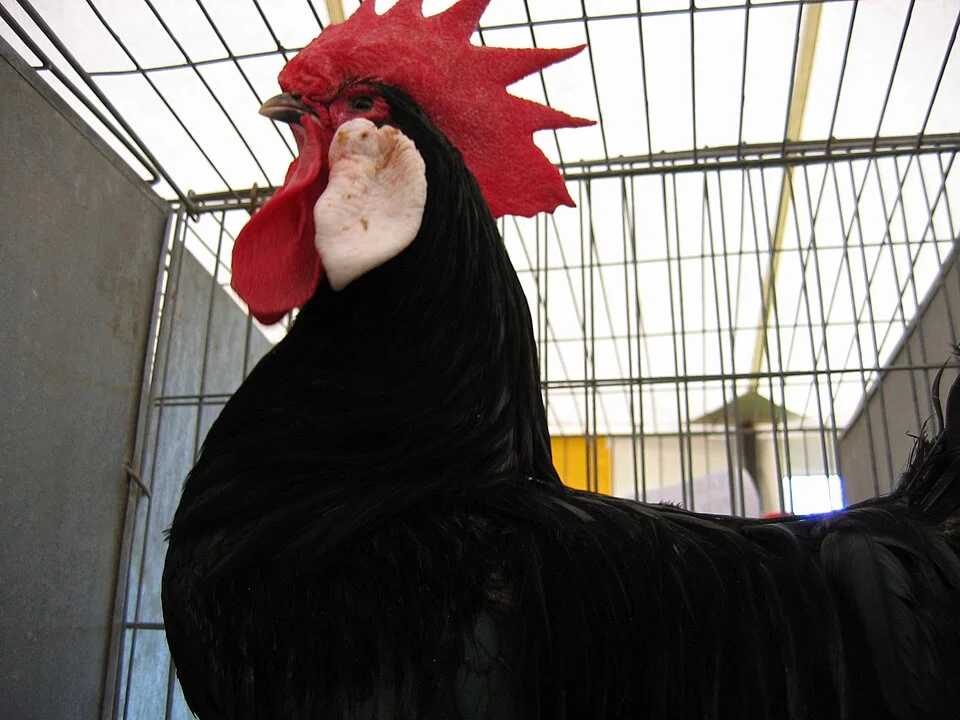
Look for a long, substantial bird with a full tail, clean legs and conspicuous white earlobes. Black Minorcas have dark shanks; White and Buff birds differ, so leg color should be evaluated with the variety rather than treated as a single rule. Both single- and rose-combed forms exist. The familiar tall single comb is part of the breed's appearance, but also a practical consideration in freezing weather. This is not simply a black Leghorn with a different name.
The reference describes 140–220 very large white eggs and little broodiness. A substantial Mediterranean bird can be useful for egg size without matching a smaller commercial layer's annual count.
The adult weight in the facts is a mature-bird reference, not a target a pullet must reach before laying. Allow development on a balanced age-appropriate ration and keep records of first eggs, egg weight and body condition. Very large eggs are a breed strength, but a first pullet egg may be much smaller. Our recommendation is to compare a hen's later sequence of eggs with her own earlier record, rather than assuming a young bird has failed the breed description after one small egg.
Active ranging birds rather than automatic lap chickens
Minorca generally suits a keeper who enjoys watching chickens explore. The Conservancy describes active, sometimes flighty birds that prefer room to forage. Calm feeding routines can build familiarity, but breed identity does not promise a chicken that enjoys being carried. Our practical advice is to make catching and inspection possible without a long chase: use a secure enclosure, approach predictably and keep a small handling area available. A friendly bird can still startle, fly over a low barrier or avoid unfamiliar visitors.
Make movement and frost protection part of the design
A large Mediterranean layer needs both adequate indoor room and usable outdoor space. Check fencing and consider a covered run where flight or aerial predators are concerns. A warm-climate reputation does not remove the need for summer shade, ventilation and dependable water. In cold weather, prominent combs and wattles warrant close observation; dry bedding and moisture control matter more than closing every vent. Place feeders so an active bird can eat without jostling confined flockmates, especially when bad weather keeps everyone indoors.
Preserve egg size without ignoring laying persistence
For a breeding flock, identify the comb form and variety first. Record individual egg weights alongside laying totals; selecting only the largest egg can conceal long gaps in production. Mature body size, sound structure, fertility and manageable behavior should remain part of the assessment. Our suggested ledger records hatch date, family, first lay, later egg weights and seasonal breaks. It can reveal which hens combine the large-egg character you wanted with reliable performance under your actual housing and climate.
Choose Minorca when very large white eggs and an active, impressive-looking bird appeal to you. Think more carefully if space is tight, winters are severe or cuddly behavior is your first priority. Leghorn offers a useful comparison for white-egg production, while Ancona and Andalusian share some Mediterranean features. Conservation interest can add value to maintaining a well-documented Minorca family, but rarity alone does not tell you whether its temperament or seasonal output fits your household.
Its exposed head features need attention in frost, even though the bird is sizeable. Allow secure movement space and choose this for large white eggs rather than strong sitting instincts.
These priorities apply the breed traits above to a backyard setup. Use the chick-to-coop planner for young birds and the housing guides for your coop plan.
Questions keepers ask
Does its large size make Minorca cold hardy?
Not automatically. The substantial body does not eliminate the exposure of a large single comb and wattles. Provide dry, ventilated winter shelter and monitor exposed head features. A rose-combed bird still needs proper housing and daily care. [1][7]
Are all Minorcas black with dark legs?
No. Black is familiar, but White and Buff varieties also exist, and their shank colors differ. Single- and rose-combed forms are another distinction. Use the relevant variety standard when evaluating a bird rather than a photograph of a Black Minorca. [1][2]
Will they reliably hatch their own chicks?
Their generally low sitting tendency makes that a poor assumption. If breeding is your goal, arrange incubation or a suitable broody hen in advance. Laying fertile eggs and choosing to incubate them are separate traits. [1][5]
Is this a good children's pet breed?
It can be enjoyable to observe and feed, but its active, flighty reputation makes it a less predictable choice for frequent carrying. Judge the individual and supervise handling. A bird that approaches for treats may still dislike being picked up. [1][6]
Reviewed October 7, 2026. Breed organizations, university references and conservation histories establish breed traits; hatchery estimates describe named supplier lines. This profile identifies the source of the figures instead of treating them as one standardized trial.
Our care recommendations and suggested records apply those traits and Extension husbandry guidance to a backyard flock. They are editorial advice, not results from a controlled breed trial. A breed reputation does not establish an individual bird's behavior, health or readiness to move outdoors.
Egg-size words are source descriptions, not measured carton grades. Adult weights refer to mature birds, not market or pullet weights. Conservation categories describe U.S. populations. Examples of varieties are not a complete list of every national registry's accepted colors.