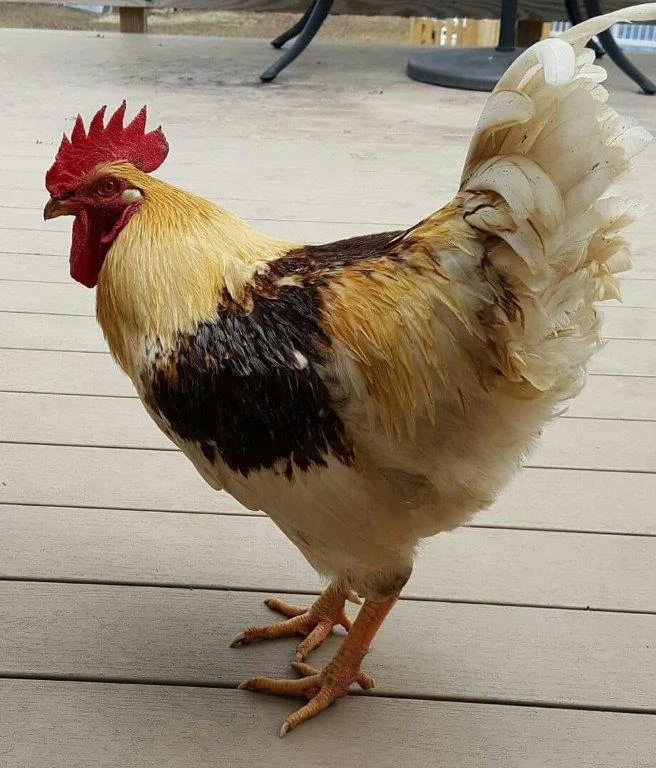
United States; parentage varies by source · Named sex-link hybrid
Golden Comet
A familiar brown-egg layer with golden-red and white plumage. Learn what the name tells you, and where different suppliers use different parent crosses.
Egg color
Brown
Annual eggs
250–320
Adult size
Hen 5–7 lb; rooster 8–9 lb
Broodiness
Variable in the cited Cackle line
Have Golden Comet in your flock?Your everyday experience could help someone choose their next chickens.
Clean; usually yellow, with occasional greenish shanks in the cited line [1]
Size forms
Commercial large-fowl stock; no standard bantam form [1]
Development
An early-laying production hybrid; the cited Golden Comet product facts do not establish one first-lay week for every line. [1]
A familiar name with supplier-specific parentage
Golden Comet is a named production hybrid. Cackle describes its own stock as Cherry Egger males crossed with Rhode Island White females, with development of that line dating to 1997. Extension gives a different example of a gold-comet cross: New Hampshire males over silver-factor White Plymouth Rock hens. Both references explain why a name alone cannot establish one universal parent pair.
Keep the supplier's information with the hatch record. It will make the first generation's chick markings, adult size and later breeding results easier to interpret without confusing one hatchery's program with another.
Cackle describes brownish-red female chicks, mostly white male chicks and adult hens with brown and white feathering. Males can be white with red shoulders. Its mature ranges are 5–7 lb for hens and 8–9 lb for roosters. Those figures belong to the named line; they are not an exhibition standard for all Golden Comets.
For identification, retain both the name and its source. Adult color is an attractive feature, but it cannot demonstrate the genetic cross by itself. The same caution applies to a rehomed bird: describe known plumage and laying traits clearly while leaving undocumented parentage unresolved.
Cackle estimates 250–320 eggs per year for its Golden Comet line, with large to extra-large brown eggs. Its broodiness description is variable. The expectation is strong laying potential with normal seasonal and individual changes, not an uninterrupted daily egg.
The cited product reference describes early laying but does not establish one first-egg week for every Golden Comet. Customer anecdotes on a sales page can illustrate variation; they should not be converted into a guaranteed maturity date for the Almanac.
Start the record at hatch or purchase and note whether the age is certain. Record the first egg, later egg size and output over time. Compare hens bought together separately when possible. This produces useful evidence for your next purchase instead of treating the first pullet to lay as representative of the entire flock.
Productive hens still have individual personalities
The Cackle line is described as active with variable broodiness. For a keeper, that means considering both a laying routine and the possibility of a hen deciding to sit. It does not establish how every bird behaves around people, young chickens or another rooster.
Use predictable handling and introductions you can supervise. Watch the less assertive birds as well as the conspicuous ones. Put resources where more than one bird can approach comfortably, and observe who actually uses them. A flock's behavior during ordinary care is more useful than the promise that a particular hybrid will always be friendly.
Our practical recommendation is to make egg collection, water checks and closing the coop easy to repeat every day. Provide nests suitable for the adult hens, a dry resting area and a secure place to move. Include summer shade and an exposed-comb check in severe winter weather.
Lay out the routine so another person can follow it without improvising. Show which door is secured at dusk and where feed and cleaning supplies belong. Even a simple coop benefits from this planning. The chickens may consider every closed door a negotiation, but your sitter should not have to guess the answer.
A Golden Comet mating should not be treated as the repeatable breeding of a standardized autosexing breed. The purchased generation's useful chick markings depend on a planned cross, and its descendants need their own parentage description.
Before hatching, decide whether your goal is simply to raise an interesting home cross or to reproduce a documented production program. Keep both parent records, allow for male chicks and describe the offspring accurately. If breeding true is central to the project, compare established breed options and their standards rather than expecting a familiar hybrid name to do that work.
Golden Comet suits an eggs-first search when a supplier's stock, size and laying expectations fit your setup. Compare its stated figures with Cinnamon Queen and Red Sex-Link entries, then review the individual named strains within those references.
For conservation breeding or exhibition, research the heritage breeds separately. A productive hybrid can be a valued backyard bird without representing a preserved parent breed. You can keep both kinds of stock if the space and routine fit, while retaining honest records about which project each bird belongs to.
Use the supplier-specific laying and size figures when planning nests and feed. Keep first-generation production birds separate from any home-hatched breeding project, and compare actual flock records over a whole season.
These priorities apply the breed traits above to a backyard setup. Use the chick-to-coop planner for young birds and the housing guides for your coop plan.
Questions keepers ask
Is Golden Comet a variety of Rhode Island Red?
It is a named hybrid, not simply a red-feathered variety of Rhode Island Red. Parentage depends on the breeding program. [1]
Why do references give different parent breeds?
Commercial names can cover different programs. This profile distinguishes Cackle's stated mating from Extension's example instead of choosing one as a universal answer. [1][2]
Can Golden Comets hatch chicks?
Hybrid identity does not automatically prevent fertility or sitting. It means the next generation cannot be assumed to repeat the purchased cross's traits. [7]
Does the laying estimate apply for the hen's whole life?
An annual reference estimate is not a lifetime average. Track age, season and actual output when planning a flock's egg supply. [3]
Reviewed October 8, 2026. Breed organizations, university references and conservation histories establish breed traits; hatchery estimates describe named supplier lines. This profile identifies the source of the figures instead of treating them as one standardized trial.
Our care recommendations and suggested records apply those traits and Extension husbandry guidance to a backyard flock. They are editorial advice, not results from a controlled breed trial. A breed reputation does not establish an individual bird's behavior, health or readiness to move outdoors.
Egg-size words are source descriptions, not measured carton grades. Adult weights refer to mature birds, not market or pullet weights. Conservation categories describe U.S. populations. Examples of varieties are not a complete list of every national registry's accepted colors.