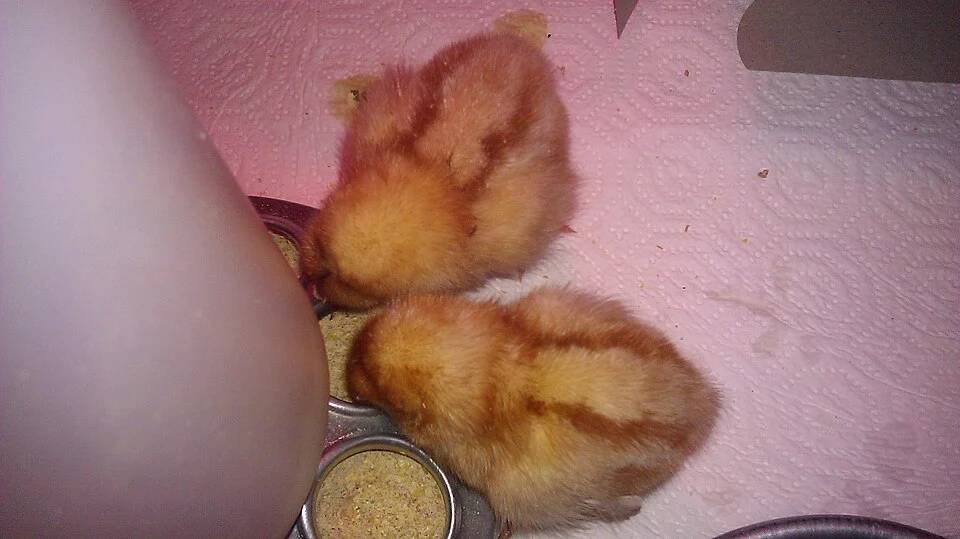
Photographer-identified Cinnamon Queen / golden sex-link chicks; not a certified supplier pedigree. lwmhuber · CC BY-SA 3.0 / original photograph
United States; named supplier lines · Named sex-link hybrid
Cinnamon Queen
A popular brown-egg hybrid with useful chick-color differences. The name belongs in your egg-layer research, with its supplier and parentage kept clear.
Egg color
Brown
Annual eggs
250–320
Adult size
Hen 5–7 lb; rooster 8–9 lb
Broodiness
Variable in Cackle stock
Have Cinnamon Queen in your flock?Your everyday experience could help someone choose their next chickens.
Usually yellow, clean legs; some greenish shanks in the cited line [1]
Size forms
Commercial large-fowl stock; no standard bantam form [1]
Development
Cackle describes first laying around four months; individual pullets can be later. [1]
What the Cinnamon Queen name means
Cinnamon Queen belongs to the useful everyday vocabulary of chicken keeping even though it is not a standardized heritage breed. Cackle describes its line as a first-generation cross of production-type Rhode Island Red males and Rhode Island White females. Its stated development history starts in 1993. That identifies this supplier's birds; it does not establish the parentage of every chicken sold under the same name.
The distinction is practical. A purchase receipt saying Cinnamon Queen is more useful when it also names the hatchery and hatch date. Keep those details with the flock record so later comparisons concern the same stock.
In Cackle's stated cross, female chicks are brownish red and males mostly white. Adult hens carry brown and white feathering; males may be predominantly white with red shoulder patches. The supplier gives mature ranges of 5–7 lb for hens and 8–9 lb for males, rather than a show-standard weight.
Plumage can help describe the bird without proving its ancestry. A brown-and-white hen found in a mixed pen could belong to another commercial line. Compare the actual source information, not just a resemblance in an online photograph. The chick photograph on this page illustrates a photographer-identified Cinnamon Queen type, not a certified Cackle pedigree.
Cackle lists an estimated 250–320 eggs annually for its line and describes large to extra-large brown eggs. It reports variable broodiness. These are supplier descriptions, not a controlled comparison of every chicken sold under this name.
Cackle describes first laying around four months. Use that as its line's expectation, rather than a deadline for every pullet. An early layer still needs age-appropriate rearing; the approaching first egg does not justify rushing a chick outdoors or mixing it with much larger birds.
A useful record contains hatch date, first egg, later egg size and weekly output. Add short notes when the routine changes. That makes a delayed first egg, a seasonal pause and a flock-management change easier to distinguish. Your notebook is considerably more informative than a hen's expression at breakfast.
The supplier's temperament label is active, and its broodiness label is variable. Neither determines whether a particular hen will enjoy being picked up. Begin with a predictable feeding and dusk routine and watch how the individuals approach you.
When adding birds, make the arrangement easy to observe. Put food and water where a quieter hen can reach them without repeatedly crossing a dominant bird's path. The relevant question is whether the flock can use its resources comfortably, rather than whether every bird fits an advertised personality. Assess rooster behavior separately from the laying hens' reputation.
Plan around productive hens, not a marketing total
For this backyard application, start with a secure coop, a dry resting area and a usable run. Place nests where collecting and inspecting eggs is straightforward. Keep the route to water convenient in summer and check exposed combs during freezing weather.
Use real flock size and adult dimensions when assessing the setup. A laying hybrid still needs room to move, and its productive reputation cannot compensate for awkward entrances or crowded resources. Make daily care easy enough for a sitter to repeat. A clear routine is a more dependable upgrade than expecting the hens to manage their own performance targets.
A first-generation cross is not an autosexing breed
Sex-link chick identification depends on the intended parent mating. It differs from a maintained autosexing breed such as Cream Legbar. Hatching eggs from two purchased hybrids does not recreate the original production cross or establish the same reliable chick-color key.
If you hatch a home cross, retain the parent identities and label the chicks accordingly. Plan for both sexes and variable appearance. You can enjoy a productive hybrid flock and a separate breeding project, but their records should answer different questions. Keep the name Cinnamon Queen attached to documented stock rather than assigning it to every similar-looking descendant.
Consider Cinnamon Queen when your main interest is brown eggs and practical production stock. Compare it with Golden Comet and ISA Brown using the supplier's own figures. Similar plumage does not make their genetic programs or adult ranges identical.
For a breeding or conservation goal, also compare Rhode Island Red and standard-bred Rhode Island White. Decide whether you want replacement pullets from a documented commercial cross or offspring whose breed identity you can maintain over generations. That choice changes the project far more than the shade of a hen's feathers.
Keep the hatchery name with your flock records. Plan for productive hens, monitor their actual laying and body condition, and label home-hatched offspring as crosses rather than replacement Cinnamon Queen stock.
These priorities apply the breed traits above to a backyard setup. Use the chick-to-coop planner for young birds and the housing guides for your coop plan.
Questions keepers ask
Is Cinnamon Queen a recognized heritage breed?
It is a named laying hybrid, not a separate APA standard breed. Its usefulness as an egg layer and its breeding identity are different considerations. [1]
Can I tell every Cinnamon Queen chick's sex from color?
Use a color key only for documented stock from the intended cross. A familiar name or second-generation parent pair does not establish that key. [2]
Are Cinnamon Queen and ISA Brown exactly the same?
Cackle describes similar performance but identifies its own parent cross. Similar laying goals are not proof of identical commercial genetics. [1]
Will home-hatched chicks be infertile?
Being a hybrid does not itself make a chicken sterile. The issue is predicting the offspring's traits and chick-sexing pattern, not automatically preventing reproduction. [2]
Reviewed October 8, 2026. Breed organizations, university references and conservation histories establish breed traits; hatchery estimates describe named supplier lines. This profile identifies the source of the figures instead of treating them as one standardized trial.
Our care recommendations and suggested records apply those traits and Extension husbandry guidance to a backyard flock. They are editorial advice, not results from a controlled breed trial. A breed reputation does not establish an individual bird's behavior, health or readiness to move outdoors.
Egg-size words are source descriptions, not measured carton grades. Adult weights refer to mature birds, not market or pullet weights. Conservation categories describe U.S. populations. Examples of varieties are not a complete list of every national registry's accepted colors.