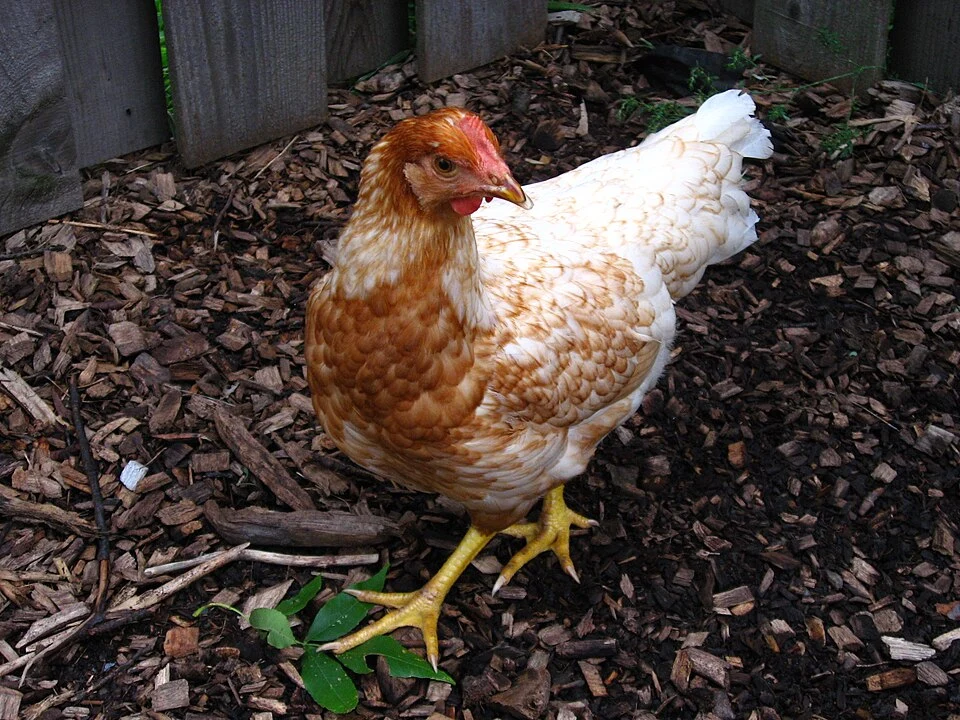
Multiple planned crosses; U.S. hatchery examples · Hybrid cross category
Red Sex-Link
A family of color-sexable brown-egg crosses, including named Red Star stock. The cross matters more than treating every red hybrid name as interchangeable.
Egg color
Brown
Annual eggs
200–280
Adult size
Cackle: hen 6–7 lb; rooster 8–9 lb
Broodiness
Cackle non-setter; McMurray Red Star unlikely to sit
Have Red Sex-Link in your flock?Your everyday experience could help someone choose their next chickens.
Clean; usually yellow in cited supplier examples [1]
Size forms
A cross category, not one breed standard; cited examples are large fowl [1]
Development
McMurray Red Star text says about 22 weeks; its Q&A says 18–20 weeks. This is a source discrepancy, not a universal category age. [2]
A cross category with several named commercial lines
Red Sex-Link describes a family of planned crosses, not one standardized breed. Extension describes matings that use sex-linked plumage traits to identify the purchased generation's sexes. Suppliers attach names to their selected stock; those names need context instead of being treated as an exact list of synonyms.
McMurray calls its Red Star a commercial strain developed over multiple generations and also uses the ISA Brown name in its description. The supplier does not describe it as one simple two-breed recipe. This entry therefore keeps Red Star's identity separate from Cackle's specifically stated cross.
Cackle describes a Rhode Island Red male over a Delaware female. It gives mature ranges of 6–7 lb for hens and 8–9 lb for males. McMurray's Red Star reference instead lists a 6 lb hen and an 8 lb male, red-and-white hens and predominantly white males.
The color difference is useful for the intended stock, but a reddish adult hen cannot prove its parentage. Keep hatchery identity, generation and any documented cross with the bird's record. When the line is unknown, describe it as an identified or presumed cross rather than certifying it from appearance.
Cackle estimates 200–280 annual eggs for its line; McMurray Red Star Q&A gives 280–365 annually under ideal conditions. Keep each figure attached to the named supplier rather than constructing one universal red sex-link range. Neither estimate guarantees an individual hen's annual total.
Named-line ages can disagree even within one reference
McMurray's Red Star description gives about 22 weeks to laying, while its Q&A gives 18–20 weeks. This is a real difference within the reference. It should stay visible rather than being converted into one seemingly precise age for the whole red sex-link category.
For your flock, retain hatch date and first-egg observations. Record eggs over subsequent weeks rather than judging production from the first day. A useful comparison follows the actual birds through the season and notes age and routine. It does not simply choose whichever age made the most appealing sales headline.
Separate line descriptions and individual behavior
Cackle describes active stock and non-setting behavior. McMurray describes its line's disposition favorably and sitting as unlikely. Those are initial expectations for the named stock, not evidence that every red sex-link behaves identically or that no hen ever goes broody.
Arrange introductions so you can monitor access to feed and water. Watch the quieter hens and assess the males separately. When comparing sources, useful observations concern the same age group and management setup. The red feather coat contributes very little to predicting which individual will insist on being first through the coop door.
Our backyard application is to use the actual adult size and flock count when planning a secure home. Provide accessible nests, a dry resting area, room to move and summer weather protection. Check exposed combs during hard winter weather.
Make daily tasks visible and easy to explain. Keep water and feeding instructions current, and review who can reach resources comfortably. The birds' production purpose makes dependable care especially relevant; it does not reduce their housing needs. A laying figure is a reference for expectations, not a substitute for checking the hens at the coop.
For the Extension examples, reversing the male and female parent breeds can remove the useful chick-color difference. A planned sex-linked mating is therefore more specific than crossing any red chicken with any pale chicken.
Purchased hybrids do not automatically recreate that mating when bred together. Keep the generation and both parent identities on home-hatched chicks' records, allow for both sexes and label the results as a cross. A maintained autosexing breed follows a different breeding logic. Compare Cream Legbar if repeatable sex-specific chick markings are a central breeding goal rather than assuming all color-sexable stock is equivalent.
An eggs-first category, with useful named comparisons
Red sex-link stock is relevant to a brown-egg flock where the actual supplier's size, behavior and production fit the setup. Cackle's 200–280 annual estimate belongs to its line. McMurray publishes a different ideal-condition Red Star range in its Q&A. These are different contexts, not ingredients for a newly averaged category guarantee.
Use the Cinnamon Queen, Golden Comet and ISA Brown profiles to investigate familiar names in more detail. For conservation breeding, compare the parent breeds independently. The ability to purchase color-sexed commercial chicks is valuable without establishing that the hybrid is a preserved heritage breed.
Keep the actual cross or commercial line on the flock record. Chick down color predicts sex only for the correct mating; adult red plumage alone does not prove a bird belongs to that cross.
These priorities apply the breed traits above to a backyard setup. Use the chick-to-coop planner for young birds and the housing guides for your coop plan.
Questions keepers ask
Is Red Star just another name for every red sex-link?
It is McMurray's named commercial stock. The broader category contains different programs and parentage, so exact equivalence should not be assumed. [2]
Why can reversing the parent breeds change the chick markings?
The identifying plumage traits follow the sex-linked mating. The intended male and female parent combination is part of the method. [3]
Will two red sex-link parents produce reliably sexable chicks?
That pairing does not automatically repeat the original planned cross. Retain the new generation's parentage and do not assume the same visual key. [8]
Do hens need a rooster to produce eggs?
Hens can lay without a rooster. A male is relevant to fertile eggs and a breeding project, not required for ordinary table-egg production. [4]
Reviewed October 8, 2026. Breed organizations, university references and conservation histories establish breed traits; hatchery estimates describe named supplier lines. This profile identifies the source of the figures instead of treating them as one standardized trial.
Our care recommendations and suggested records apply those traits and Extension husbandry guidance to a backyard flock. They are editorial advice, not results from a controlled breed trial. A breed reputation does not establish an individual bird's behavior, health or readiness to move outdoors.
Egg-size words are source descriptions, not measured carton grades. Adult weights refer to mature birds, not market or pullet weights. Conservation categories describe U.S. populations. Examples of varieties are not a complete list of every national registry's accepted colors.