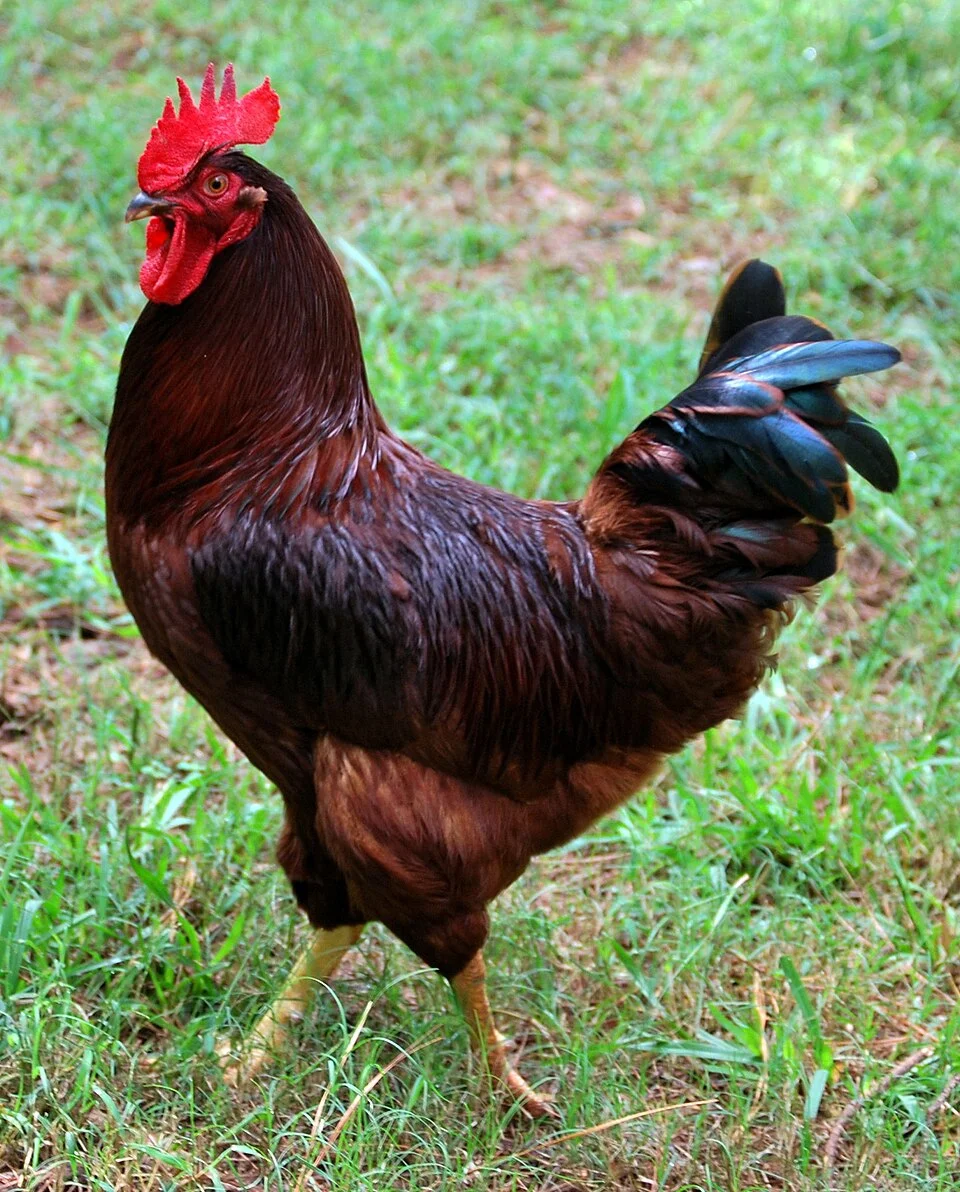
Rhode Island Red developed in New England from several poultry backgrounds, including Asiatic and farm stocks. Single-combed birds entered the American standard in 1904 and rose-combed birds in 1906. Its utility reputation subsequently made it important in commercial crossing. That influence creates a naming trap: a red layer with Rhode Island ancestry is not necessarily a pure Rhode Island Red. Standard exhibition birds, laying-selected families and red sex-link hybrids should be compared as the different populations they actually represent.
A standard Rhode Island Red combines a substantial body, clean yellow legs and rich red plumage with black in specified areas. Single- and rose-combed forms exist. The darker mahogany appearance distinguishes many standard Reds from lighter chestnut New Hampshires, although color alone cannot prove ancestry. Large fowl and bantams also require separate weight comparisons. When judging an unfamiliar red bird, record comb, body, plumage and family information together. A hatchery's generic production-red label is not interchangeable with a documented pure-breed pedigree.
The 200–280 figure refers to Cackle's Rhode Island Red line. Heritage exhibition Reds, production strains and red sex-link hybrids are different comparisons. Flock assertiveness and broodiness can differ with selection.
Growth, first lay and later egg size depend on the actual stock as well as care and season. Our suggested record includes hatch date, weight, first egg and later production, with feeding and daylight changes noted. Do not turn a laying-selected line's reputation into a fixed development timetable for exhibition stock. The numerical laying example on this page belongs to the cited hatchery line. Youngsters still need a balanced age-appropriate ration, and their first eggs may be smaller than the familiar mature brown eggs.
Rhode Island Reds are active birds, with temperament influenced by selection and individual behavior. A productive flock is not automatically a quiet one, and a friendly hen can still dominate a feeding station. Our recommendation is to observe introductions and provide multiple resource positions when assertiveness displaces smaller or gentler birds. Record male behavior separately, especially around people and during breeding. Do not excuse repeated injury or unsafe conduct because a rooster is described as protective. Manage the individual you have rather than a breed stereotype.
Allow passing room and winter protection for the comb
Provide sturdy adult-sized nests and roosts, plus room for birds to avoid one another when weather keeps the flock indoors. Watch doorways and feeders for competition. Dry, ventilated winter shelter is necessary for both comb forms; a rose comb reduces exposed profile but does not prevent every cold-weather problem. In summer, plan shade, airflow and dependable water. Our practical recommendation is to locate a second feeding point beyond the first bird's immediate control, rather than placing two feeders together where one assertive hen can guard both.
Pure Reds and first-generation sex links have different goals
For a pure Rhode Island Red family, select type, soundness, temperament and recorded farm performance together. In specific crosses, a Red male can contribute to chick-sexing patterns. Extension describes unbarred Rhode Island Red males with barred Plymouth Rock females for black sex links, and Red males with Delaware females for another first-generation distinction. Parent identity and mating direction matter. Our recommendation is to label crossbred chicks accurately and retain hatch records; breeding those offspring together does not automatically recreate the initial sexing pattern or a pure Red family.
For a laying-and-farm flock with compatible companions
Rhode Island Red makes sense for a keeper who values brown eggs and active, substantial farm birds. Its suitability for a gentle mixed flock depends on the actual individuals and selection history. Compare New Hampshire for related ancestry, Buckeye for another red American breed and Plymouth Rock for a familiar dual-purpose alternative. If steady eggs are your main goal, compare measured performance rather than redness of plumage. If breeding or exhibition matters, establish pure identity and the relevant standard before relying on a seller's general label.
A useful laying-and-farm candidate. Compare the actual strain when choosing companions; productivity or friendly handling does not guarantee an unassertive pecking order.
These priorities apply the breed traits above to a backyard setup. Use the chick-to-coop planner for young birds and the housing guides for your coop plan.
Questions keepers ask
Is a red sex-link the same as Rhode Island Red?
No. A sex-link is a specified cross, which may include Rhode Island Red ancestry. Its first-generation chick markings and performance should be attributed to that cross. Red coloring alone does not turn a hybrid into a pure Rhode Island Red. [1][9]
Are all Rhode Island Red roosters aggressive?
No single temperament applies to every rooster. Judge behavior around people and hens, and select for manageability if breeding. Do not assume aggression from the name, or excuse unsafe behavior because the flock's hens are productive or friendly. [3][5]
Does a rose comb remove winter care needs?
No. It changes the exposed head profile, while moisture, ventilation, shelter and daily observation remain important. Every flock needs accessible unfrozen water and adequate feed. A smaller comb is one consideration in a winter plan rather than the whole plan. [5][6]
Will exhibition Reds lay like a production line?
That should not be assumed. Selection goals and family records differ. The annual estimate here describes a named hatchery line. Compare actual laying records for the stock being offered if egg totals are a deciding factor. [3][4]
Reviewed October 7, 2026. Breed organizations, university references and conservation histories establish breed traits; hatchery estimates describe named supplier lines. This profile identifies the source of the figures instead of treating them as one standardized trial.
Our care recommendations and suggested records apply those traits and Extension husbandry guidance to a backyard flock. They are editorial advice, not results from a controlled breed trial. A breed reputation does not establish an individual bird's behavior, health or readiness to move outdoors.
Egg-size words are source descriptions, not measured carton grades. Adult weights refer to mature birds, not market or pullet weights. Conservation categories describe U.S. populations. Examples of varieties are not a complete list of every national registry's accepted colors.