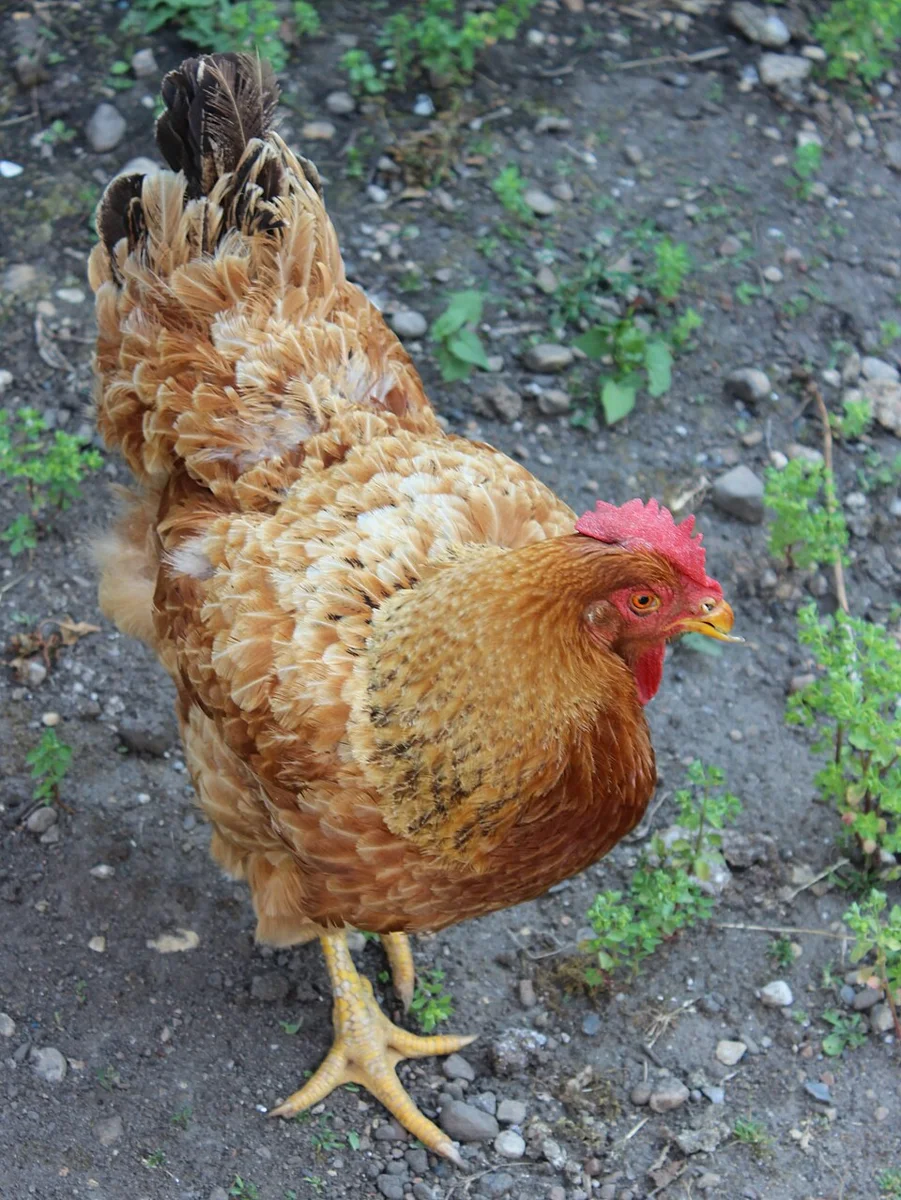
This picture belongs to Xavier Caré. Please credit : Xavier Caré / Wikimedia Commons / CC-BY-SA. If you would like special permission to use, license, or purchase the image please contact me to negotiate terms. I'd appreciate if you could let me know about it or mail me ( xavier.carepm.me) if you want to use this picture out of the Wikimedia project scope. · CC BY-SA 4.0 / original photograph
United States · Breed
New Hampshire
An American breed selected from Rhode Island Red stock for earlier development.
Egg color
Tinted to Brown
Annual eggs
200–220
Adult size
Hen 6.5 lb; rooster 8.5 lb
Broodiness
Can brood; sitting or mothering is described in the breed reference
Have New Hampshire in your flock?Your everyday experience could help someone choose their next chickens.
New Hampshire developed through selection within Rhode Island Red ancestry, with emphasis on quicker growth, feathering and useful farm performance. It became a distinct standardized breed in the 1930s. This is different from a modern red hybrid assembled for one generation of commercial production. Its history helps explain why it is often compared with Rhode Island Red while retaining its own body and color identity. A reddish chicken is not enough to establish either breed, particularly in a mixed hatchery flock.
Chestnut color, a single comb and a substantial body
New Hampshire has a single comb and clean yellow legs. Its red coloring is generally lighter and more chestnut-toned than the deep mahogany associated with standard Rhode Island Reds. Body structure matters alongside color when assessing breeding or exhibition birds. Large fowl and bantams exist, and this profile's weight example concerns large fowl. Black areas in the tail and wing should be evaluated within the relevant standard, not treated as proof of crossbreeding simply because the bird is not uniformly red.
The reference gives 200–220 eggs and describes rapid feathering and useful mothering. It also stresses a wide temperament range between source stocks, so a single 'docile' label would conceal an important difference.
Earlier development is a breed goal, not a fixed deadline
Rapid development and feathering are important parts of the breed's history. They do not supply a universal first-egg week, market age or brooder exit date. Our suggested record follows hatch date, body weight, feather coverage and first lay, with season and feeding noted. Move youngsters according to their condition and the environment, rather than the name on the hatchery order. Compare birds from the same hatch and management conditions if you want to identify a family that develops usefully for your flock.
The Conservancy describes a broad temperament range, from gentle to assertive or aggressive. A uniformly cuddly label would hide a real selection issue. Observe how individual birds behave at feeders, during handling and around smaller flockmates. Our recommendation is to provide multiple resource points and intervene when a bird is persistently excluded or injured. Keep rooster conduct separate from hens' behavior when recording the family. An energetic forager, an assertive hen and an unsafe rooster are different management problems, even within one breed.
Room for adult birds and a manageable pecking order
Plan nests, doors and roost access around substantial large fowl, with enough usable space for birds to pass each other. A second feeder or water station is particularly helpful when flock assertiveness creates a bottleneck. Provide shade and ventilation during summer and dry, ventilated shelter during winter; the single comb remains exposed in severe cold. Our practical recommendation is to inspect the flock during feeding and at roosting time. Those moments can reveal competition that is easy to miss while the birds are scattered outside.
Keep pure breeding and sex-linked crosses clearly labeled
A pure New Hampshire project aims to preserve its identity and performance across generations. It can also be used in specific sex-linked crosses, but the mating direction and partner breed determine the result. Extension describes New Hampshire males crossed with barred Plymouth Rock females for black sex-link chicks, and with Delaware females for another identifiable first-generation pattern. Our recommendation is to keep crossbred hatch records separate from pure-breed families. Do not sell later generations as though the first cross's chick-sexing pattern automatically repeats.
A practical farm bird when you value the actual family
New Hampshire can suit a dual-purpose flock that values development, brown eggs and the option of breeding. Its temperament range means the family matters as much as a favorable breed summary. Compare Rhode Island Red for another red farm breed and Delaware for a related utility history. If gentle handling is your priority, look for an established record of manageable behavior. If preservation is your aim, document parentage and performance rather than choosing solely for an attractive red color.
Treat temperament as genuinely line dependent. Monitor an established pecking order and separate competing birds if needed rather than relying on a universally gentle label.
These priorities apply the breed traits above to a backyard setup. Use the chick-to-coop planner for young birds and the housing guides for your coop plan.
Questions keepers ask
Is New Hampshire just another name for Rhode Island Red?
No. It was developed from that ancestry through selection and became a distinct breed. Chestnut color and body type help distinguish it, but reliable family information is more useful than trying to assign every reddish backyard bird from color alone. [1][3]
Does rapid growth tell me when to move chicks outside?
No. Feather coverage, health, weather and the suitability of the outdoor enclosure still determine readiness. A reputation for quick development is not a substitute for observing the chicks and providing age-appropriate care. [1][6]
Will every hen be gentle?
No. The breed reference explicitly describes differing temperaments between lines. Assess actual behavior, including access to food and handling. Select manageable birds if breeding, and keep individual rooster behavior separate from a flock-wide label. [1]
Will sex-linked offspring breed true?
The first-generation sexing pattern depends on the exact parents and mating direction. Crossing those offspring together does not automatically recreate it. Label the cross accurately and preserve parent records instead of presenting the offspring as pure New Hampshire. [10]
Reviewed October 7, 2026. Breed organizations, university references and conservation histories establish breed traits; hatchery estimates describe named supplier lines. This profile identifies the source of the figures instead of treating them as one standardized trial.
Our care recommendations and suggested records apply those traits and Extension husbandry guidance to a backyard flock. They are editorial advice, not results from a controlled breed trial. A breed reputation does not establish an individual bird's behavior, health or readiness to move outdoors.
Egg-size words are source descriptions, not measured carton grades. Adult weights refer to mature birds, not market or pullet weights. Conservation categories describe U.S. populations. Examples of varieties are not a complete list of every national registry's accepted colors.