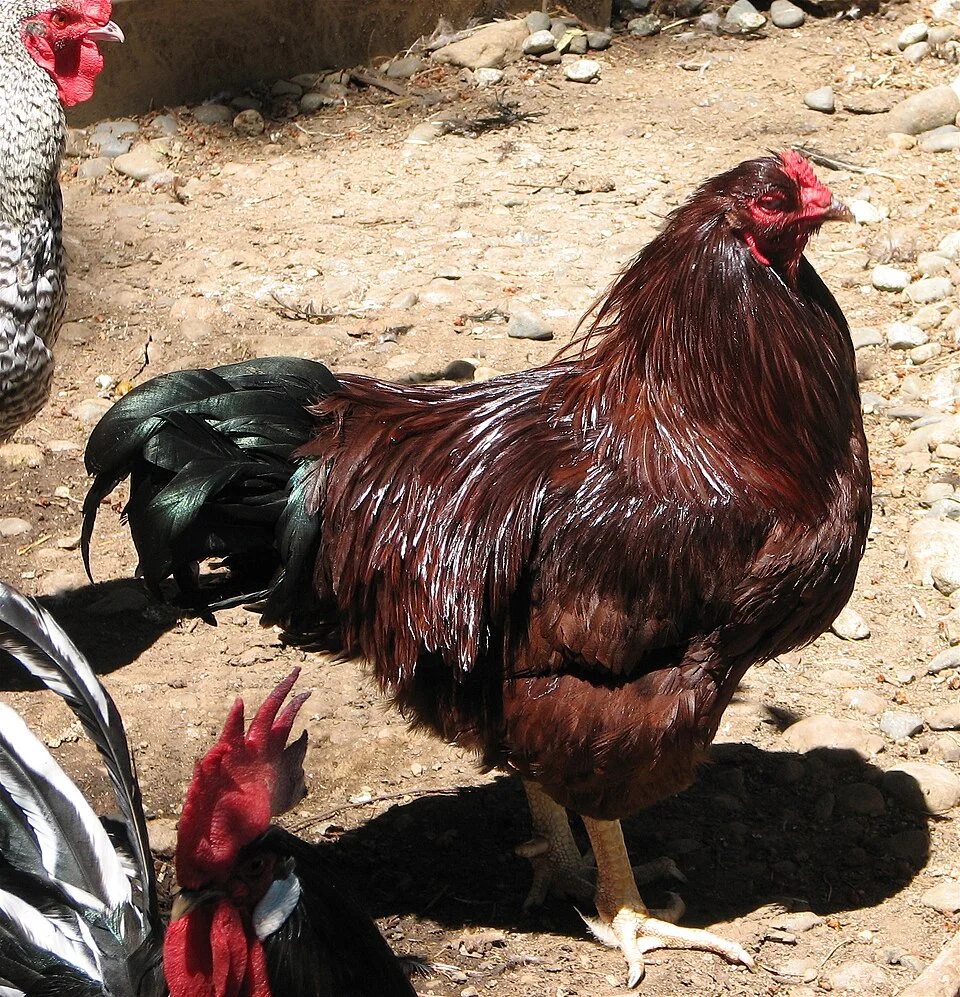
Buckeye was developed by Nettie Metcalf in Ohio and named for both the state and its rich red-brown color. Its ancestry includes Cochin, Plymouth Rock and game stock. It became a distinct American dual-purpose breed rather than remaining under the early label of a pea-combed Rhode Island Red.
Commercial poultry displaced many traditional farm breeds, and later conservation work helped restore Buckeye numbers and practical production. That history makes preserving useful body type and performance just as relevant as maintaining the familiar mahogany appearance.
Buckeye has a pea comb, yellow clean legs and a compact, broad body. The rich mahogany-bay feathering includes black in the tail. Its shape and comb make a useful contrast with the longer, more rectangular Rhode Island Red; similar red plumage does not make them interchangeable.
The adult weights in the grid are mature-bird references. Our recommendation is to judge body condition and balance alongside a scale reading. A bird selected only for size may not preserve the active farmyard type that makes the breed useful.
The Conservancy describes selection improving output from earlier 150–200 figures to 175–240 in some modern flocks. Broodiness can be useful, and the breed's active foraging character remains relevant to a farm setup.
Historical Buckeye egg totals and later selectively improved flocks differ. The laying example above reflects that source context; it should not be treated as a promise for every red, pea-combed chick. Growth, first egg and annual output are three different records.
Our suggested youngster log includes hatch date, regular weight observations and first-lay date. Compare birds of the same age raised in similar conditions. This is more informative for choosing replacements than comparing one well-grown chick with a photograph of a mature exhibition bird.
Buckeyes are active, inquisitive foragers and can be personable around people. A keeper who likes watching chickens investigate a yard may enjoy that combination. Their reputation for pursuing small prey should not be treated as a rodent-control service or a reason to leave feed unprotected.
Our practical recommendation is to provide interesting, secure ranging space and observe each bird's handling response. In a mixed flock, check the quiet hens as well as the outgoing ones. Temperament belongs in the replacement-bird decision, rather than being assumed from the breed label.
The low pea comb and Ohio farm background make Buckeye an attractive candidate for cooler locations. Dry shelter, fresh air and reliable winter water remain essential. The comb shape changes one exposure risk; it does not provide a substitute for good housing.
Our recommendation is to give these active birds usable daytime space even during periods when ranging is restricted. Inspect muddy gateways and shelter access, and provide summer shade as well as winter protection. Feed stores and coop openings should be secured independently of the flock's confidence or foraging ability.
Buckeye conservation work emphasizes a bird that can grow, lay and reproduce effectively as well as resemble the breed. Our suggested breeding record pairs growth and adult weight with eggs, fertility, hatch results and parent group. Do not keep only the most vividly colored male if his overall usefulness is poor.
For preservation, keep unrelated family contributions visible and clearly label any crosses. A flock containing attractive red chickens is not automatically a Buckeye conservation flock. Its contribution depends on maintaining the breed identity and a viable breeding population.
Buckeye suits someone who wants brown eggs, a substantial farm bird and a preservation interest. It is a particularly useful comparison with Rhode Island Red, New Hampshire and Chantecler. Choose it for its combination of traits, not an expectation that it will eliminate rodents or guarantee a friendly rooster. Active birds need both space and a keeper willing to observe them.
An active foraging candidate for a practical flock. Provide space to explore; protective mothering and a small comb are useful traits, but neither eliminates the need for attentive care.
These priorities apply the breed traits above to a backyard setup. Use the chick-to-coop planner for young birds and the housing guides for your coop plan.
Questions keepers ask
How do I distinguish Buckeye from Rhode Island Red?
Look at the comb and body as well as color. Buckeye has a pea comb and a shorter, broader presentation; Rhode Island Red has its own rectangular type and comb forms. Red feathers alone are insufficient identification. [1][2]
Will Buckeyes control mice around the coop?
They may chase small prey, but that is an interesting behavior, not a reliable control program. Keep feed in secure storage and close pest entry points. Do not create a rodent problem in order to give the flock something to hunt. [1][7]
Do all Buckeyes lay the higher modern egg estimate?
No. Selection history and flock performance differ. The source distinguishes earlier totals from improved laying lines. Track a defined season in your own flock before treating a published upper figure as its expected output. [1]
Does a pea comb make frostbite impossible?
No. A lower comb changes the exposed profile, but cold and moisture still matter. Inspect birds and manage ventilation and litter rather than relying on the comb shape as complete protection. [4]
Reviewed October 7, 2026. Breed organizations, university references and conservation histories establish breed traits; hatchery estimates describe named supplier lines. This profile identifies the source of the figures instead of treating them as one standardized trial.
Our care recommendations and suggested records apply those traits and Extension husbandry guidance to a backyard flock. They are editorial advice, not results from a controlled breed trial. A breed reputation does not establish an individual bird's behavior, health or readiness to move outdoors.
Egg-size words are source descriptions, not measured carton grades. Adult weights refer to mature birds, not market or pullet weights. Conservation categories describe U.S. populations. Examples of varieties are not a complete list of every national registry's accepted colors.