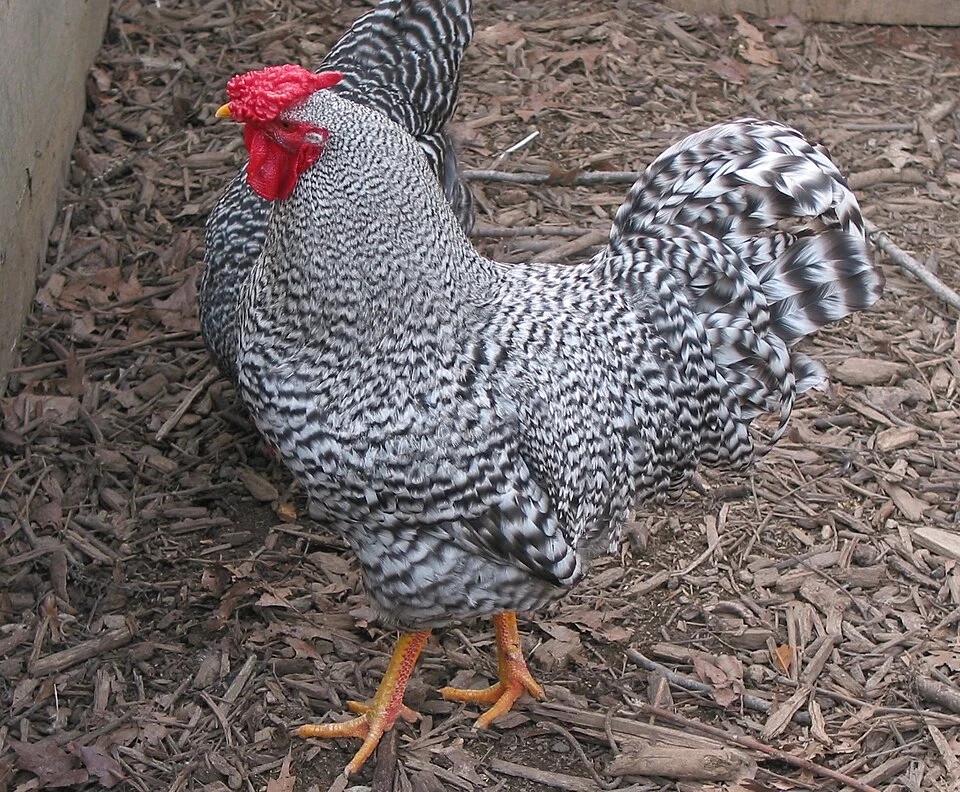
Dominique is regarded as America's oldest established chicken breed, although stories about its exact early arrival differ. It became a familiar farmyard bird before later standardized breeds gained prominence. The historical term “Dominicker” was sometimes used loosely, which can still cause identification confusion.
The modern Dominique has its own type and rose comb. It is not simply a regional name for every barred chicken. Knowing that distinction is useful when buying chicks from a mixed backyard flock or interpreting an older family description of farm poultry.
The low rose comb is the simplest first contrast with a single-combed Barred Plymouth Rock. Dominique also has a lighter, different body presentation and a distinctive tail carriage. Clean yellow legs and barred plumage help complete the identification, but color alone does not settle it.
Use the mature hen and male reference weights separately. Our recommendation is to compare the whole outline in a normal standing pose, rather than relying on a tightly cropped feather photograph. The comb should be visible in any useful identification image.
The Conservancy's laying range is 230–275, with broody and mothering ability also described. The combination can suit a working farm flock, but sitting periods should be considered when interpreting output.
The sources describe an established laying and foraging breed, but do not establish one reliable first-lay week for all current strains. The annual egg reference belongs to mature production. Record a pullet's actual age at first egg rather than using a breed total as a maturity calendar.
Our suggested replacement record combines growth, first laying, seasonal eggs and sitting behavior. That helps preserve a balanced farm bird instead of gradually selecting only for one attractive appearance or one unusually productive month.
Dominiques are generally described as calm, familiar with people and useful family birds. They still forage actively and benefit from things to investigate. The flock's source and individual behavior are worth checking, particularly if children will help with care.
Our practical recommendation is to pair regular calm handling with observation of adult males. In mixed groups, watch the quieter birds' access to resources and resting places. A reassuring breed reputation is a useful starting point, not a substitute for judging the actual chickens.
The rose comb offers a lower exposed profile than a tall single comb, while close feathering is part of the breed's farm background. Dry winter shelter and dependable water remain necessary. Our suggestion is to inspect the occupied roosting space for moisture rather than relying only on an outdoor temperature reading.
Foraging ability is a reason to provide usable activity space, not to remove enclosure protection. Build a secure dusk routine and shelter the flock from predators independently of its barred coloration. Keep summer shade and airflow in the plan for warm, humid periods.
Avoid confusing breed preservation with barred crosses
For a preservation flock, evaluate rose comb, body outline, feathering and utility together. Keeping only barred offspring from a mixed pen does not maintain Dominique identity. Our suggested records connect each mating with growth, annual laying, broodiness and hatch results.
Sitting tendencies differ among lines, so decide whether natural replacement chicks are part of the goal. Record which hens actually complete incubation and rear chicks. Maintain those observations alongside egg totals, rather than treating broodiness as uniformly present or absent across the breed.
Dominique suits someone who wants a comparatively manageable farm bird, brown eggs and an interest in American poultry history. Compare Barred Plymouth Rock for a heavier, single-combed alternative and Buckeye for another American breed with a low comb. Choose based on your handling goals, source flock and space. An old breed can be a sensible everyday chicken as well as a preservation interest.
Good for an active homestead flock. Keep lineage records when preserving the breed; barred feathers by themselves do not identify a Dominique.
These priorities apply the breed traits above to a backyard setup. Use the chick-to-coop planner for young birds and the housing guides for your coop plan.
Questions keepers ask
Is Dominique the same as Barred Rock?
No. Dominique has a rose comb and its own lighter farm-bird type. Barred Plymouth Rock usually has a single comb and a different body presentation. Shared barring is not enough to make the names interchangeable. [1][3]
What does “Dominicker” mean?
It is a historical and colloquial name that has sometimes been applied loosely to barred chickens. For a current purchase, use Dominique's actual breed traits and parentage rather than assuming the nickname guarantees a purebred bird. [1]
Will Dominique hens raise replacement chicks?
Some do, and others have little sitting tendency. The source identifies strain differences. Record successful sitting and mothering in the actual flock if natural hatching is important to your replacement plan. [1]
Does barred plumage prevent predation?
No. Less conspicuous coloration in some surroundings is not reliable protection. Secure daytime containment where needed and a predator-resistant nighttime coop remain the practical defenses. [1][8]
Reviewed October 7, 2026. Breed organizations, university references and conservation histories establish breed traits; hatchery estimates describe named supplier lines. This profile identifies the source of the figures instead of treating them as one standardized trial.
Our care recommendations and suggested records apply those traits and Extension husbandry guidance to a backyard flock. They are editorial advice, not results from a controlled breed trial. A breed reputation does not establish an individual bird's behavior, health or readiness to move outdoors.
Egg-size words are source descriptions, not measured carton grades. Adult weights refer to mature birds, not market or pullet weights. Conservation categories describe U.S. populations. Examples of varieties are not a complete list of every national registry's accepted colors.