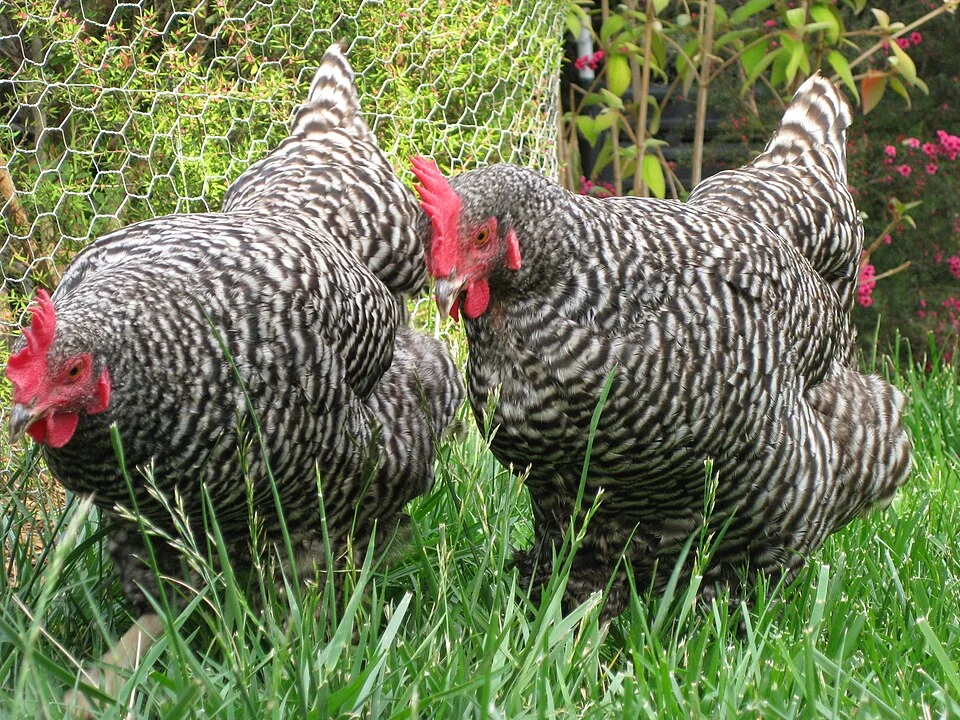
An American farm breed with utility and show branches
Barred Plymouth Rocks were exhibited in America in 1869, and the breed soon reached Britain. Other varieties followed. Its history includes both practical farm selection and exhibition breeding for precise plumage patterns. Those aims did not always favor the same body or performance. Modern keepers should therefore distinguish a breed's dual-purpose background from the particular family being offered. A carefully barred show bird and a laying-oriented hatchery Rock can both be legitimate examples without supplying identical growth or annual egg totals.
A single comb separates Barred Rock from Dominique
Plymouth Rock has a single comb, clean yellow legs and a substantial body. Barred is the familiar black-and-white patterned variety, but the breed also includes White, Buff and other presentations. Large fowl and bantams need separate size comparisons. A rose-combed barred bird suggests Dominique rather than a standard Barred Rock, although comb shape alone cannot prove ancestry in a mixed flock. Examine the whole bird and its records. Crisp plumage bars are an exhibition consideration, not an independent measure of laying ability.
The cited Barred Rock line is estimated at 200–220 eggs. Other varieties and utility or exhibition strains need not perform identically. Broodiness varies, and the breed's dual-purpose history is part of its appeal.
Follow development instead of a universal pullet deadline
The adult weights and annual laying example describe mature large fowl and a named Barred Rock line. They do not establish an identical first-egg age for every variety. Our suggested record follows hatch date, weight, first lay and later egg size, with seasonal daylight and feed changes noted. Keep youngsters on an appropriate balanced ration rather than expecting them to grow on scratch alone. Comparing birds raised together is more useful for selecting a farm family than comparing unrelated hatchery descriptions with different measurement methods.
A versatile mixed-flock bird, with individual differences
The cited Barred Rock line is described as docile with sitting potential. That can make it a useful mixed-flock candidate, but size and familiarity do not guarantee agreement at the feeder. Our recommendation is to observe resource access after introductions and when wet weather confines the flock. Give a broody hen a usable nest arrangement and keep track of laying interruptions. Judge a rooster on his actual conduct around people and hens; favorable descriptions of the breed's females do not establish the safety of every male.
Provide nests and doorways that adult Rocks can use comfortably, and enough perch space to settle without repeated displacement. A roomy run allows normal scratching and exploration when unrestricted ranging is not appropriate. In winter, protect the single comb with dry, ventilated shelter; in summer, keep water and shade within easy reach. Our practical recommendation is to inspect the narrowest point in the daily routine: coop door, feeder, shaded corner or perch entry. A well-sized enclosure can still work poorly if one dominant bird controls that bottleneck.
Barring can help sex-linked crosses, with exact parents
For pure breeding, preserve the variety, body type, soundness and utility records together. Barring also makes specific crosses useful for chick sexing. Extension describes barred Plymouth Rock females crossed with unbarred Rhode Island Red or New Hampshire males: the first-generation males have a white head spot while females lack it. The mating direction is essential. Our recommendation is to label these chicks as the actual cross and retain parent identities. Crossing the offspring together does not automatically reproduce the same dependable first-generation sexing pattern.
A familiar farm option that still deserves a specific comparison
Plymouth Rock fits many keepers seeking brown eggs, a substantial body and a familiar farm breed. Choose the variety and family that match your goal rather than assuming every Rock is the same as the Barred line in our facts. Compare Dominique for another barred bird, Delaware for a related utility background and Wyandotte for a rose-combed farm option. If natural hatching matters, include actual sitting records; if eggs matter most, examine production records alongside appearance and temperament.
A versatile backyard candidate. Distinguish its single comb from the Dominique's rose comb, and keep utility-line expectations separate from exhibition breeding goals.
These priorities apply the breed traits above to a backyard setup. Use the chick-to-coop planner for young birds and the housing guides for your coop plan.
Questions keepers ask
Is every Plymouth Rock barred?
No. Barred is one variety. White, Buff and other varieties belong to the same breed but have different plumage requirements. The Barred Rock hatchery estimate in this profile should not be presented as a measured result for every variety. [1][3]
How is a Barred Rock different from a Dominique?
A standard Plymouth Rock has a single comb; Dominique has a rose comb. Body and barring also differ. For an unrecorded mixed-flock bird, use those features as clues rather than claiming that one visual trait proves pure breeding. [3]
Can the head spot tell me the sex of every barred chick?
No universal rule applies to every barred chick. A known sex-linked cross depends on specified parents and mating direction. Purebred chick marking assessments and unrecorded crosses should not be given the certainty of a documented first-generation mating. [9][10]
Does dual purpose mean the same growth as a commercial broiler?
No. Plymouth Rock's farm history combines eggs and table use, but it is not a modern fast-growing commercial meat hybrid. Plan and record growth for the actual family. Adult weight alone is not a processing-age prediction. [1][3]
Reviewed October 7, 2026. Breed organizations, university references and conservation histories establish breed traits; hatchery estimates describe named supplier lines. This profile identifies the source of the figures instead of treating them as one standardized trial.
Our care recommendations and suggested records apply those traits and Extension husbandry guidance to a backyard flock. They are editorial advice, not results from a controlled breed trial. A breed reputation does not establish an individual bird's behavior, health or readiness to move outdoors.
Egg-size words are source descriptions, not measured carton grades. Adult weights refer to mature birds, not market or pullet weights. Conservation categories describe U.S. populations. Examples of varieties are not a complete list of every national registry's accepted colors.