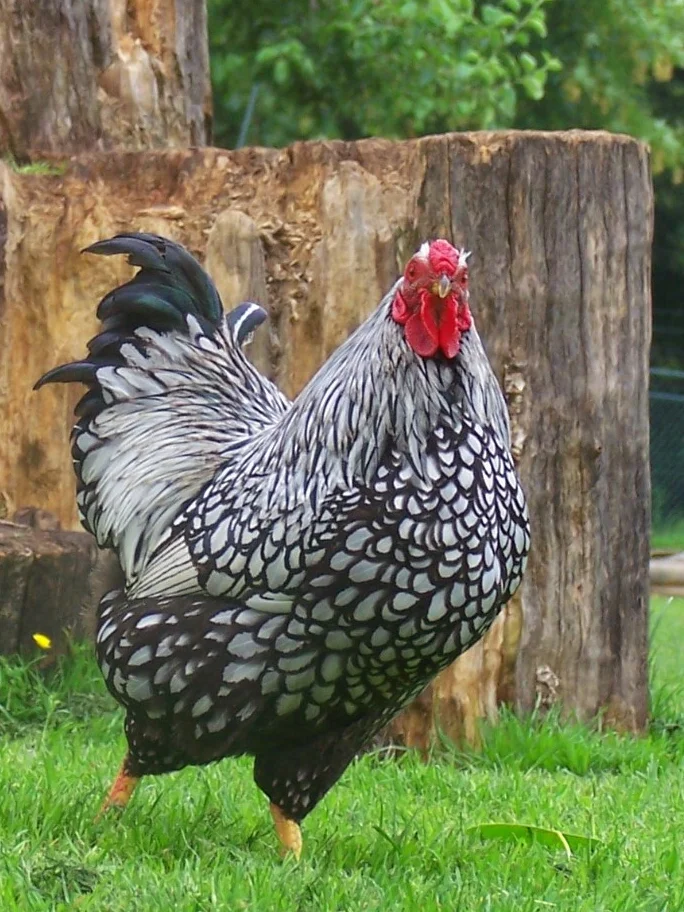
An American breed with separately developed varieties
Silver Laced was the first Wyandotte variety, standardized in America in 1883. Other varieties developed through different breed combinations and later selection. That history explains the wide family of colors and patterns without making every variety's performance interchangeable. British breeders contributed substantially to pattern refinement after the breed's arrival. Today's keeper should identify the actual variety and selection goal: an exhibition family bred for exact lacing and a farm family bred for useful laying can represent different priorities within the same recognizable breed.
Wyandotte combines a broad, rounded outline with a rose comb and clean yellow legs. Silver Laced and Gold Laced are familiar, but White, Columbian and other varieties have their own identities. Large fowl and bantams require different size comparisons. Laced is a plumage description, not a separate breed, and a rose comb alone cannot establish pure ancestry. Assess body structure and the applicable variety standard together. The annual laying and egg-size examples here specifically describe the cited Black Laced Silver hatchery line.
The 180–260 estimate and medium egg size describe Cackle's Silver Laced line. Other varieties can differ. Its rose comb and rounded body make it a useful cold-oriented candidate, while sitting tendencies vary.
Plumage and body shape can make a young Wyandotte look mature before its development is complete. Our suggested record follows hatch date, actual weight, feather coverage and first lay, with the family and season noted. Provide a balanced age-appropriate ration rather than using extra treats to chase a larger silhouette. The mature weight reference is not a pullet target or an outdoor-ready deadline. Compare youngsters raised under the same conditions if you want to identify a family with useful growth and later laying in your setup.
Usually manageable, with a pecking order to observe
The cited line is described as relatively docile with sitting potential. Individual birds can still be assertive at a feeder or displaced by other companions. Our recommendation is to observe actual access after introductions and when the flock is confined by weather. Record broodiness separately from general friendliness: a calm hen may never sit, while another may regularly interrupt laying. Judge rooster behavior on its own record. A broad favorable breed description should not conceal repeated exclusion, injury or uncomfortable handling in the flock you actually have.
Use the cold-oriented shape without neglecting summer care
The rose comb and substantial body make Wyandotte a useful cooler-climate candidate. They do not remove the need for dry winter bedding, ventilation and reliable water. Provide adult-sized nests and roost access, with room for heavier birds to land comfortably. In summer, a well-feathered bird still needs shade and airflow. Our practical recommendation is to check both the coop and the shaded run when temperatures peak. A compact enclosure can concentrate heat and competition even when its rounded occupants are often described as hardy.
Keep color inheritance and crossbred sexing separate
Pure breeding requires the relevant variety standard, sound structure and recorded family performance. Ordinary Blue plumage in appropriate laced-color families can produce Black, Blue and Splash expressions; it is not a universal rule for every Wyandotte variety. Separately, Extension describes New Hampshire males crossed with silver Wyandotte females as a sex-linked Cinnamon Queen example. Our recommendation is to label such offspring as the cross and retain the exact parents. Neither blue-color segregation nor a first-generation sexing pattern should be used to blur pure-variety records.
Wyandotte can suit a keeper who wants brown eggs, a substantial farm body and attractive patterns, particularly with a thoughtful cooler-weather setup. Compare the actual variety and family if egg output is crucial. Plymouth Rock offers a single-combed farm comparison, Chantecler another cold-oriented history and Barnevelder a different lacing-and-egg tradition. Choose on soundness, behavior and housing fit alongside the feather pattern. Exact lacing is an enjoyable selection goal, but it does not independently establish fertility, annual production or compatibility with every flockmate.
A cold-oriented farm and ornamental candidate. Allow summer shade for a well-feathered bird, and compare production within a named variety rather than assuming every laced flock performs alike.
These priorities apply the breed traits above to a backyard setup. Use the chick-to-coop planner for young birds and the housing guides for your coop plan.
Questions keepers ask
Are all Wyandottes laced?
No. The breed includes laced and other varieties. Their plumage requirements and selection histories differ. The Silver Laced hatchery example used here is a specific line, rather than a measured production result for every color. [1][3]
Does a rose comb mean frostbite is impossible?
No. It reduces exposed comb profile compared with a tall single comb, while shelter, moisture control and daily care still matter. Maintain dry ventilation and water access, and observe the birds rather than relying on a categorical cold-proof label. [5][6]
Will Blue Laced birds always hatch the same color?
Ordinary Blue feathering can produce Black, Blue and Splash expressions in suitable pairings. Keep exact parent and variety records. Do not apply that inheritance pattern to every laced variety or assume an unexpected shade alone establishes crossbreeding. [9]
Is a Cinnamon Queen a pure Wyandotte?
No. Extension describes a New Hampshire-male and silver-Wyandotte-female sex-linked cross. Its first-generation identity differs from either pure parent breed. Label crossbred chicks accurately and do not assume their later offspring repeat the initial chick-sexing pattern. [10]
Reviewed October 7, 2026. Breed organizations, university references and conservation histories establish breed traits; hatchery estimates describe named supplier lines. This profile identifies the source of the figures instead of treating them as one standardized trial.
Our care recommendations and suggested records apply those traits and Extension husbandry guidance to a backyard flock. They are editorial advice, not results from a controlled breed trial. A breed reputation does not establish an individual bird's behavior, health or readiness to move outdoors.
Egg-size words are source descriptions, not measured carton grades. Adult weights refer to mature birds, not market or pullet weights. Conservation categories describe U.S. populations. Examples of varieties are not a complete list of every national registry's accepted colors.