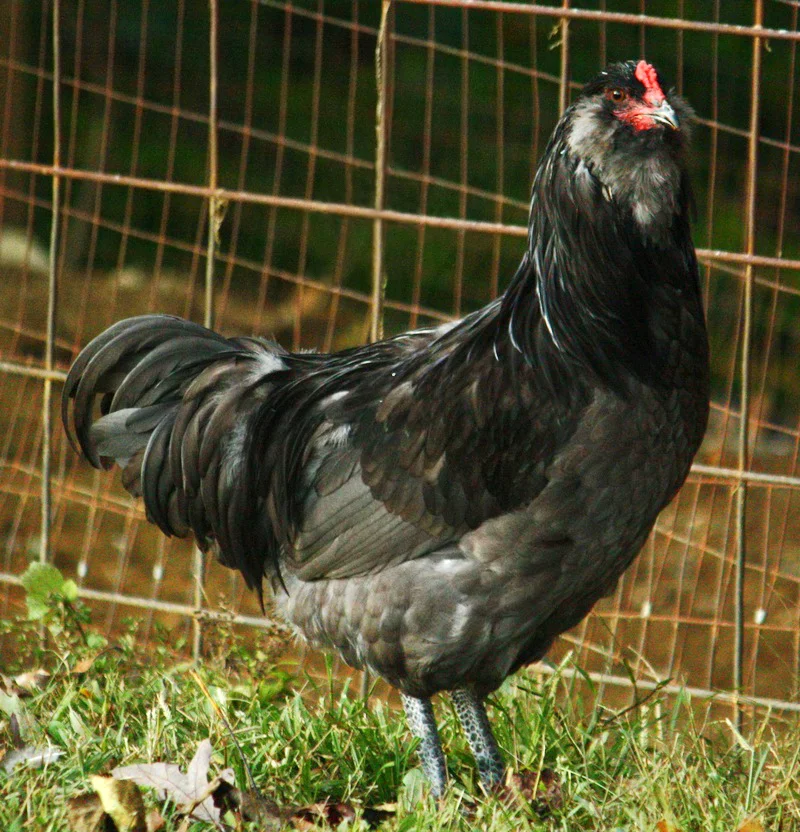
Ameraucana is an American standardized breed, developed from blue-egg poultry rather than identified by egg color alone. Breeders coordinated their efforts in the late 1970s, initially working with bantams. Bantam recognition preceded the American Poultry Association's acceptance of both size forms in 1984. That history explains why a mixed blue-egg flock and a flock of a named Ameraucana variety are different purchases.
The spelling matters when shopping: “Americana” is frequently a sales label for mixed colored-egg chickens. It does not establish the parentage or standard of an Ameraucana.
Look for a pea comb, a tail, beard and muffs, slate shanks, and the appropriate plumage pattern. Muffs cover the cheeks; they are different from an Araucana's projecting ear tufts. The club's standard excerpts separate mature large-fowl weights from bantam weights: bantam adults are approximately 26 oz for hens and 30 oz for males, rather than the pounds used in the fact grid.
The original eight recognized varieties were black, blue, blue wheaten, brown red, buff, silver, wheaten and white. The club also documents subsequent self-blue and splash recognition, with dates differing by size form and registry.
The numerical example is Cackle's Black Ameraucana line. Other recognized varieties need not match that output or the same temperament. Breed identity depends on the standard, not merely a blue shell.
Treat the first egg as a milestone to record, rather than a date promised by the breed name. A pullet's hatch date, season and individual development matter. The Black Ameraucana production example above describes a supplier's line; it does not establish a universal first-lay age for every variety.
Start a simple record with the hatch date, first egg, shell color and later egg size. That will distinguish a genuinely late-maturing bird from one whose age was only estimated when purchased.
Ameraucanas can be active, alert birds, and the cited Black line is described as somewhat flighty. A beard and an appealing face do not guarantee a lap chicken. For a pet flock, judge the actual birds' response to a calm approach and ordinary handling instead of choosing by a photograph.
Our practical recommendation is to offer a predictable daily routine and enough room for a bird to move away without being chased. In a mixed flock, observe access to feed and water as well as the visible pecking order.
The pea comb has less exposed surface than a tall single comb, but “cold hardy” still calls for dry shelter. Check the beard and muffs after wet weather and place the waterer where birds can drink without repeatedly soaking their faces. These are practical applications of the breed's facial feathering.
For an active flock, plan secure daytime space and a dependable dusk routine. Shade, airflow and fresh water remain necessary in summer. Choose a coop by usable floor and roost space, not by the number of colorful birds that fit in a sales photograph.
Begin with birds of an identified variety and work toward the whole breed type. Blue eggs, a pea comb and a beard together still do not establish a correct variety. The breed club lists compatible blue/black/splash and wheaten/blue-wheaten/splash-wheaten groupings; haphazardly mixing other colors can create offspring that no longer fit a variety description.
Ordinary blue and self-blue are different breeding projects. Keep parentage, color, shell color and hatch results in your records, and label mixed offspring honestly. A handsome backyard cross can be a wonderful chicken without being sold as a standardized Ameraucana.
Choose Ameraucana if you want blue eggs and enjoy learning the difference between a breed and a colored-egg cross. It also suits someone interested in a named variety or exhibition. Choose by the source flock's behavior if frequent handling is your main goal. If you simply want a varied egg basket, compare Easter Eggers too; they may fit that goal without the same standard-breeding requirements.
Blue eggs alone cannot identify this breed. Compare the birds' type and variety with a breed standard, and keep a mixed blue-egg layer's parentage separate from a purebred claim.
These priorities apply the breed traits above to a backyard setup. Use the chick-to-coop planner for young birds and the housing guides for your coop plan.
Questions keepers ask
Can an Easter Egger become an Ameraucana because it lays blue eggs?
No. Egg color is only one breed trait. Body type, facial feathering, comb, shanks and variety also matter. A blue egg identifies a useful shell-color trait, not a pedigree or a show classification. [1][4]
Are beard feathers the same as Araucana tufts?
No. Ameraucana muffs and beards are facial feathering. Araucana ear tufts project from skin appendages near the ears. The distinction is important for identification and for understanding Araucana breeding risks. [1][4]
Will two blue Ameraucanas produce only blue chicks?
Not with the ordinary blue dilution pattern. Blue, black and splash can occur in compatible matings. That is different from self-blue. Keep the variety grouping and parent colors in your records rather than calling every pale chick the same color. [5][9]
Do I need a rooster to get blue eggs?
No. A hen can lay her normal shell color without a rooster. A rooster is needed for fertile hatching eggs, and his genetic contribution matters to the traits of the resulting chicks, not to fertilizing a table egg after it is laid. [6]
Reviewed October 7, 2026. Breed organizations, university references and conservation histories establish breed traits; hatchery estimates describe named supplier lines. This profile identifies the source of the figures instead of treating them as one standardized trial.
Our care recommendations and suggested records apply those traits and Extension husbandry guidance to a backyard flock. They are editorial advice, not results from a controlled breed trial. A breed reputation does not establish an individual bird's behavior, health or readiness to move outdoors.
Egg-size words are source descriptions, not measured carton grades. Adult weights refer to mature birds, not market or pullet weights. Conservation categories describe U.S. populations. Examples of varieties are not a complete list of every national registry's accepted colors.