McMurray lists maturity at 22 weeks; first lay is not a fixed deadline [3]
Origins & breed identity
Developed through Cambridge genetics work by R. C. Punnett and Michael Pease. Leghorn-derived Legbars and Araucana ancestry contributed the cream color, crest and blue eggs.
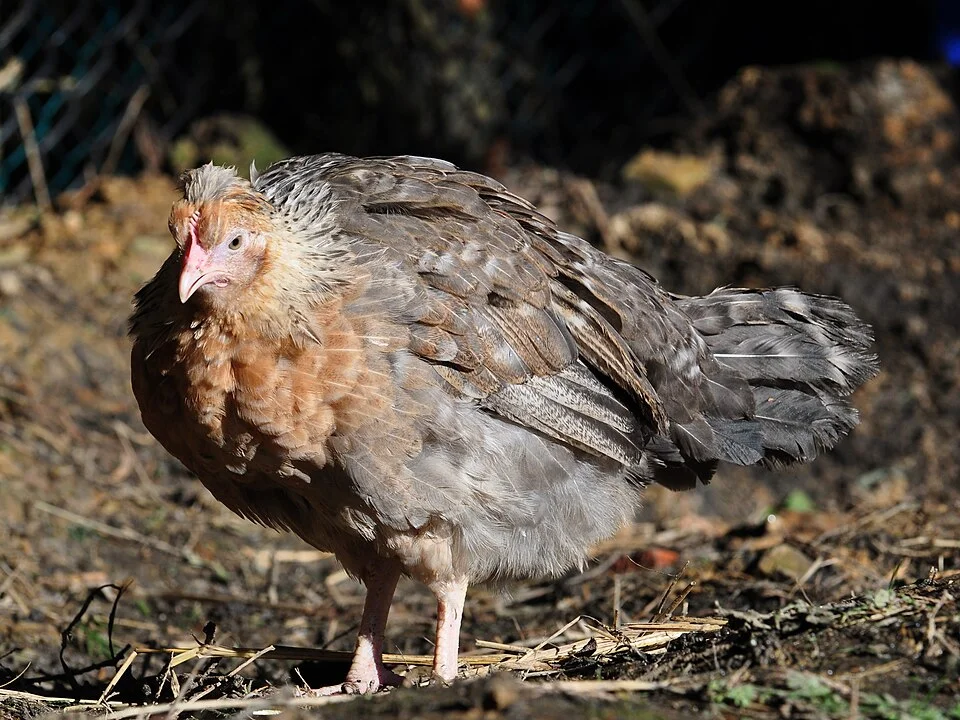
A single comb, small crest, yellow clean legs and barred plumage. Hens typically have a salmon breast and gray body; roosters have more conspicuous barred hackles, saddle and tail feathers.
Cackle estimates 180–200 medium-to-large eggs. McMurray lists medium eggs and maturity at 22 weeks. These are supplier references, not guarantees of a first egg on a particular day or identical output in every flock.
In correctly bred Legbars, male and female chicks have different down patterns at hatch. Females generally show clearer dark stripes, including a well-defined eye stripe; males tend to have paler, less sharply defined markings. The pattern needs to be read as a whole rather than relying on one isolated spot.
Autosexing describes a breed trait that can be maintained over generations. It differs from a sex-linked hybrid produced by a particular parental cross. Crossbreeding or selection that weakens the markings can make an individual chick difficult to classify. Cackle reports 85–90% sexing accuracy for its listed stock; that is its estimate, not a universal success rate.
Araucana ancestry introduced the blue-egg trait during the breed’s development. Genetic research identifies an insertion affecting regulation of SLCO1B3 in blue-egg chickens and includes Cream Legbar samples. This is an inherited shell-pigmentation trait, not a diet trick.
Supplier references describe blue through aqua or blue-green shades. Shade does not establish breed identity, and a blue-egg cross should not automatically be sold as Cream Legbar. If breeding for shell color, keep the pedigree and the flock’s actual egg records together.
McMurray lists maturity at 22 weeks, hens at 5.5 lb and roosters at 7.5 lb. Cackle lists hens at 5 lb and roosters at 7.5 lb. The quick facts therefore show the two hen examples as a range; they are not a universal minimum and maximum.
Use 22 weeks as one supplier’s planning reference, not a first-egg appointment. McMurray describes laying qualitatively as fair, while Cackle gives 180–200 eggs annually for its stock. Comparing these as though both were measured in the same flock would hide the difference in source and method.
Cream Legbar has a particular color and body type; not every crested Legbar-like bird meets the same standard. British breed history distinguishes Cream from Gold and Silver Legbars. Cackle currently describes its offering as including Cream and Golden Crele stock, so the product label requires a closer read if your goal is breeding to a Cream standard.
For a backyard laying flock, egg production and sound birds may be your priority. For an exhibition or preservation flock, use the applicable written standard and records for the actual breeding group. Decide which goal you have before treating a hatchery assortment as a standard-breeding project.
Cream Legbar is described as active and alert; individual handling response still varies. Our recommendation is to establish a dependable feeding and dusk routine in a secure space rather than expect every bird to enjoy being carried. Watch introductions and access to resources in a mixed flock. A small crest is less imposing than some ornamental breeds' head feathering, but it should still leave the bird able to see food, companions and hazards. Judge each rooster by his own behavior, separately from the hens' laying reputation.
Plan a roomy, secure setup for an active bird, with suitable adult nests and accessible roosts. Provide dry, ventilated winter shelter and observe the single comb during freezing weather. Summer shade, airflow and dependable water remain necessary. Our practical recommendation is to inspect the crest and the route between resting, feeding and outdoor areas after rain. A covered part of the run can preserve activity space when exposed ground is wet. Neither blue eggs nor useful chick markings make the bird exempt from ordinary weather and predator protection.
For blue eggs and an interest in correctly maintained identity
Cream Legbar suits a keeper who wants blue-toned eggs and appreciates the difference between maintained autosexing traits and a loosely named colored-egg cross. It also rewards careful records if breeding or exhibition matters. Compare Ameraucana for another standardized blue-egg option and Easter Egger for a varied mixed-ancestry category. Choose the actual source family, housing fit and temperament rather than a crest alone. If day-old sex identification is crucial, establish the stock's documented accuracy instead of treating the breed name as an absolute guarantee.
An active blue-egg layer for a secure, roomy setup. Chick markings are useful for sexing only when the relevant breeding traits are maintained; a crest or a blue egg alone is not proof of a correctly bred Cream Legbar.
These priorities apply the breed traits above to a backyard setup. Use the chick-to-coop planner for young birds and the housing guides for your coop plan.
Questions keepers ask
Is it an Easter Egger with a crest?
No. Cream Legbar is an established autosexing breed with defined type. Easter Egger is a mixed colored-egg category. A crest and a blue egg cannot by themselves establish Legbar ancestry. [1][4]
Will every chick be easy to sex?
No. The trait is useful, but markings and accuracy depend on breeding and the observer. Unclear chicks should stay unconfirmed rather than be assigned a sex with certainty. The cited supplier’s 85–90% estimate leaves room for mistakes. [2][4]
Is it a good natural broody?
It is mainly a laying choice. McMurray rates broodiness as not very likely, while other supplier descriptions allow variation. Build a hatching plan around a confirmed broody or incubation rather than assuming every Legbar will sit. [2][3]
Can it cope with a North Carolina summer or winter?
McMurray rates both heat and cold suitability favorably. For this active, single-combed bird, the practical priorities are shaded, airy space in summer and dry shelter with attention to the exposed comb in freezing conditions. The crest is small, but it still needs to stay dry. [3]
Reviewed October 7, 2026. Breed organizations, university references and conservation histories establish breed traits; hatchery estimates describe named supplier lines. This profile identifies the source of the figures instead of treating them as one standardized trial.
Our care recommendations and suggested records apply those traits and Extension husbandry guidance to a backyard flock. They are editorial advice, not results from a controlled breed trial. A breed reputation does not establish an individual bird's behavior, health or readiness to move outdoors.
Egg-size words are source descriptions, not measured carton grades. Adult weights refer to mature birds, not market or pullet weights. Conservation categories describe U.S. populations. Examples of varieties are not a complete list of every national registry's accepted colors.