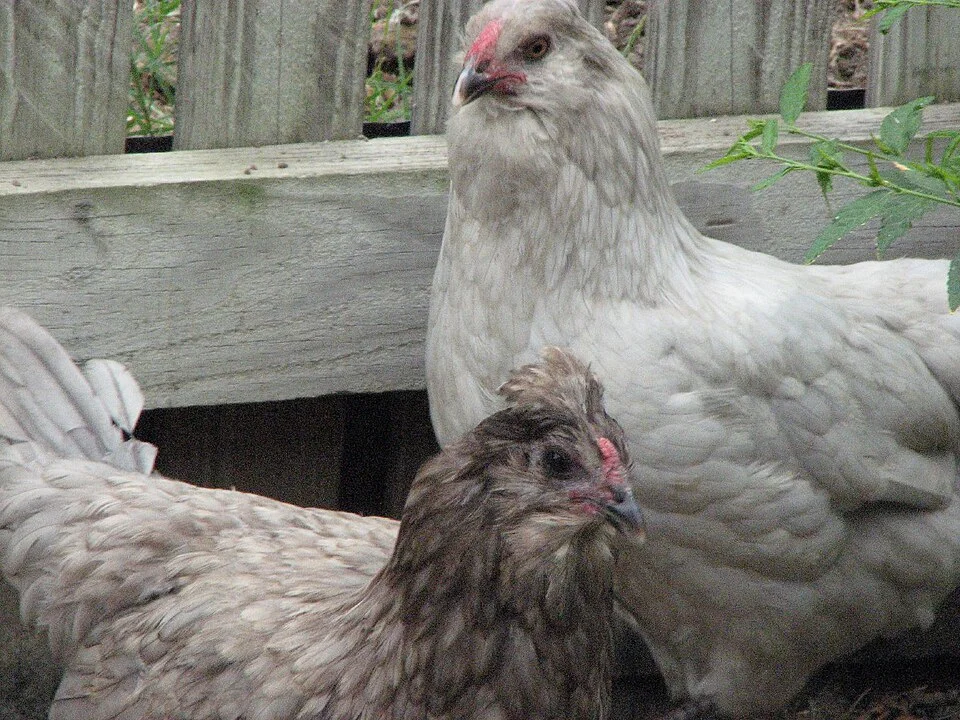
A colored-egg category, not one standardized breed
Easter Egger describes colored-egg chickens that do not meet a particular standardized breed description. It is a useful backyard category, but does not establish one fixed ancestry, body type or variety. Hatcheries may maintain their own consistent source flock while another seller uses a different cross.
That is why Ameraucana, Araucana and Easter Egger should not be treated as interchangeable names. An Easter Egger can be a terrific laying or companion bird without needing to be promoted as a standardized breed. Accurate labeling makes the purchase more informative, not less appealing.
Many Easter Eggers have beards, muffs and pea combs, but those features are not universal category requirements. Tails, leg colors, body sizes and feather patterns can differ. A mixed set of attractive chicks does not provide the same predictable adult comparison as a named variety of a standardized breed.
The adult size and laying example above are identified supplier-line facts. They are not a category-wide standard. Our recommendation is to compare the seller's mature flock with its chicks rather than assume a generic gallery picture describes every Easter Egger purchase.
Cackle gives 200–280 for one Easter Egger population. That can illustrate a supplier's birds, but it is not a breed-wide statistic. Shell color, broodiness, mature size and handling behavior depend on the cross.
A broad sales category cannot establish one universal age at first egg. The pullet's actual ancestry, development and season matter. Our recommended record includes hatch date, first laying, shell color and later egg size.
This is particularly useful when chicks arrive in an assortment. Keep the bird's identity connected to its own egg rather than assuming every tinted egg in a mixed nest came from an Easter Egger. The source line's annual estimate is a planning example, not a deadline for each pullet.
Temperament can differ with the source flock and individual. A familiar-looking beard or soft feather color does not predict how readily a bird will be handled. For a companion flock, observe calm approach, resource access and response to ordinary contact.
Our practical suggestion is to choose a source that describes its actual birds and to develop a predictable daily routine. Compare adult size when mixing birds from different Easter Egger sources. Sharing a category label does not mean two lines will have the same confidence or handling preferences.
Plan the coop around mature size, comb form, facial feathering and activity rather than the broad label. A pea-combed, bearded bird and a clean-faced single-combed cross may have different inspection priorities even when sold in the same egg-color category.
Our recommended checks include whether the beard repeatedly gets wet at the drinker, whether every hen can reach feed, and whether the enclosure suits the birds' flight and activity. Seasonal shelter, shade and water still matter. Use the source flock's traits to make a practical housing plan.
Breeding Easter Eggers can produce a varied and enjoyable flock, but offspring do not automatically reproduce the parents' appearance or shell color. A male does not lay an egg, so his shell-color contribution has to be understood through parentage and offspring rather than observation of his own output.
Our suggested records connect sire and dam group, chick identity and eventual hen eggs. Keep a colorful cross project separate from claims of purebred Ameraucana or Araucana. Variety in the egg basket is a legitimate goal; it does not need a pedigree claim to make it worthwhile.
Easter Egger suits someone who wants an interesting egg basket and is comfortable with differences in appearance and performance. It is less useful when a precise exhibition variety or tightly predictable breeding result is the main goal. Compare the seller's actual line rather than a category average. If standard-breeding interests you, explore Ameraucana, Araucana and Cream Legbar individually.
Expect variation between suppliers and crosses. One hen normally lays one shell-color family; a multicolored basket comes from different hens, not a hen rotating through every color.
These priorities apply the breed traits above to a backyard setup. Use the chick-to-coop planner for young birds and the housing guides for your coop plan.
Questions keepers ask
Will one hen lay blue, green and pink eggs?
Do not interpret a mixed flock's egg-color range as a daily palette for one hen. Individual hens have their own usual shell-color presentation. Keep bird-to-egg records if you want to know which hen contributes each color. [1][2]
Does a beard make an Easter Egger a pure Ameraucana?
No. Beard and muffs are only part of Ameraucana identification. Type, comb, shanks, variety and breeding consistency matter too. An attractive mixed bird does not become purebred because it shares one feature. [1]
Can I use the published laying estimate for every Easter Egger?
No. The example is for a named supplier line. The category has no single production standard. Compare that line with its own records and keep a defined laying year for your actual flock. [2]
Is an unrecognized Ameraucana variety always an Easter Egger?
Not necessarily. The Alliance distinguishes a true-breeding variety that meets breed type from a mixed bird that does not. Registry recognition, variety consistency and overall breed identity are related but separate questions. [1]
Reviewed October 7, 2026. Breed organizations, university references and conservation histories establish breed traits; hatchery estimates describe named supplier lines. This profile identifies the source of the figures instead of treating them as one standardized trial.
Our care recommendations and suggested records apply those traits and Extension husbandry guidance to a backyard flock. They are editorial advice, not results from a controlled breed trial. A breed reputation does not establish an individual bird's behavior, health or readiness to move outdoors.
Egg-size words are source descriptions, not measured carton grades. Adult weights refer to mature birds, not market or pullet weights. Conservation categories describe U.S. populations. Examples of varieties are not a complete list of every national registry's accepted colors.