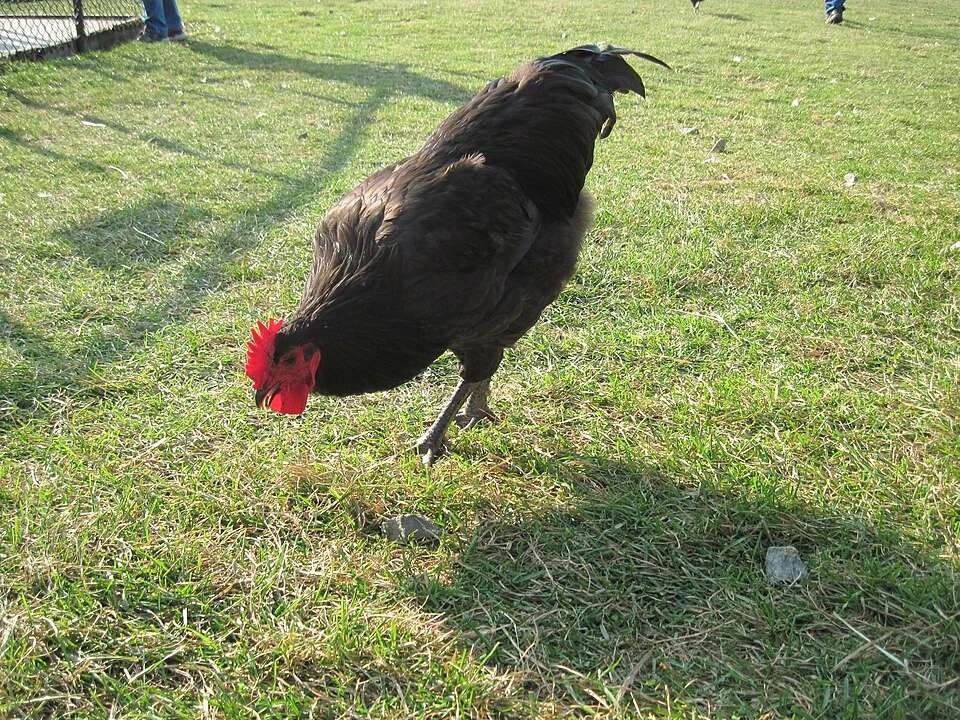
Multiple planned crosses; U.S. hatchery examples · Hybrid cross category
Black Sex-Link
Dark-feathered brown-egg layers with first-generation chick markings. Black Star belongs here, with its named lines distinguished from a single universal cross.
Egg color
Light brown to brown
Annual eggs
200–280
Adult size
Cackle: hen 6–7 lb; rooster 8–9 lb
Broodiness
Non-setter / unlikely in the cited suppliers
Have Black Sex-Link in your flock?Your everyday experience could help someone choose their next chickens.
A cross category; cited commercial examples are large fowl [1]
Development
McMurray Black Star Q&A gives about 22–24 weeks to first laying; this does not establish every black sex-link's maturity. [2]
A useful category beyond one familiar trade name
Black Sex-Link is a planned-cross category. Extension describes a barred hen crossed with a non-barred male; a common example uses Barred Plymouth Rock hens and Rhode Island Red or New Hampshire males. The documented mating is what gives the purchased generation its useful identifying markings.
Black Star is McMurray's named stock within this commercial context. It currently lists two proprietary lines and does not offer customers a choice between them. Preserve those source details instead of assuming that every bird sold under a black sex-link name has one identical pedigree.
Cackle's stated example is Rhode Island Red males over Barred Rock females, with adult ranges of 6–7 lb for hens and 8–9 lb for roosters. For documented first-generation stock, the chick head marking is part of the sex-identification method; it is not a universal rule for every dark chick in a mixed hatch.
McMurray distinguishes a predominantly black, red-chested line from a barred, grey-chested line. Its broader description also mentions gold or silver breast and neck feathering. Those variants should stay identified as supplier stock, not be invented as separate standardized breeds.
Cackle estimates 200–280 large light-brown eggs annually and calls its stock non-setting. McMurray Black Star Q&A instead says four or more eggs weekly in good conditions; this weekly description is not a measured year-round average. Its two proprietary lines are a separate supplier example. Neither name guarantees an egg every day or one identical genotype across hatcheries.
McMurray's Black Star Q&A gives approximately 22–24 weeks to first laying. That is a reference for its stock, not a category-wide deadline. Keep the flock's actual hatch date and first-egg observations alongside it.
Early records should distinguish the first egg from later sustained output. Where several pullets share nests, use a flock-level record if the individual cannot be identified. Note age uncertainty when birds arrive without a reliable hatch date. This prevents a genuine delay from being confused with an estimate that was wrong at purchase.
The cited supplier examples emphasize useful laying stock and describe sitting as unlikely or non-setting. Neither reference means every hen is incapable of broodiness. Their handling descriptions also need to be applied to observed individuals rather than the entire category.
For a mixed flock, watch how birds enter shared spaces and access resources. Make the arrangement easy to alter if quieter hens repeatedly hang back. Review males independently and retain a clear daily routine. A lively bird can be enjoyable company without necessarily being the one that volunteers to sit calmly on your lap.
Our recommendation is a secure, roomy arrangement with a dry sleeping area, reachable nests and dependable water. Include shaded movement space for summer and exposed-comb checks during severe winter weather. Use the adult size of the actual line when planning entrances and nest access.
Build the routine around tasks a sitter can repeat: count birds, refresh water, follow feed instructions, collect eggs and secure the sleeping space. Keep the record of changes beside those instructions. A productive flock benefits from this ordinary consistency; the hybrid label does not make the daily checks optional.
A head spot is meaningful only in the correct mating
The chick pattern is connected to the intended parent cross. It should not be applied to every black-feathered breed, an undocumented mixed hatch or descendants of two purchased hybrids. Identify the cross before relying on the marking.
For home breeding, retain both parents' identities and describe the offspring as the resulting cross. Do not assign Black Star's proprietary name to an unrelated mating just because the chicks look similar. If you want a flock that maintains a breed identity over generations, compare the Plymouth Rock and Rhode Island Red profiles and their breeding standards as a separate project.
Black sex-link stock is worth exploring for a brown-egg flock when the actual supplier's behavior and adult size suit your setup. Cackle's 200–280 annual estimate is a named-line example. McMurray's Black Star is another source with its own line descriptions and maturity guidance.
Compare Red Sex-Link for the wider production-cross picture, then use named hybrid profiles to narrow the purchase. For exhibition or conservation, investigate the parent breeds independently. A black-feathered hybrid can be a valued everyday layer without representing a standard-bred Plymouth Rock or Rhode Island Red conservation population.
Document the line and the chick-marking method rather than identifying a hybrid from a black adult feather coat. Plan introductions by individual behavior and keep breeding expectations separate from a purchased production flock.
These priorities apply the breed traits above to a backyard setup. Use the chick-to-coop planner for young birds and the housing guides for your coop plan.
Questions keepers ask
Is every black chicken a black sex-link?
No. Adult black plumage does not establish a planned cross or its chick-sexing method. [3]
Does McMurray sell just one Black Star color?
It describes two proprietary lines and does not accept requests for a specific line or color. Keep that difference in mind when comparing photographs. [2]
Can I use a head spot to sex any mixed hatch?
Use the visual key only for the documented mating it describes. The same marking can have another meaning in other stock. [3]
Are Black Stars and Barred Rocks interchangeable?
Black Star is hybrid stock. Barred Plymouth Rock is a variety of the Plymouth Rock breed; shared barring does not make their identities identical. [2]
Reviewed October 8, 2026. Breed organizations, university references and conservation histories establish breed traits; hatchery estimates describe named supplier lines. This profile identifies the source of the figures instead of treating them as one standardized trial.
Our care recommendations and suggested records apply those traits and Extension husbandry guidance to a backyard flock. They are editorial advice, not results from a controlled breed trial. A breed reputation does not establish an individual bird's behavior, health or readiness to move outdoors.
Egg-size words are source descriptions, not measured carton grades. Adult weights refer to mature birds, not market or pullet weights. Conservation categories describe U.S. populations. Examples of varieties are not a complete list of every national registry's accepted colors.