U.S. conservation population, 2026 list. This is not a worldwide extinction-risk rating.
A true bantam with its own identity
Booted Bantam is an established breed, not simply a small chicken with feathered legs. It has no corresponding large-fowl breed. European breeding history spans several countries and older Asian feather-footed ancestry; reducing that history to one modern national name misses the connections between those populations.
The European name Sabelpoot also appears in breed literature. In American keeping, the important distinction is from the Belgian Bearded d’Uccle. Booted Bantams are unbearded. A shared Mille Fleur pattern does not make the two breeds interchangeable, and neither name should be inferred from feathered feet alone.
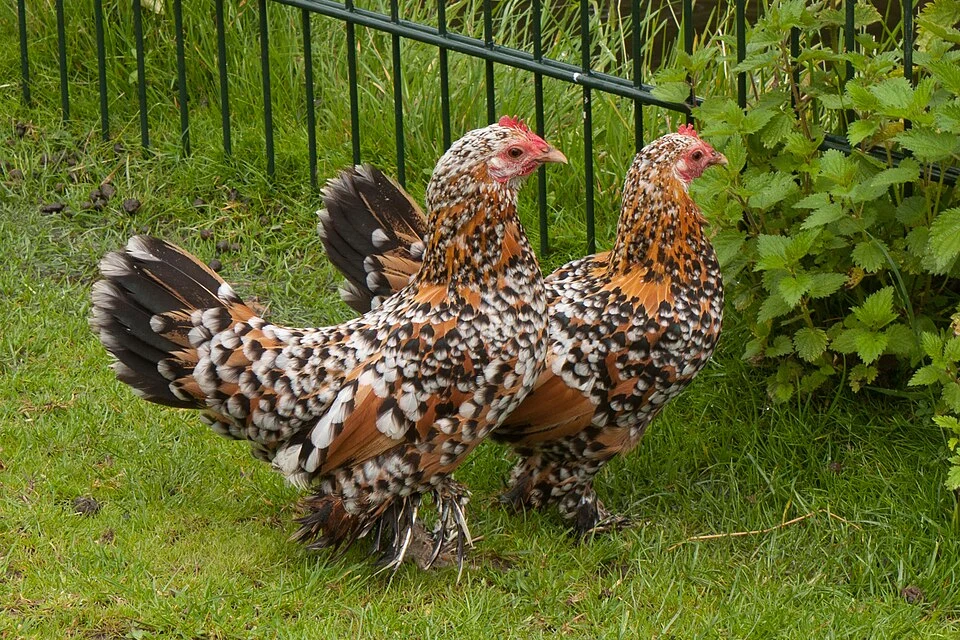
The U.S. adult reference is 26 ounces for a rooster and 22 ounces for a hen. Expect a single comb, clean facial feathering without a beard, heavily feathered feet and the projecting thigh feathers called vulture hocks. Those details matter more for identification than the brightness of a photograph.
White, Black, Mille Fleur, Porcelain and Self Blue occur in the American recognized-variety reference. Other national organizations may recognize additional colors. Record both the variety and the applicable standard when showing or breeding. A color accepted by one organization does not automatically become an accepted variety everywhere.
Booted Bantams produce small pale-shelled eggs. The cited primary breed references focus on identity and husbandry rather than an annual production trial or one documented first-lay age. Their chief role here is ornamental and conservation keeping; record the actual family's laying and sitting behavior.
The British club notes that youngsters can initially look tall and narrow before becoming compact, stocky and fully feathered. An awkward young bird is therefore not necessarily a poor adult prospect. Keep dated photographs from similar angles if you are evaluating a family’s development.
The cited breed references do not supply one dependable first-egg week or annual production count. They do identify small pale eggs. Record hatch date, first egg and subsequent laying in your own flock instead of importing a production-hybrid timetable. Finished feathering, sexual maturity and first laying are separate milestones.
These bantams are alert, and their lighter scratching reputation can appeal to people with carefully tended runs. That does not establish that they will leave every plant alone, tolerate every flockmate or escape a predator. Watch what your actual birds do with the space and resources provided.
For a mixed flock, make the smallest birds’ routes easy to inspect. Check whether a bantam can reach feed and water without being repeatedly displaced. Personality varies with the bird and handling history; tiny dimensions are not a promise of a cuddly pet. A keeper should be able to catch and examine a bird without chasing it around obstacles.
Foot feathering is central to the housing plan. Wet, dirty or abrasive ground can spoil the boots and make inspection difficult. Prioritize drainage, dry resting places, clear walking routes and surfaces that do not continually snag the feathers. Check beneath the plumage rather than judging foot condition from its attractive outline.
Scale entrances and access to the actual bantams. Provide reachable resting places and avoid forcing a heavily feathered bird through narrow gaps. During cold weather, protect the small birds from damp exposure while retaining ventilation. The run should be secure enough that its protection does not depend on a bantam being a fast or powerful escape artist.
For conservation breeding, keep the family identity, parent records and unbearded type together. Crosses with d’Uccle, Cochin or other feather-footed bantams may be attractive, but attractive offspring are not automatically Booted Bantams. Label a cross plainly if that is the project you choose.
Evaluate feet, sound movement and mature proportions alongside the color pattern. Record fertility, hatch outcomes and the development of each family. The 2026 U.S. Critical designation concerns the Conservancy’s conservation population assessment; it does not mean every bird carrying the breed name has a documented conservation pedigree. Pedigree and breeding practices determine what your flock contributes.
This breed is worth considering when you enjoy bantams, detailed feather patterns and the work of keeping feathered feet in good condition. It is a less practical choice if the only available run remains muddy or if the main goal is a predictable quantity of large eggs.
Compare it with d’Uccle for the beard and body differences, and with Nankin or Sebright for other true-bantam projects. Plan your housing before choosing a color. The boots are wonderful; cleaning around them becomes part of your ordinary routine, not an occasional show-day task.
Build the run around the boots: keep the surface dry, routes clear and perches accessible. Allow time for young birds' proportions to settle before judging their adult type.
These priorities apply the breed traits above to a backyard setup. Use the chick-to-coop planner for young birds and the housing guides for your coop plan.
Questions keepers ask
Is Booted Bantam the same as Belgian Bearded d’Uccle?
No. Booted Bantam is unbearded; d’Uccle has a beard. Similar feathered feet or a shared color pattern do not erase their separate breed identities. [1][2]
Is there a large Booted Bantam breed?
No corresponding large-fowl breed is described. This is a true bantam, rather than a miniature version of a large-fowl breed. [1][2]
Does Mille Fleur mean a separate breed?
Here it is a plumage variety within the breed. Search for the pattern, then check the breed and national standard attached to the bird. [2][4]
Why is there no annual egg promise?
The cited primary references identify small pale eggs but do not provide one comparable annual production figure. An invented number would be less useful than an honest flock record. [1][2]
Reviewed October 8, 2026. Breed organizations, university references and conservation histories establish breed traits; hatchery estimates describe named supplier lines. This profile identifies the source of the figures instead of treating them as one standardized trial.
Our care recommendations and suggested records apply those traits and Extension husbandry guidance to a backyard flock. They are editorial advice, not results from a controlled breed trial. A breed reputation does not establish an individual bird's behavior, health or readiness to move outdoors.
Egg-size words are source descriptions, not measured carton grades. Adult weights refer to mature birds, not market or pullet weights. Conservation categories describe U.S. populations. Examples of varieties are not a complete list of every national registry's accepted colors.