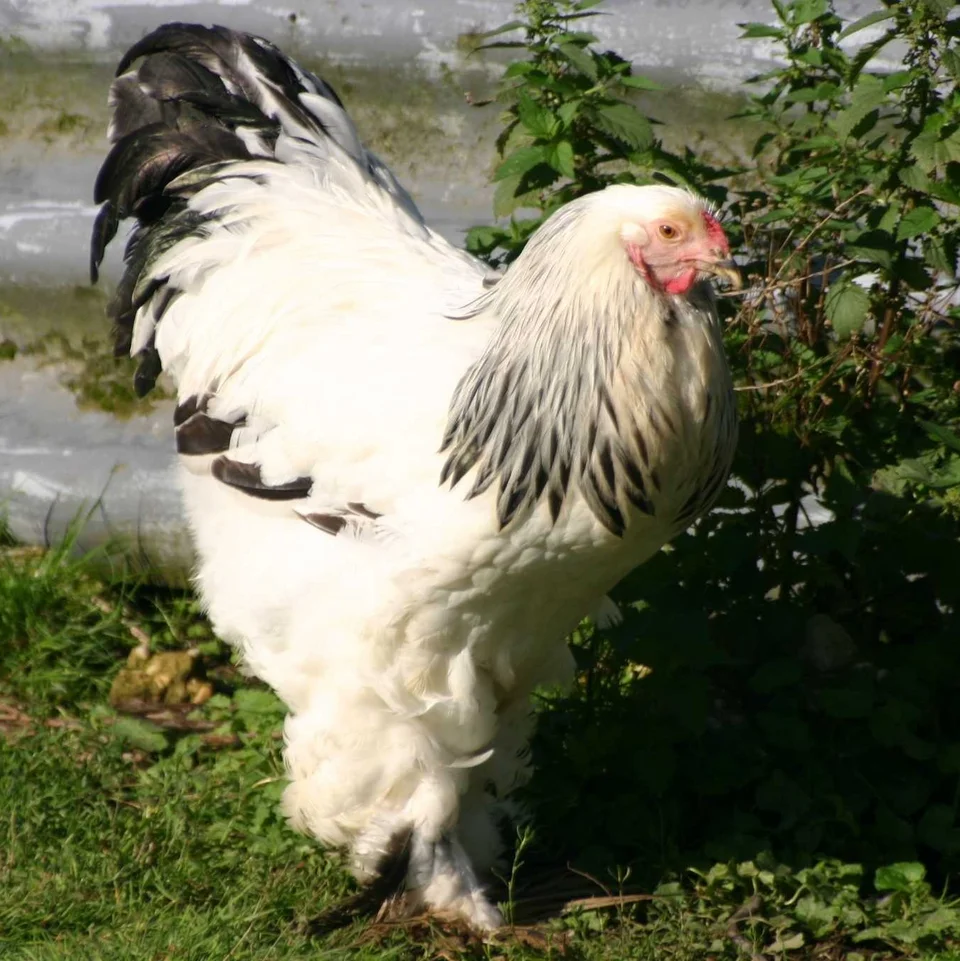
Brahma's name suggests India, but its standardized development is generally associated with America and large Asian feather-legged stock. Imported Shanghai birds and Chittagong-type ancestry contributed to the type. The breed became prominent during the nineteenth-century enthusiasm for large poultry and reached British royal flocks in the 1850s.
It is a heritage heavy breed, not a modern rapid-growth broiler. That distinction matters when estimating feed, development and housing. The impressive adult size does not imply a short timetable to either full body weight or first eggs.
The pea comb, broad head and feathered shanks distinguish Brahma from other large backyard chickens. Light, dark and buff are familiar varieties, with different male and female pattern details. The Light variety commonly pictured has a largely white body with contrasting black neck and tail markings.
Large fowl and bantams need separate weight expectations. Dense feathering also makes visual weight estimates unreliable. Our practical recommendation is to assess actual body condition and movement rather than interpreting every large feather outline as a heavy, well-conditioned bird.
The laying figure is a Light Brahma supplier-line estimate. The Conservancy describes useful winter production and a tendency to sit in early summer. Large body size and broody spells make egg totals only one part of its value.
Brahmas develop more slowly than rapid-growth meat hybrids. The Light Brahma laying figure above describes a supplier line; it is not a prediction that a pullet will lay on a particular week. Record growth and laying milestones separately.
For a youngster project, our suggestion is to plan the adult enclosure from the beginning. Doors, feeders and roost routes that work for small chicks can become awkward for mature birds. Judge a young Brahma against similar-aged Brahmas, not against a smaller breed already approaching its adult size.
Brahmas are often described as gentle and manageable. Their size can be reassuring to an experienced keeper and intimidating to someone meeting chickens for the first time. Calm behavior does not make lifting a heavy bird effortless, or remove normal rooster precautions.
Our recommendation is to establish a reliable feeding and coop-return routine and teach supervised children to approach slowly. In a mixed flock, watch how larger birds move through shared doorways and around feeders; enough room to stand is not the same as enough room for smaller birds to pass safely.
Plan broad, stable perches, accessible nest boxes and a short, safe landing route. These are practical applications of the breed's body size. Keep the landing area clear of sharp objects and avoid forcing a large bird through a cramped pop door.
Feathered feet make drainage and litter management especially important. Look beneath the foot feathers after muddy weather rather than assuming they remain clean. Heavy feathering is useful in cooler conditions, but summer still needs shade, fresh water and good airflow. Adapt the shelter to the birds' actual condition rather than a single climate label.
For a breeding flock, evaluate the pea comb, head, body balance, leg feathering and the appropriate variety pattern together. A very large bird is not automatically the best example of the breed. Sound movement and practical fertility deserve attention alongside appearance.
Our suggested records include mature weight, growth dates, egg totals, sitting behavior and hatch results by parent group. Keep bantam and large-fowl projects clearly distinguished. That record helps avoid comparing a small mature bantam with a slow-growing large-fowl youngster or selecting replacements solely from photographs.
Brahma is appealing for a keeper who enjoys substantial, usually manageable birds and can provide accessible housing. It is less convenient in a wet, cramped run or where very early laying is the main goal. Compare Cochin for another feather-footed companion option and Jersey Giant for a clean-legged heavy breed. Check doors, roost access and summer shade before choosing by adult appearance.
Allow generous access openings and stable, accessible roosts. Dry footing matters for feathered feet; hot-weather shade and airflow deserve extra attention for such a substantial bird.
These priorities apply the breed traits above to a backyard setup. Use the chick-to-coop planner for young birds and the housing guides for your coop plan.
Questions keepers ask
Is Brahma the same as Cochin?
No. Both are large and feather-legged, but Brahma has a pea comb and a different head and body presentation. Compare the entire bird, including the relevant variety pattern, rather than identifying it from foot feathers alone. [1][3]
Can a Brahma use the same roost as smaller hens?
It may, but our recommendation is to check stability, width and landing distance for its mature size. Provide an accessible route rather than assuming a perch designed around small pullets will remain suitable for every adult. [1][8]
Are muddy foot feathers just a cosmetic problem?
They deserve attention because caked, damp feathers can affect comfort and obscure the feet. Prioritize drainage and clean resting surfaces, then inspect the skin and toes. Do not judge foot condition from the visible feather tips alone. [1]
Are bantam Brahmas merely undersized large fowl?
No. Bantam is a recognized size form with its own expectations. Establish which form you are buying before comparing weight, egg size or housing needs with the large-fowl figures shown in the grid. [3]
Reviewed October 7, 2026. Breed organizations, university references and conservation histories establish breed traits; hatchery estimates describe named supplier lines. This profile identifies the source of the figures instead of treating them as one standardized trial.
Our care recommendations and suggested records apply those traits and Extension husbandry guidance to a backyard flock. They are editorial advice, not results from a controlled breed trial. A breed reputation does not establish an individual bird's behavior, health or readiness to move outdoors.
Egg-size words are source descriptions, not measured carton grades. Adult weights refer to mature birds, not market or pullet weights. Conservation categories describe U.S. populations. Examples of varieties are not a complete list of every national registry's accepted colors.