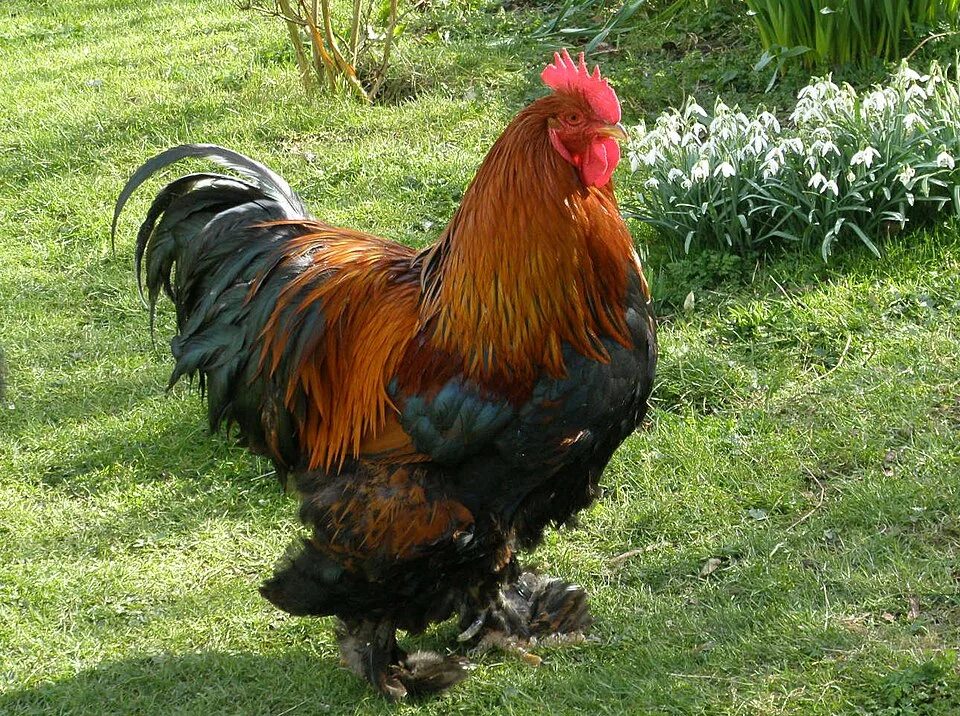
Cochin became internationally famous after large Chinese birds reached Western poultry enthusiasts. Its role in nineteenth-century “hen fever” helped turn poultry keeping into an exhibition pursuit. Subsequent selection emphasized abundant feathering and impressive appearance more than efficient commercial egg or meat production.
That history makes its modern appeal understandable: Cochin is often chosen for companionship, sitting ability and visual character. It should not be evaluated as though its enormous feather outline promises the output or growth rate of a production hybrid.
The large-fowl Cochin has a single comb, a rounded outline and heavy feathering down the shanks and toes. Black, white, buff, partridge and laced colors are familiar examples; recognized varieties depend on the registry. Feather volume can make a bird appear heavier than its actual body condition.
U.S. Cochin bantam terminology differs from British classification, where Pekin is treated separately as a true bantam. State the country and size form when comparing birds. The large-fowl adult weights here should not be used to evaluate a bantam purchase.
The Conservancy's 150–200 figure explicitly depends on hens not going broody. It also describes late first laying. Strong sitting instincts make this a more natural fit for companionship or hatching than uninterrupted egg output.
Cochins are not an early-output choice. The Conservancy describes laying starting around eight months, while the cited supplier's annual range is specifically qualified by periods when hens are not broody. Keep those two pieces of context together.
Our recommended record distinguishes hatch date, first egg, laying intervals and actual incubation periods. A hen can be a valuable sitter without producing a high table-egg total. For a growing flock, plan the mature body size and foot-feather care before young birds reach full feathering.
Companions, with individual and size-form differences
Large Cochins are known for a gentle disposition and tolerance of confinement. That can make them enjoyable birds for a keeper who likes close interaction. Bantam behavior is not automatically identical, and individual males still need assessment.
Our practical suggestion is to keep Cochins with similarly manageable birds and watch resource access. Very assertive flock mates can make life difficult for a quiet individual. Calm does not mean no exercise is needed: give birds room to move normally and inspect actual condition beneath the fluff.
Heavy foot feathering makes mud management a central issue. Provide a dry resting surface, inspect between and beneath the feathers, and prevent the run entrance from becoming a persistent wet patch. These are more useful priorities than simply choosing a coop that looks large in a photograph.
Large birds need low, stable roost access and a safe landing area. Summer shade and airflow deserve attention alongside cold-weather shelter. Our recommendation is to place feed and water so movement remains easy, while avoiding repeated wetting or fouling of the feathered feet.
Sitting ability is a goal, not just an interruption
Decide whether the flock's purpose is exhibition, companionship or natural incubation before selecting replacements. Cochin broodiness can be a benefit for a hatching project and an inconvenience for steady table eggs. Record whether a hen completes sitting successfully, not merely whether she occupies a nest.
For larger sitters, egg breakage and safe nesting space deserve observation. Keep body type, movement and foot feathering in the assessment alongside color. Our suggested records distinguish bantam and large-fowl projects and connect hatch results with the actual hen and mating group.
A wonderful sitter or companion, with extra upkeep
Cochin suits someone who enjoys a substantial, usually gentle bird and is comfortable managing frequent sitting and feathered feet. It is less convenient in a persistently muddy run or a flock planned around uninterrupted high egg output. Compare Brahma for another large feather-footed option and Orpington for a fluffy clean-legged alternative. Choose the maintenance routine along with the appearance.
Prioritize dry litter and easy roost access. Strong broodiness can be useful for natural hatching but competes with steady laying; this is not primarily an egg-production choice.
These priorities apply the breed traits above to a backyard setup. Use the chick-to-coop planner for young birds and the housing guides for your coop plan.
Questions keepers ask
Does the laying range include months spent broody?
The cited supplier qualifies its estimate for periods when hens are not broody. Sitting changes the laying pattern. Keep broody spells in your own annual record rather than expecting the quoted laying pace to continue during incubation. [1]
Is a Pekin the same as a Cochin bantam?
Naming depends on the national system. U.S. usage includes Cochin bantams, while British classification treats Pekin separately. Identify the country and standard before merging two descriptions or applying a large-fowl weight table. [3]
Are Cochins suitable for a muddy yard?
Persistent mud makes their feathered feet harder to keep comfortable and inspect. Improve drainage and provide clean covered surfaces first. A breed known for cold suitability still needs its foot feathers kept clear of caked, wet material. [1]
Can a very fluffy bird be underweight?
Yes; feather outline is not a scale reading or a body-condition assessment. Our recommendation is to check the bird beneath the feathers and follow its weight and movement over time rather than judging condition from fluff alone. [1][8]
Reviewed October 7, 2026. Breed organizations, university references and conservation histories establish breed traits; hatchery estimates describe named supplier lines. This profile identifies the source of the figures instead of treating them as one standardized trial.
Our care recommendations and suggested records apply those traits and Extension husbandry guidance to a backyard flock. They are editorial advice, not results from a controlled breed trial. A breed reputation does not establish an individual bird's behavior, health or readiness to move outdoors.
Egg-size words are source descriptions, not measured carton grades. Adult weights refer to mature birds, not market or pullet weights. Conservation categories describe U.S. populations. Examples of varieties are not a complete list of every national registry's accepted colors.