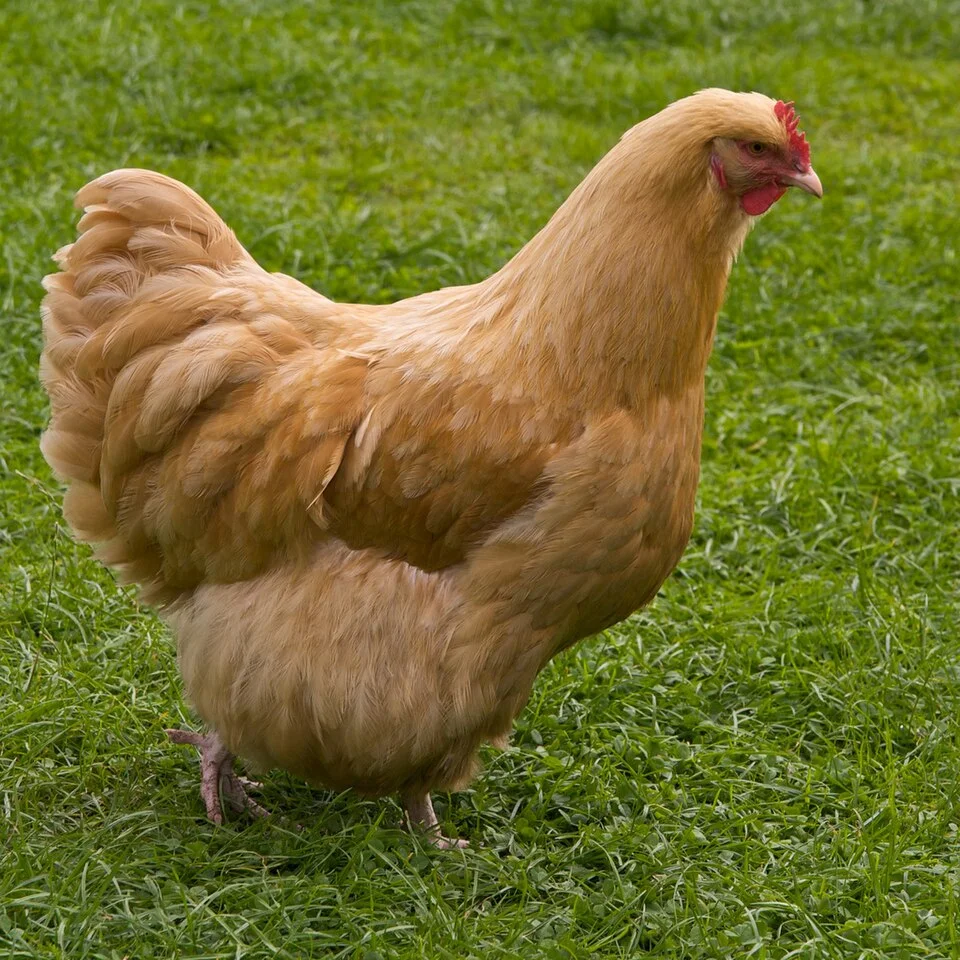
William Cook's utility bird and its exhibition descendants
William Cook developed Orpington in Kent, introducing Black in 1886, White in 1889 and Buff in 1894. Exhibition breeding soon emphasized greater size and fuller feathering. Modern keepers consequently encounter very different-looking utility and exhibition families under one breed name. That history matters more than a fashionable color label: an especially round show bird and a practical hatchery Buff flock may differ in development and laying. Buff is a variety of Orpington, not the definition of the entire breed.
Orpington has a single comb, clean legs and a broad, full-feathered outline. Black, Buff, White and Blue are familiar presentations, with additional varieties subject to different national standards. Large fowl and bantams require separate size comparisons. Feather volume can make a bird appear heavier than it is, so appearance alone does not establish body condition. For a breeding or exhibition assessment, look at structure and the applicable variety requirements; for daily care, learn the feel of the bird beneath its plumage.
Lavender. Lavender Orpington is a marketed color and line within Orpington, rather than a separate breed. Cackle documents its own Lavender stock; this supplier reference does not establish acceptance by every national registry. Cackle Hatchery — Lavender Orpington line ↗
Egg production & sitting
The 150–280 range is Cackle's Buff line estimate. Broodiness and differences between exhibition and utility stock can alter the keeper's experience. The British history explicitly describes a strong move toward exhibition size.
Do not infer maturity from a fluffy silhouette or promise a first-egg date from the breed name. Track hatch date, actual weight, feather development and first lay on a balanced ration. Our suggested approach is to compare youngsters from the same family and season. A young Orpington can look enormous beside a close-feathered breed without having reached mature body size. Set up nests before the pullets begin laying and allow development to proceed without trying to accelerate it through excessive treats or overfeeding.
The cited Buff line has a calm reputation and broody potential. These traits can suit an involved backyard keeper, including someone interested in natural hatching. They also make observation important in an assertive mixed flock. Our recommendation is to watch a quiet hen at the feeder and when choosing a roost, rather than assuming that lack of fighting means she is comfortable. Give a sitting hen access to daily food and water, and distinguish a broodiness-related laying break from a change in health.
A large Orpington needs doors, nests and roost spacing that accommodate its body comfortably. Provide a stable route onto perches and enough landing room that heavy birds need not jump onto hard clutter. Full plumage does not replace dry, ventilated winter shelter, and it makes summer shade and airflow particularly worth planning. Our practical recommendation is to inspect the shaded area in the hottest part of the afternoon. A coop that feels comfortable in the morning may leave a heavily feathered flock with nowhere comfortable later.
Record the performance behind the attractive outline
Choose a breeding objective before selecting: utility, exhibition, companionship and natural hatching place different emphasis on the same birds. Maintain records of growth, eggs, sitting behavior and family alongside photographs. Our recommendation is to keep color selection from displacing sound structure and usable performance. In Blue families, ordinary blue-plumage inheritance can produce Black, Blue and Splash offspring; this is different from an unexpected mixed-breed hatch. Keep variety and mating records so future buyers understand the birds you have actually produced.
A companion-and-farm option with a summer care commitment
Orpington can be a good fit for someone who enjoys calm birds, a substantial flock and the possibility of broody hens. It is less convenient if uninterrupted laying, tiny housing or minimal summer management is the main goal. Compare Australorp for a related utility background, Sussex for another British farm breed and Cochin for a more strongly ornamental, feather-footed option. Choose on the family's actual traits and the space available, rather than assuming the fluffiest photograph also promises the most eggs.
A calm companion-and-utility candidate with broody potential. Exhibition bulk, laying ability and tolerance of summer heat should be considered together rather than choosing solely for fluff.
These priorities apply the breed traits above to a backyard setup. Use the chick-to-coop planner for young birds and the housing guides for your coop plan.
Questions keepers ask
Are English and American Orpingtons different breeds?
They are commonly used labels for differences in stock, selection and appearance within Orpington. Establish the national standard and actual family before making comparisons. Neither label alone tells you its laying rate, adult condition or temperament. [1][3]
Is a very fluffy bird necessarily overweight?
No. Feather volume can conceal both a well-conditioned bird and one that needs attention. Learn body-condition assessment through handling and track weight where useful. Do not change the feeding plan solely because a full-feathered bird looks round in a photograph. [3][5]
Will Buff Orpingtons reliably go broody?
Broodiness is documented in the cited line, but timing and frequency vary. Arrange an incubation alternative if chicks are essential. If steady eggs matter more, account for the laying interruption when a hen chooses to sit. [3]
Can I keep Orpingtons in a hot climate?
It can be possible with thoughtful management. Provide reliable shade, water and airflow, and check the birds during hot afternoons. Breed reputation is not a temperature guarantee, especially for heavily feathered birds or an enclosed coop with poor ventilation. [5][7]
Reviewed October 7, 2026. Breed organizations, university references and conservation histories establish breed traits; hatchery estimates describe named supplier lines. This profile identifies the source of the figures instead of treating them as one standardized trial.
Our care recommendations and suggested records apply those traits and Extension husbandry guidance to a backyard flock. They are editorial advice, not results from a controlled breed trial. A breed reputation does not establish an individual bird's behavior, health or readiness to move outdoors.
Egg-size words are source descriptions, not measured carton grades. Adult weights refer to mature birds, not market or pullet weights. Conservation categories describe U.S. populations. Examples of varieties are not a complete list of every national registry's accepted colors.