British table-poultry traditions and later breed organization
Sussex belongs to the long poultry history of Sussex, Kent and Surrey, where farm birds supplied table poultry and eggs. Modern breed organization developed from those stocks, with a British club formed in 1903. That is more precise than assigning every modern Sussex an unchanged Roman-era pedigree. Speckled has an especially old place in the breed's recorded varieties, while Light and other presentations have their own development histories. This background explains a practical dual-purpose identity alongside the variety differences keepers see today.
A rectangular body, pale legs and several plumage patterns
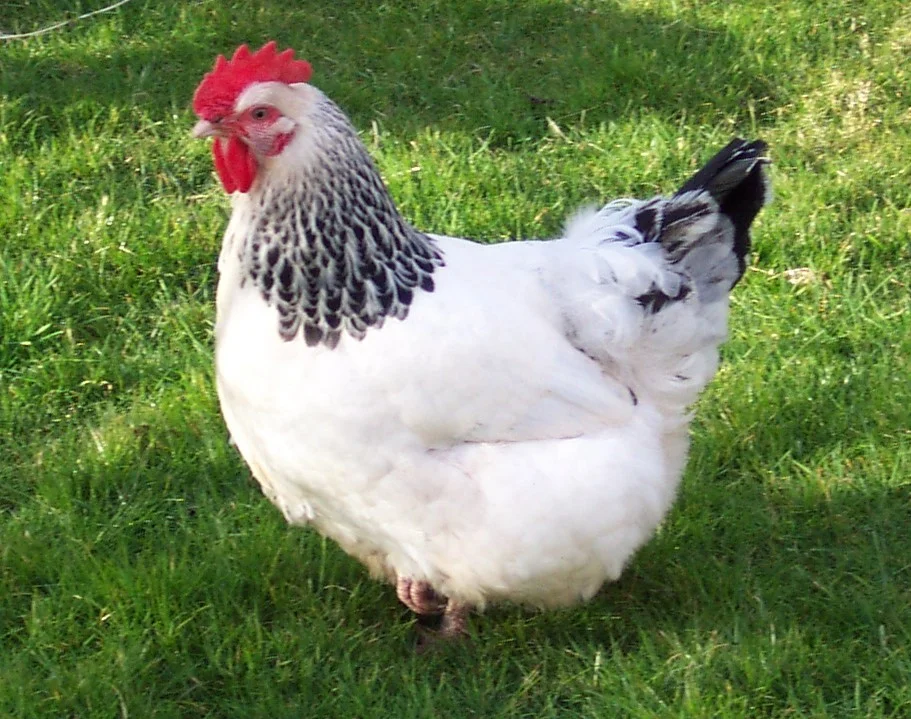
Sussex has a substantial rectangular body, a single comb, clean pale legs and four toes. Speckled birds combine rich ground color with patterned feather tips; Light birds present a largely white body with contrasting dark markings. Red and additional varieties have separate requirements, with national recognition differing. Large fowl and bantams exist. Pale legs and body type help distinguish Sussex from superficially similar farm birds, but records remain important. A patterned photograph alone cannot establish a pure family or the standard a breeder maintains.
The Conservancy gives 200–250 eggs and describes some broody ability. Calm, curious birds can suit an involved backyard flock, but a gentle disposition also makes compatible companions and feeding access worth considering.
Manage condition rather than feeding for the biggest outline
A table-bird history is not a reason to overfeed a laying flock. Track growth and later body condition on an appropriate balanced ration, with treats kept from displacing it. Our suggested record includes hatch date, weight, first lay and seasonal production. The mature adult weight example is not a pullet target or a processing timetable. If eggs matter most, compare the family's useful laying alongside its substantial body rather than choosing solely for maximum size. First eggs can be smaller than the mature large-egg description.
Curiosity and a generally approachable disposition
The reference describes calm, curious birds, a useful combination for an involved keeper. Familiarity does not mean every individual enjoys being carried or automatically holds its own in an assertive mixed flock. Our recommendation is to give birds a predictable routine and watch feeding access after introductions. Provide safe opportunities to investigate their run, such as suitable perches and areas to scratch. A curious hen approaching every visitor still needs boundaries around hazardous materials, open gates and places where she could become trapped.
Allow exploration, adult room and dependable summer shade
Provide adult-sized nests, comfortable roost access and usable outdoor space for scratching and exploration. Sussex's cooler-weather reputation still requires a dry, ventilated coop and reliable water in winter. Plan summer shade and airflow for a substantial bird, and inspect the flock during hot afternoons. Our practical recommendation is to offer more than one comfortable resting and feeding location. A spacious run can still concentrate every bird in a single small shaded corner, creating competition precisely when the flock most needs relief from heat.
Select the variety and standard before comparing pattern details. Alongside structure and plumage, record individual growth, eggs, sitting behavior, fertility and parent identity. Our recommendation is to avoid making striking speckling or exceptional body size the sole criterion. A useful family should reproduce reliably and function in the housing and climate where it is kept. Some hens may brood and mother chicks, but that does not guarantee a hen will sit when a planned hatch requires one. Keep an alternative incubation arrangement available.
Sussex can suit a keeper who wants brown eggs, a substantial farm breed and approachable birds worth watching. Its fit depends on the actual family, summer setup and companions. Compare Orpington for another British breed with a calm reputation, Faverolles for a distinct feather-footed alternative and Plymouth Rock for an American dual-purpose history. If breeding matters, include variety identity and laying records. If companionship matters most, meet the individuals and observe how they behave in everyday care rather than choosing solely by a breed stereotype.
A curious, practical mixed-flock candidate. Provide shaded summer space and keep body condition in mind rather than feeding for maximum size at the expense of laying.
These priorities apply the breed traits above to a backyard setup. Use the chick-to-coop planner for young birds and the housing guides for your coop plan.
Questions keepers ask
Is Speckled Sussex the whole breed?
No. Speckled is one variety; Light, Red and others have their own plumage identities and national recognition. Compare the correct variety and size form rather than treating every Sussex as a differently photographed Speckled bird. [2][3]
Does dual purpose mean I should maximize body weight?
Not for a laying flock. Balanced feeding and useful body condition matter more than an oversized outline. Adult reference weights are not instructions to overfeed. Track eggs and condition together, especially if table and laying selection goals compete. [1][6]
Are Sussex suitable for a family flock?
Their calm, curious reputation makes them reasonable candidates. Assess the individual, supervise children's handling and provide compatible companions. A bird that enjoys being near people does not necessarily enjoy being picked up or tolerate rough flockmates. [1][6]
Will a broody Sussex still provide daily eggs?
Sitting interrupts laying, so plan for a different contribution during that period. Some hens can be useful mothers, but broodiness and its timing vary. If eggs or a specific hatch date are essential, do not rely on a uniform response from every hen. [1][5]
Reviewed October 7, 2026. Breed organizations, university references and conservation histories establish breed traits; hatchery estimates describe named supplier lines. This profile identifies the source of the figures instead of treating them as one standardized trial.
Our care recommendations and suggested records apply those traits and Extension husbandry guidance to a backyard flock. They are editorial advice, not results from a controlled breed trial. A breed reputation does not establish an individual bird's behavior, health or readiness to move outdoors.
Egg-size words are source descriptions, not measured carton grades. Adult weights refer to mature birds, not market or pullet weights. Conservation categories describe U.S. populations. Examples of varieties are not a complete list of every national registry's accepted colors.