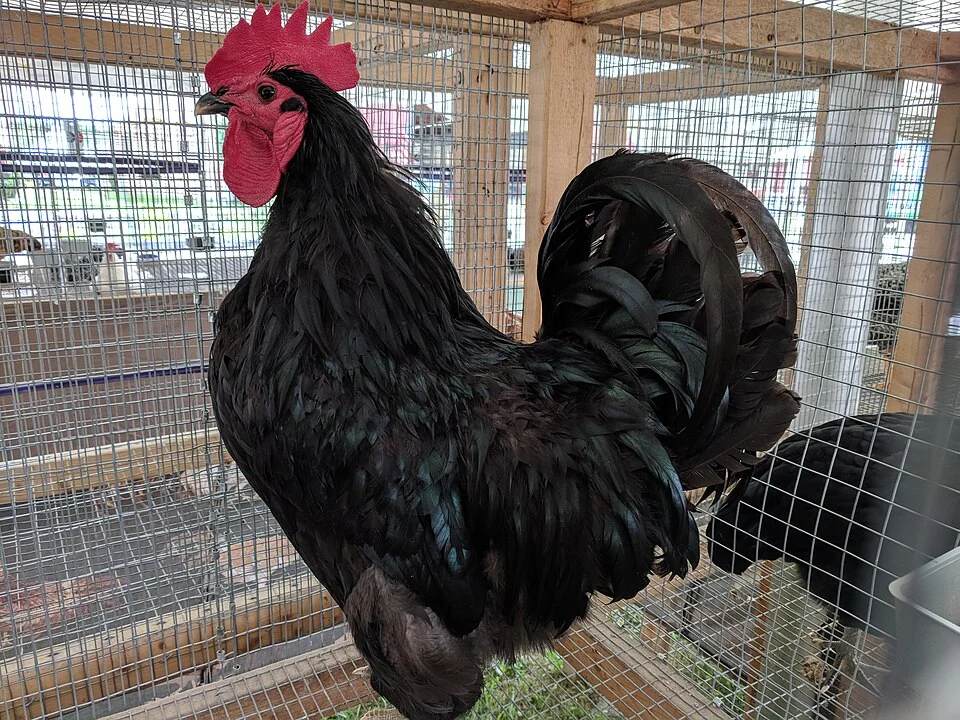
Jersey Giant was developed by the Black brothers in New Jersey with the ambition of producing a very large table bird. Java, Langshan and Brahma ancestry contributed to the project. Later selection and recognition established its identity as one of the largest standardized chicken breeds.
Its adult scale is impressive, but it is not a modern rapid-growth broiler. The original large-table-bird ambition and today's companion or exhibition flock are different uses of the same breed. Choose the project deliberately before estimating its growing period and feed needs.
Jersey Giant has a substantial, broad body, a single comb and clean legs. Black, white and blue have distinct variety histories. Leg and sole colors should be checked against the relevant description rather than borrowed from a similar-looking black breed.
The mature weights in the grid are large-fowl references, not expectations for young birds. Our practical recommendation is to follow actual weight and body condition as the bird develops. Feather volume and a dramatic camera angle can make comparisons misleading, particularly against a smaller but fully mature chicken.
The Conservancy gives 150–200 eggs and variable broodiness. It describes first lay at 8–12 months, while noting some reports at 5 months. Large adult size and slower table-bird development should be considered separately from the date of a first egg.
The Conservancy describes laying onset often around eight months to a year, with some earlier individual reports. This is useful context, not a deadline or guarantee. Body growth and table development also take time, so first laying does not mean every development goal has been reached.
Our suggested record includes hatch date, growth, first egg and later adult size. Plan housing for the eventual bird from the outset. A youngster that still fits a small doorway can outgrow an enclosure long before reaching its final impressive weight.
Jersey Giants are often calm and approachable, and some enjoy close contact. Their physical size still changes handling and equipment needs. A quiet bird is not necessarily easy for a child to lift or for a keeper to support safely without preparation.
Our recommendation is to build reliable feeding and coop-return routines and supervise interactions with smaller flock mates. Observe individuals rather than assuming a gentle breed reputation guarantees compatible males. Some birds can also be vocal, which matters in a close-neighbor yard.
Check the pop door, nest dimensions, perch stability and landing area against mature size. Low accessible roost routes and clear surfaces reduce awkward jumps for a heavy bird. Our suggested layout also gives smaller companions room to pass around Giants at shared feeders.
Summer relief deserves serious planning. Provide usable shade, fresh water and airflow where the flock rests. Winter shelter still needs to stay dry, and the male's single comb remains exposed. A coop's advertised capacity is especially unhelpful if it was calculated around much smaller hens.
Select sound movement and breeding usefulness alongside exceptional size. A very heavy bird is not automatically the best parent. Our suggested records pair mature weight with growth, egg production, fertility and hatch results.
Hens may go broody, but a heavy sitter can break eggs. Observe nesting space and actual hatch outcomes rather than assuming that maternal behavior guarantees success. Keep variety and parent groups identifiable, and assess offspring at comparable ages before deciding that the biggest early youngster is the best representative of the mature breed.
Jersey Giant suits a keeper who enjoys large, generally manageable birds and can provide equipment and space built around their adult scale. It is less convenient in a small prefabricated coop, prolonged exposed heat or a rapid-growth meat project. Compare Brahma, Orpington and Australorp for different combinations of size and upkeep. Choose by the mature housing plan, not the irresistible chick photograph.
Measure nest boxes, pop doors and roost access for adult bodies. Large size does not imply fast economical meat growth; the reference describes a long wait to develop a well-fleshed bird.
These priorities apply the breed traits above to a backyard setup. Use the chick-to-coop planner for young birds and the housing guides for your coop plan.
Questions keepers ask
Does the biggest chick become the best breeding Giant?
Not necessarily. Compare growth, mature type, movement and reproductive performance over time. Early size is only one observation, and selection should not sacrifice soundness or the usefulness of the females. [1][7]
Can I use a standard small backyard nest box?
Check it against the actual adult birds. Our recommendation is to provide room for comfortable entry, turning and sitting, along with accessible roost routes. A manufacturer's generic hen count is not enough for this breed. [1]
Why has my pullet not laid as early as a commercial layer?
Jersey Giant has a longer development context, with the source describing later first laying and individual variation. Keep hatch and growth records. Do not judge it solely against a breed or hybrid selected for early eggs. [1]
Will their size protect them from predators?
No. Large body size does not replace a secure enclosure and nighttime coop. Make the protection plan dependable regardless of the bird's confidence or ability to confront an aggressor. [8]
Reviewed October 7, 2026. Breed organizations, university references and conservation histories establish breed traits; hatchery estimates describe named supplier lines. This profile identifies the source of the figures instead of treating them as one standardized trial.
Our care recommendations and suggested records apply those traits and Extension husbandry guidance to a backyard flock. They are editorial advice, not results from a controlled breed trial. A breed reputation does not establish an individual bird's behavior, health or readiness to move outdoors.
Egg-size words are source descriptions, not measured carton grades. Adult weights refer to mature birds, not market or pullet weights. Conservation categories describe U.S. populations. Examples of varieties are not a complete list of every national registry's accepted colors.