Langshan came to Britain from China in the nineteenth century through the Croad family's imports. The name is associated with the Wolf Hill region. Its arrival added a distinct tall, feather-legged bird to a poultry world already interested in Brahma and Cochin.
Croad Langshan and other later Langshan developments need context rather than being merged into one outline. This profile follows the traditional feather-legged type described by the cited references. State the country and type when comparing a seller's birds or planning exhibition breeding.
Height, a U-shaped outline and light leg feathering
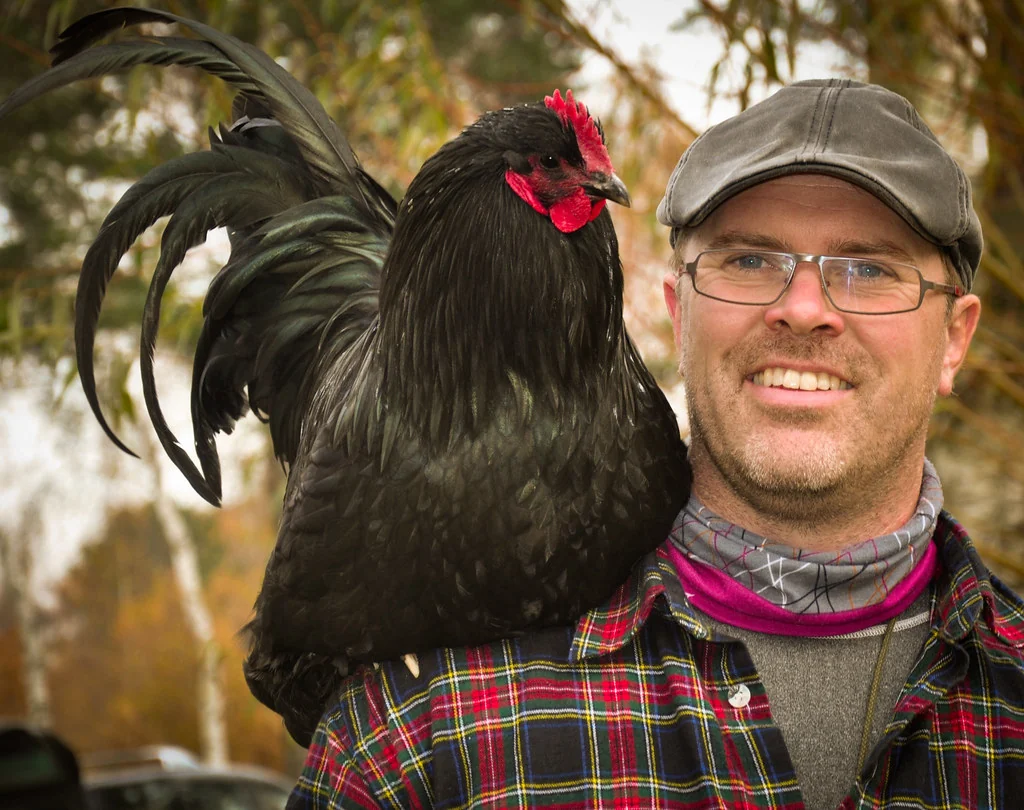
Langshan's deep body, upright tail and long neck create a distinctive silhouette. It has a single comb and lighter shank and toe feathering than many Cochins or Brahmas. Black, white and blue are familiar variety examples.
The adult weight belongs to a substantial bird despite the tall presentation. Our practical recommendation is to compare the whole standing outline and actual condition. A tall black chicken is not automatically Langshan, and a green sheen alone cannot distinguish it from other black breeds.
The Conservancy describes about 150 or more eggs and laying onset around 6–7 months. Broody ability and the type being kept affect expectations. A lightly feathered shank still benefits from dry footing.
The Conservancy places pullet laying onset around six to seven months. Treat that as a reference observation with individual and seasonal variation. Reaching the first egg and reaching a mature show outline are separate milestones.
Our suggested record includes hatch date, growth, first egg and later adult photographs. The annual “150+” figure is a reference description, not a guarantee that every bird will produce identically. Keep actual broody periods and later-season changes visible when comparing hens for replacement selection.
Langshans are generally calm and can become readily familiar with people. Their substantial size does not mean they cannot fly over a fence. That combination makes them approachable birds whose containment still deserves a deliberate plan.
Our recommendation is to establish an evening routine and observe the actual flock's preferred resting places. In mixed groups, check resource access and adult male compatibility individually. A gentle reputation is useful, but it should not replace assessment of the birds or the enclosure you intend to use.
Provide well-drained ground and inspect the lightly feathered feet after wet weather. Our suggested coop check includes doorway clearance, comfortable standing height and safe roost access. A shelter designed only around a shorter, smaller hen may not suit Langshan's mature presentation.
The breed's background includes humid conditions, but it still benefits from protection against rain and excessive sun. Keep shade, water and airflow usable in summer, and dry resting space available in winter. Do not confuse tolerance of a climate with tolerance of permanently wet litter.
The characteristic outline should be assessed alongside sound movement, leg feathering and reproductive performance. Our recommended record pairs mature photographs and weight with eggs, fertility and hatch results. Select a useful bird rather than only the tallest tail or darkest feather sheen.
Hens may sit, but the source distinguishes sitting tendency from faithful mothering. Record completed incubation and chick care if natural replacements are part of your plan. Keep the Langshan type and variety clearly labeled instead of blending different national developments or unrecorded crosses in one sales description.
Langshan suits someone who likes a substantial bird with a distinctive upright outline and can provide suitable headroom, drainage and containment. It is less convenient when a low fence is the entire plan or muddy ground cannot be improved. Compare Brahma and Cochin for other feather-legged breeds and Jersey Giant for a clean-legged heavy alternative. Choose by the full silhouette and care routine.
Specify the type when comparing size and exhibition traits. Keep ground well drained and use the cited laying range without promising a purple egg from every hen.
These priorities apply the breed traits above to a backyard setup. Use the chick-to-coop planner for young birds and the housing guides for your coop plan.
Questions keepers ask
Can a large Langshan fly over a fence?
Yes, the source notes that they can. Plan containment around observed ability rather than weight alone. A calm disposition and a substantial body do not guarantee that an open-topped run will hold the flock. [1]
Are its foot feathers as heavy as a Cochin's?
Generally not. The traditional Langshan has lighter shank and toe feathering. That can simplify some upkeep, but the feet and ground still need inspection after wet or muddy conditions. [1]
Do they always lay dark purple eggs?
No. The reference describes brown eggs, sometimes with a dark or purplish appearance. That is not a guarantee for every hen or every egg. Compare a particular flock's usual eggs rather than a single exceptional photograph. [1]
Does first laying at six to seven months settle full maturity?
No. It is a reproductive milestone, not the entire mature body and feather evaluation. Keep growth, age and later adult photographs separately if breeding or exhibition type matters to you. [1]
Reviewed October 7, 2026. Breed organizations, university references and conservation histories establish breed traits; hatchery estimates describe named supplier lines. This profile identifies the source of the figures instead of treating them as one standardized trial.
Our care recommendations and suggested records apply those traits and Extension husbandry guidance to a backyard flock. They are editorial advice, not results from a controlled breed trial. A breed reputation does not establish an individual bird's behavior, health or readiness to move outdoors.
Egg-size words are source descriptions, not measured carton grades. Adult weights refer to mature birds, not market or pullet weights. Conservation categories describe U.S. populations. Examples of varieties are not a complete list of every national registry's accepted colors.