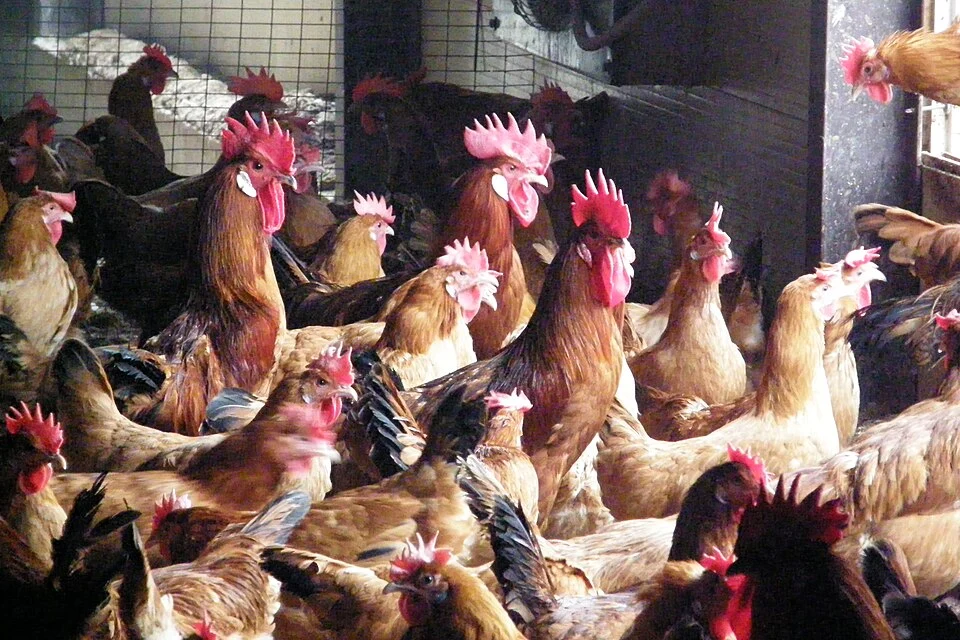
A buff Mediterranean utility breed with slate legs and black tail feathers. Heat-oriented traits, pale eggs and a conservation story make it worth knowing beyond U.S. retail availability.
Egg color
White to tinted / very pale pink
Annual eggs
200–240
Adult size
Hen 6 lb; rooster 8 lb
Broodiness
Usually non-broody in the breed references
Have Catalana in your flock?Your everyday experience could help someone choose their next chickens.
U.S. conservation population, 2026 list. This is not a worldwide extinction-risk rating.
A Catalonian utility breed, beyond U.S. rarity
Catalana is associated with Catalonia and El Prat de Llobregat in Spain. Its history combines local poultry with imported Asian ancestry, although accounts do not establish one unambiguous parent recipe. The names Prat and Pota Blava appear in that regional context.
The breed attracted wider attention in the early twentieth century; American recognition of Buff followed in 1949. U.S. conservation rarity should not be turned into a claim that the breed has the same population status everywhere. Spanish origin, regional identity and an American conservation assessment answer different questions about the same breed.
The familiar American form is buff, with a darker tail, white earlobes, a single comb and clean bluish-slate legs. The hen’s comb may fall to one side. A buff feather coat alone does not distinguish Catalana from other buff poultry; legs, body type and head features belong in the identification.
Both cited breed references give adult large-fowl weights of 8 pounds for a rooster and 6 pounds for a hen. Oklahoma State also lists separate bantam weights of 32 and 28 ounces. Spanish descriptions include White as well as Buff; that does not make every national registry’s accepted varieties identical. Keep country and size form visible when using the figures.
The Conservancy reports roughly 200–240 medium/large pale eggs annually and usually non-broody hens. It describes shells as white to light pink; OSU says pale pink or white. These very pale tint descriptions do not predict a blue/green egg or a rich pink shell.
The references describe useful production and an active foraging bird without establishing one breed-wide first-lay week. Record hatch date, growth and the first eggs of your actual family. Avoid filling the gap with a timetable from a faster commercial hybrid.
Compare mature birds with mature weights, not market-weight figures sometimes printed in summaries. A photograph taken while a bird is growing may also understate its eventual size or comb development. Keep dated observations together so differences between development, individual variation and a different size form are easier to recognize. Good records make the next generation’s expectations more practical.
Independent exploration rather than a lap-pet promise
Catalana is generally described as active, wary and interested in foraging. A keeper should enjoy watching an independent bird explore its space, rather than selecting it on an assumption that every hen will welcome being held. Handling experience still matters to the individual.
Plan for movement and potential flight when arranging the range. Make the return-to-shelter routine predictable and check that all birds are accounted for. In a mixed flock, look at access to resources instead of labeling the whole group with one temperament adjective. A shy hen can be inconvenienced by an awkward layout even when no dramatic fighting occurs.
A warm-weather candidate still needs a complete plan
Provide secure usable range, shade, drinking access and a dry place to shelter. Heat-oriented traits cannot compensate for a run with no midday refuge. Keep everyday observation easy enough that changes in how the birds move, rest and use water are noticeable.
Do not equate Mediterranean ancestry with exemption from winter care. Protect exposed features and maintain dry, ventilated shelter when weather turns cold. Put boundaries, gates and the evening routine in instructions a sitter can follow. A coop plan should explain how the active birds use the space, rather than simply quote how many chickens a structure is advertised to hold.
The Conservancy reports roughly 200–240 medium-to-large pale eggs annually and usually low broodiness. Shell descriptions range from white to very pale pink or tint. They do not establish blue or green eggs, or a reliably saturated pink carton. Photograph the actual eggs in neutral light if comparing the line’s shell color.
For preservation work, keep parentage, national type, fertility and hatch results beside laying and adult appearance. Plan hatching independently of an assumption that hens will sit. The dated 2026 U.S. list places Catalana in Critical; older summary boxes can carry earlier categories. Use the assessment year and organization whenever communicating the status.
A useful breed for an observant conservation keeper
Catalana offers a combination of pale eggs, utility history and active foraging. It makes sense for a keeper with secure space and an interest in preserving identifiable stock. It is less suitable when the principal goals are easy handling, a guaranteed natural broody or a small quiet pet flock.
Compare Ancona, Andalusian and Minorca for other Mediterranean alternatives. Keep their sizes, shell colors and behavior separate from this profile. Before acquiring a conservation flock, decide how the breeding records and replacement plan will work. A rare breed is easier to sustain when the housing and recordkeeping suit ordinary daily life.
Plan a generous secure range with flight protection and a reliable dusk routine. Keep the standard-bred identity, origin and laying records together when contributing to a conservation flock.
These priorities apply the breed traits above to a backyard setup. Use the chick-to-coop planner for young birds and the housing guides for your coop plan.
Questions keepers ask
Are Catalana, Prat and Pota Blava separate pages?
These regional names are searchable within this profile. Their identity context is explained rather than creating duplicate pages for the same documented breed account. [1][2]
Can I expect strongly pink eggs?
No. The references describe white or very pale pink/tinted shells. Those descriptions do not promise a saturated pink egg. [1][2]
Why does an older page show a different conservation category?
Conservation assessments change. This profile uses The Livestock Conservancy’s dated 2026 U.S. list and identifies its scope. [3]
Are the 8- and 6-pound figures bantam weights?
No. They describe adult large fowl. The same reference gives bantam weights separately in ounces. [2]
Reviewed October 8, 2026. Breed organizations, university references and conservation histories establish breed traits; hatchery estimates describe named supplier lines. This profile identifies the source of the figures instead of treating them as one standardized trial.
Our care recommendations and suggested records apply those traits and Extension husbandry guidance to a backyard flock. They are editorial advice, not results from a controlled breed trial. A breed reputation does not establish an individual bird's behavior, health or readiness to move outdoors.
Egg-size words are source descriptions, not measured carton grades. Adult weights refer to mature birds, not market or pullet weights. Conservation categories describe U.S. populations. Examples of varieties are not a complete list of every national registry's accepted colors.