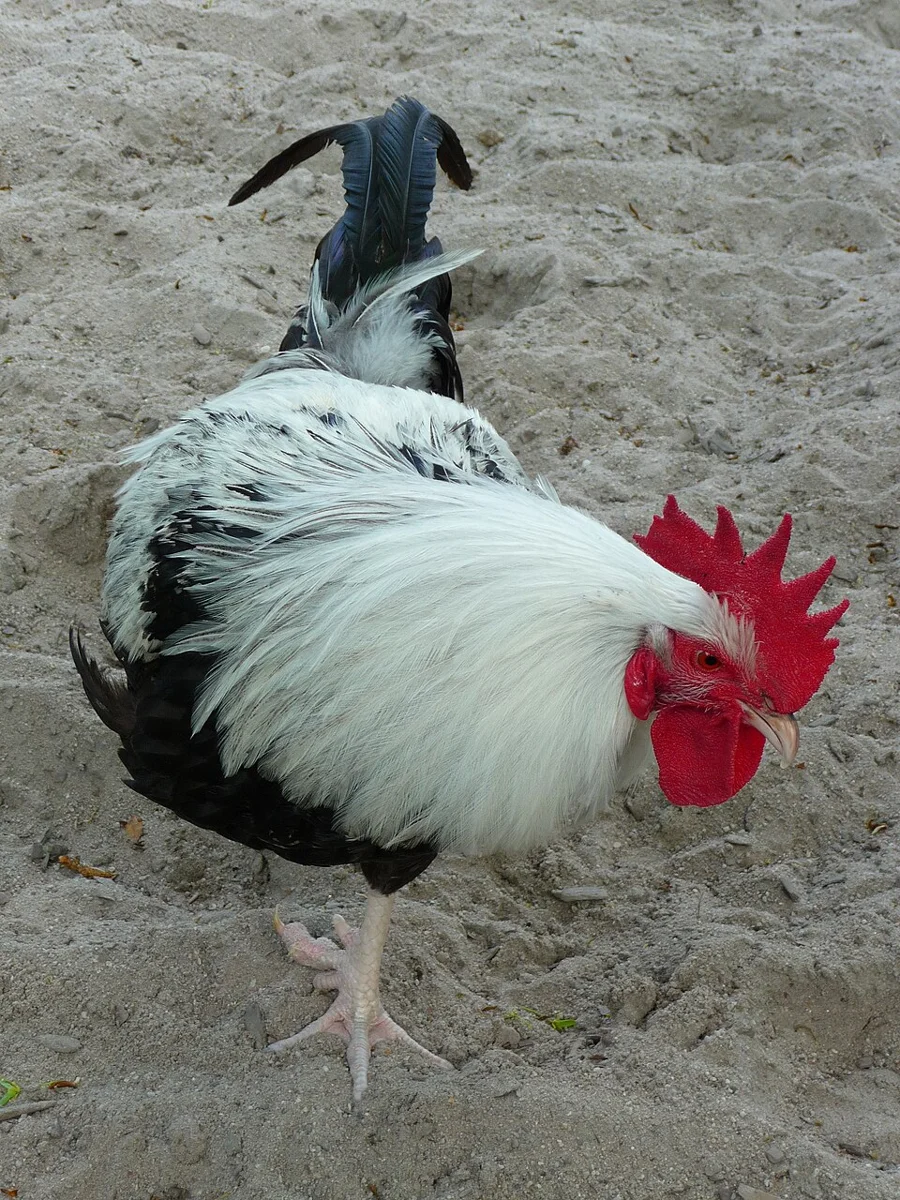
Dorking is associated with southern England's long table-poultry history and takes its name from the Surrey market town. Claims linking it directly to every ancient five-toed chicken are harder to establish than the documented regional breed. Its reputation rests on a substantial, short-legged bird with fine table qualities.
Modern interest includes preservation and backyard keeping as well as its original utility. That combination makes it important to retain body type, reproduction and useful production, rather than judging the breed only by its uncommon extra toe.
Dorking has five toes, clean pale legs and a long, broad, relatively low-set body. White, colored and silver-gray are familiar historic varieties; additional varieties exist under specific standards. Comb form depends on the variety and system, so it should be recorded rather than assumed.
The extra toe is one clue, not a complete identification. Other breeds also have five toes. Our recommendation is to assess the body, skin and shank color, comb and plumage together, and compare adult hens and males separately against the appropriate variety description.
The reference describes slower commencement of laying, useful winter eggs and strong sitting ability. Its table-bird history and patient development make it a different choice from an early-maturing commercial layer.
Slower first laying, with a long view of production
The Conservancy describes pullets as slow to start laying and notes good winter production once established. It does not supply a fixed first-egg week for every variety. Plan a development record instead of demanding that a Dorking match an early production layer's timetable.
Our suggested record includes hatch date, growth, first egg and later broody periods. A hen can provide useful eggs and excellent mothering while laying fewer continuous months than a non-sitter. Judge those contributions according to the purpose of your flock.
Dorkings are generally calm and people-friendly, but can be disadvantaged alongside very assertive flock mates. A keeper interested in handling or a family flock may find the temperament appealing. Individual behavior still matters, especially with adult males.
Our practical recommendation is to watch the birds during feeding and settling at night, not only when you offer a treat. Ensure quiet hens can reach resources without repeatedly retreating. Provide a separation option if a mixed flock prevents that, rather than treating the bottom of the pecking order as automatically harmless.
Accessible resting places and variety-aware winter care
Short legs and a substantial body make accessible equipment and a clear landing area sensible priorities. Our suggested layout offers a dependable route to the roost and nest without awkward squeezing. Dorkings can still choose elevated resting places, so do not assume their build makes containment unnecessary.
Inspect the comb in cold, damp conditions; a rose-combed variety has a different exposed profile from a single-combed one. Keep the ground well managed and offer summer shade. Winter reputation describes comparative suitability, not freedom from ordinary shelter and water requirements.
Dorking hens are known for strong sitting and mothering, which may be valuable in a replacement flock. Keep records of actual hatch completion and chick care, not just whether a hen occupies a nest. Compare those outcomes with annual egg production and mature body condition.
A preservation flock should retain the five-toed type and proper variety while maintaining a viable population. Our suggested mating record tracks family origin and reproduction to avoid narrowing the project to one attractive pair. Honest labels distinguish purebred matings from crossbred table-bird experiments.
Dorking suits someone who values a traditional dual-purpose bird, natural hatching and a calmer flock. It is less convenient when the earliest possible eggs or a group of aggressive companions drives the plan. Compare Sussex for another British utility breed and Faverolles for another five-toed choice. Choose the variety and comb form with your winter conditions in mind.
A calm farm-breed candidate with useful sitting instincts. Allow for slower development and protect single combs during severe cold rather than equating winter laying with frostbite immunity.
These priorities apply the breed traits above to a backyard setup. Use the chick-to-coop planner for young birds and the housing guides for your coop plan.
Questions keepers ask
Does a fifth toe prove a chicken is Dorking?
No. Silkie, Houdan and Faverolles also have five toes. Dorking identification needs the rest of the type, including its long low body, clean pale legs, comb and variety pattern. [1][2]
Why is my pullet later than my production layer?
Dorking is described as slower to begin laying. Hatch date, season and individual development also matter. Record the actual milestones rather than judging all breeds against one early-layer timetable. [1]
Are Dorkings a useful broody breed?
Yes, strong sitting and mothering are characteristic tendencies. Individual results still vary. Keep the hen's actual hatch and chick-rearing record if you want to choose reliable mothers for future seasons. [1]
Can a Dorking roost high despite short legs?
Some do choose elevated places. Our recommendation is to provide a safer accessible route and landing area rather than assuming the body shape prevents high roosting. Observe the actual flock's nighttime habits. [1]
Reviewed October 7, 2026. Breed organizations, university references and conservation histories establish breed traits; hatchery estimates describe named supplier lines. This profile identifies the source of the figures instead of treating them as one standardized trial.
Our care recommendations and suggested records apply those traits and Extension husbandry guidance to a backyard flock. They are editorial advice, not results from a controlled breed trial. A breed reputation does not establish an individual bird's behavior, health or readiness to move outdoors.
Egg-size words are source descriptions, not measured carton grades. Adult weights refer to mature birds, not market or pullet weights. Conservation categories describe U.S. populations. Examples of varieties are not a complete list of every national registry's accepted colors.