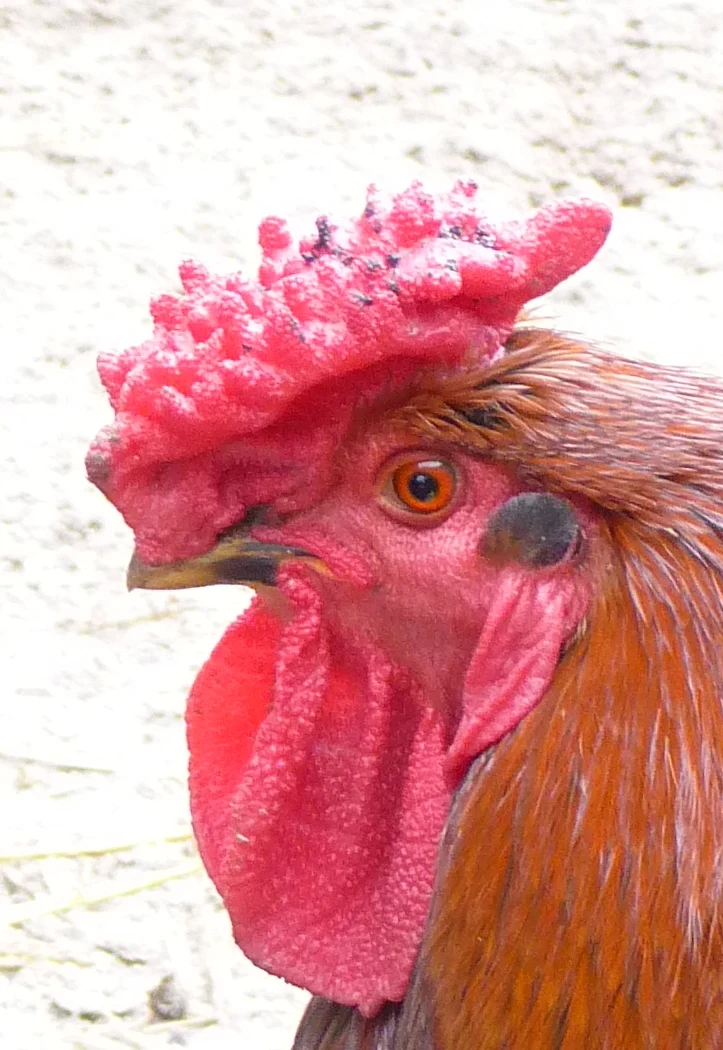
Redcap rooster portrait showing the distinctive rose comb; Commons category identifies the breed. 3268zauber · CC BY-SA 3.0 / original photograph
Derbyshire and the Pennines, England · Breed
Redcap
A historic English utility breed with a remarkable rose comb. Egg laying, foraging and slow-developing show traits belong together in its keeper profile.
Egg color
White to slightly tinted
Annual eggs
150–200
Adult size
Hen 6 lb; rooster 7.5 lb
Broodiness
Usually non-broody in the Conservancy reference
Have Redcap in your flock?Your everyday experience could help someone choose their next chickens.
U.S. conservation population, 2026 list. This is not a worldwide extinction-risk rating.
An English utility breed worth preserving
Redcap is associated with Derbyshire and the Pennines in England, and the fuller name Derbyshire Redcap helps distinguish the breed from a generic reference to a red comb. Its history combines useful egg laying with a distinctive appearance, rather than ornamental selection alone.
Historical accounts discuss relationships to other regional and spangled poultry, but that background should not be read as a proven recipe for recreating the breed. American recognition dates to 1888. A conservation flock preserves an established population and type; crossing similar-looking birds today would be a different project.
The conspicuous rose comb has rounded points and a rear leader. Mature feathering combines red and dark areas with characteristic spangling. Clean slate or lead-blue shanks complete an appearance quite different from a red commercial hybrid or a single-combed layer.
The Conservancy’s adult large-fowl weights are 7.5 pounds for a rooster and 6 pounds for a hen. Judge the whole bird, including sound movement and body condition, rather than selecting solely for an oversized cap. The standard spangled plumage belongs within this breed profile; a search for Derbyshire Redcap or Red Cap should lead to the same identity.
Oklahoma State separately gives bantam weights of 30 ounces for a rooster and 26 ounces for a hen. Its British large-fowl reference is lighter: 2.70–2.95 kg for an adult male and 2.25–2.50 kg for an adult female. Those figures demonstrate why the country, sex and size form must accompany the weight; they should not be merged into one undifferentiated range.
The Conservancy reports 150–200 pale eggs annually and usually non-broody hens. The breed's red earlobes are a useful reminder that earlobe color alone is not a dependable shell-color rule.
Comb and plumage development may continue into the second or third year. That is a warning against judging young breeding prospects as finished adults, not a claim that hens delay their first eggs for years. Keep the visual-development timeline separate from the laying timeline.
A useful breeder record includes hatch date, consistent photographs, weights and first laying. Revisit the same bird after its feathering changes. A youngster passed over for a mature color-pattern fault may simply be unfinished; conversely, waiting does not excuse poor health or unsound movement. The record should help you distinguish development from a persistent problem.
The breed is described as active and sometimes shy. It is well suited to a keeper who enjoys observing birds exploring their surroundings rather than expecting every hen to settle into lap-pet behavior. A quiet, predictable routine makes ordinary handling and inspection easier.
Plan for flight and movement when placing boundaries. A low open fence should not be assumed adequate just because the bird is a traditional utility breed. In a mixed flock, check the placement of resources and provide places to step out of another bird’s path. The useful behavior assessment is whether the birds can eat, rest and move normally in your setup.
Give an active bird usable run space, clear access to shelter and a dependable evening routine. Arrange the coop so you can inspect the large comb and the bird’s overall condition without having to chase it into a difficult corner. Look at the actual walking and resting routes when evaluating capacity.
Cooler-weather suitability is a tendency, not a substitute for dry shelter and observation during severe conditions. Keep ventilation, drainage and daily access practical. If the flock will range beyond a covered run, make its boundaries and dusk return plan explicit for anyone caring for it. “They usually come back” is less helpful on a sitter sheet than a clear routine.
Record laying, fertility, hatch results, growth and mature appearance together. The breed’s utility history is a reason to care about the whole flock, not only a showy comb. Keep family identities clear and avoid assigning the breed name to undocumented crosses with similar spangled poultry.
The Conservancy describes 150–200 medium-to-large pale eggs annually and generally low broodiness. Those are reference expectations, not fixed quotas for each hen. Red earlobes do not override the breed’s white-to-slightly-tinted shell descriptions. This is a useful example of why simple earlobe-color rules cannot replace breed-specific information.
Redcap offers white-egg utility, active foraging and a distinctive conservation project. It suits a keeper prepared to provide space and retain records over several seasons. It is less convenient if you need a very tame bird immediately or want to judge all breeding prospects at a young age.
Compare Hamburg for other spangled appearances and Dorking or Sussex for different English utility projects. Keep the alternatives’ sizes and behaviors attached to their own profiles. Redcap’s 2026 U.S. Critical classification strengthens the case for careful preservation, while the day-to-day decision still rests on whether your housing and time fit the flock.
Allow room for an active forager and plan for flight. Record adult comb and feather-pattern development over time; judging every young bird as a finished specimen can discard useful stock too soon.
These priorities apply the breed traits above to a backyard setup. Use the chick-to-coop planner for young birds and the housing guides for your coop plan.
Questions keepers ask
Does the huge comb mean I should choose the largest one?
No. Evaluate the applicable standard, soundness, fertility and the whole bird. Comb size alone does not establish the best breeding prospect. [1][2]
Will a Redcap lay brown eggs because it has red earlobes?
The reference eggs are white to slightly tinted. Earlobe color alone is not a dependable rule for shell color. [1]
Does late plumage development mean late first laying?
No. Finishing an adult feather pattern and starting to lay are different milestones. The second- or third-year development note concerns appearance. [1][2]
Are Redcap and Derbyshire Redcap different entries?
They refer to the breed covered here. The fuller regional name and spaced Red Cap spelling are searchable aliases, not duplicate breed pages. [2]
Reviewed October 8, 2026. Breed organizations, university references and conservation histories establish breed traits; hatchery estimates describe named supplier lines. This profile identifies the source of the figures instead of treating them as one standardized trial.
Our care recommendations and suggested records apply those traits and Extension husbandry guidance to a backyard flock. They are editorial advice, not results from a controlled breed trial. A breed reputation does not establish an individual bird's behavior, health or readiness to move outdoors.
Egg-size words are source descriptions, not measured carton grades. Adult weights refer to mature birds, not market or pullet weights. Conservation categories describe U.S. populations. Examples of varieties are not a complete list of every national registry's accepted colors.