A Dutch breed selected for an attractive, useful egg
Welsummer takes its name from Welsum in the Netherlands. Its development included several farm breeds, with brown eggs a central attraction when stock reached Britain in 1928. British classification places it among light breeds despite a useful adult body size; Oklahoma State describes its dual-purpose background. Those labels describe different aspects of the same bird rather than a contradiction to be averaged away. Modern keepers often choose it for its egg basket, but its identity also includes body type and distinctive plumage.
Partridge coloring and a clean-legged farm outline
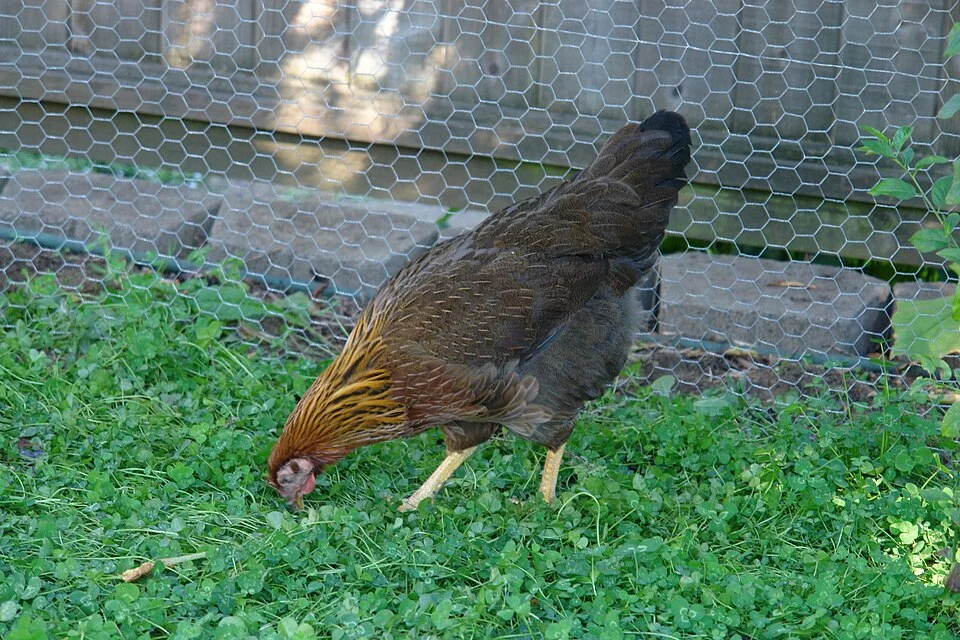
Welsummer has a single comb, clean yellow legs and a moderately substantial body. The familiar red-partridge presentation differs between sexes: hens have brown patterned plumage while mature males carry stronger red and black contrasts. Large fowl and bantams require separate comparisons. Other variety recognition depends on the national standard. Adult sex differences do not establish an infallible day-old chick-sexing system. For exhibition or breeding, assess the correct standard; for an unrecorded brown backyard hen, plumage resemblance alone cannot establish pure Welsummer identity.
The 200–280 estimate comes from Cackle's Welsummer line. Large brown eggs, sometimes speckled, are central to the breed's appeal, but darkness and spotting vary. Some hens may sit despite low-broodiness selection.
Distinctive chick markings can be useful to experienced observers, but their clarity depends on the family and individual. Our recommendation is to keep hatch records, obtain an honest description of the seller's sexing method and plan for possible mistakes. Do not turn a photograph-based guess into an autosexing guarantee. Follow growth, feather coverage and first lay under suitable chick care. The mature egg and adult weight descriptions do not supply a fixed first-egg date or a universal age for moving youngsters into an outdoor coop.
Alert, active birds that benefit from a predictable routine
The references describe active, alert birds, with friendliness that does not necessarily mean passive handling. That can suit a keeper who enjoys a ranging or roomy-run flock. Our recommendation is to establish a calm feeding and inspection routine before a bird needs to be caught for care. In a mixed flock, observe access to nests, shade and feed rather than assuming a brown-egg farm breed will be compatible with every companion. Activity is enjoyable when the enclosure offers safe places to move and investigate.
Provide exploration space and protect the single comb
Give Welsummers useful room to scratch, move and choose resting places, whether in a secure run or a carefully assessed ranging system. A substantial body does not remove single-comb exposure during severe cold. Keep winter shelter dry and ventilated, with unfrozen water access; plan shade and airflow during hot weather. Our practical recommendation is to check resource access while all birds are present. An active flock needs more than a large floor area if a narrow entrance or one crowded feeder determines who can use it.
Brown shell color and occasional speckling are part of the appeal, but selecting one photograph-worthy egg is a weak breeding record. Identify the laying hen and record several eggs, size, laying persistence and seasonal breaks. Our recommendation is to retain those records alongside body type, temperament, fertility and family. Plumage selection and useful laying should remain visible together. A striking male does not establish the egg output of his daughters, so maintain female-family performance information rather than relying only on rooster photographs when choosing a mating.
Welsummer suits someone who values brown eggs, possible darker speckles and an alert bird with room to move. It is less useful as a promise of identical shell pattern, guaranteed chick sexing or a uniformly cuddly disposition. Compare Marans for a different dark-egg selection tradition and Barnevelder for another Dutch breed, while comparing the actual family's output rather than names alone. If eggs are the deciding feature, examine a series from identified hens and keep seasonal production in view alongside attractive shell color.
An active bird for a roomy flock. Egg speckling and darkness vary; clear chick markings and color differences should not be treated as an infallible sexing guarantee.
These priorities apply the breed traits above to a backyard setup. Use the chick-to-coop planner for young birds and the housing guides for your coop plan.
Questions keepers ask
Will every egg be heavily speckled?
No. Shell shade and spotting vary. The breed is associated with brown eggs that can be speckled, rather than a guarantee of identical patterned eggs from every hen. Compare a sequence from identified birds instead of one especially striking example. [2][3]
Is Welsummer an infallible autosexing breed?
Do not treat chick marking assessments as an infallible guarantee. Their usefulness depends on the family and observer, and seller methods differ. Keep parent information and understand the uncertainty before buying chicks on the basis of a photograph alone. [2]
Why do sources call it both light and dual purpose?
Light is a British breed classification; dual purpose describes its egg-and-table background. The terms answer different questions. Compare actual mature body and production records rather than assuming either label establishes a commercial growth rate. [1][3]
Does dark egg color tell me which hen lays most?
No. Color and laying persistence are different observations. Identify hens, record egg totals and note seasonal or broody breaks. A beautiful dark egg can be part of the appeal without proving that its hen produces the largest annual basket. [2][4]
Reviewed October 7, 2026. Breed organizations, university references and conservation histories establish breed traits; hatchery estimates describe named supplier lines. This profile identifies the source of the figures instead of treating them as one standardized trial.
Our care recommendations and suggested records apply those traits and Extension husbandry guidance to a backyard flock. They are editorial advice, not results from a controlled breed trial. A breed reputation does not establish an individual bird's behavior, health or readiness to move outdoors.
Egg-size words are source descriptions, not measured carton grades. Adult weights refer to mature birds, not market or pullet weights. Conservation categories describe U.S. populations. Examples of varieties are not a complete list of every national registry's accepted colors.