Spanish ancestry; historical Dutch and British development · Breed
White-Faced Black Spanish
Glossy black feathers and a striking white face distinguish this old Mediterranean layer. Its full facial development, sensitive features and breeding history deserve careful attention.
Egg color
Chalk white
Annual eggs
Up to 180
Adult size
Hen 6.5 lb; rooster 8 lb
Broodiness
Non-setting in the cited breed references
Have White-Faced Black Spanish in your flock?Your everyday experience could help someone choose their next chickens.
U.S. conservation population, 2026 list. This is not a worldwide extinction-risk rating.
A Mediterranean layer with a distinctive legacy
White-Faced Black Spanish belongs to the old Mediterranean laying group. Spanish ancestry is central to its identity, while Dutch and British development also figures in its history. The old name Spanish should be read in that breed context, rather than as a label for every chicken originating in Spain.
American recognition dates to 1874. Historical selection for an exaggerated white face is also associated with concerns about vigor. That history supports choosing sound birds and keeping breeding records; it does not diagnose a health problem in every individual or prove that a modern line has the same weaknesses.
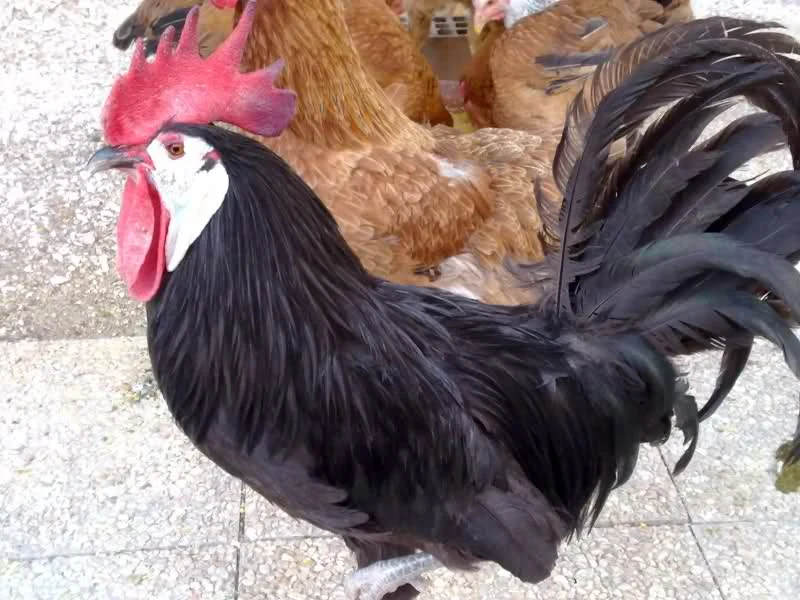
Glossy black plumage, a large single comb and the extensive white facial area create the familiar contrast. White earlobes alone are insufficient: Minorca also has white lobes, while this breed’s white extends across the face. Dark slate legs and a relatively active laying-breed build help complete the comparison.
The adult large-fowl reference is 8 pounds for a rooster and 6.5 pounds for a hen. The hen’s comb may fall to one side. Bantam references belong to a separate size context. Compare sex and size form before deciding that a bird is unusually small or large for the breed.
The Conservancy describes up to 180 large chalk-white eggs annually and non-setting behavior. This is an upper estimate. McMurray and the breed references stress slow white-face development; it is a separate milestone from first laying.
McMurray notes that the white facial development requires a full molt. A young bird can therefore look unlike the adult photograph without being a different breed. Keep consistent photographs and revisit the face as the bird matures rather than choosing solely from a chick’s appearance.
The cited references do not establish one first-egg week for all stock. First laying and finished white-face development should be recorded separately. That distinction also helps buyers: a young pullet’s incomplete face is not evidence that her laying must wait until she resembles an exhibition adult. Development should still be assessed alongside soundness and ordinary condition.
Breed references describe active, noisy or vocal birds that may be aloof. A generally non-aggressive reputation does not guarantee enjoyment of handling or an effortless introduction to every flock. Begin with an easy-to-follow routine and watch the individuals rather than expecting the spectacular face to come with a particular personality.
Design observation into the daily visit. Make it possible to inspect a bird without repeatedly chasing the whole flock. When mixing breeds, check that quieter birds can reach food and resting places. Evaluate rooster behavior separately and provide a practical way to separate an individual when necessary. Friendliness toward people and flock compatibility are different questions.
The prominent comb and facial area make weather protection a meaningful part of keeping this breed. Provide a dry, ventilated shelter and watch exposed features during freezing conditions. Mediterranean ancestry should not be treated as a substitute for summer shade, accessible water or observation during heat.
Keep entrances, catching areas and routine inspections straightforward. An active bird benefits from usable movement space, while a keeper benefits from being able to see whether the flock is resting and drinking normally. Use the local weather and the actual line’s condition to assess the setup. A general climate label cannot account for a damp coop, awkward access or a sudden temperature change.
Preserve the recognizable breed identity while recording fertility, hatch results, development and survival. Select for soundness as well as the face. A breeding program that records only the extent of white skin misses the practical qualities that make a conservation flock sustainable.
The Conservancy’s laying description is up to 180 large chalk-white eggs annually, with generally non-setting hens. Treat that as an upper estimate, not a guaranteed baseline. Low broodiness also means that a breeding project needs a considered hatching plan rather than an assumption that every hen will raise her own chicks. Keep line-specific experience separate from the broad breed account.
This breed appeals to keepers interested in white eggs, Mediterranean poultry history and a distinctive preservation project. Its independent behavior and sensitive exposed features make it a less obvious choice for someone whose priority is a readily handled pet or a low-attention winter flock.
Compare Minorca, Ancona and Leghorn using their own weights, combs and behavior notes. The full white face is the distinguishing feature here, but it should not eclipse the housing and care requirements. The 2026 U.S. Critical classification gives conservation context to the choice; it does not certify the identity or breeding quality of an individual sale bird.
Choose soundness and vigor alongside the white face. Provide a dry, airy home, protect exposed features in severe weather and allow young birds to develop before evaluating the mature face.
These priorities apply the breed traits above to a backyard setup. Use the chick-to-coop planner for young birds and the housing guides for your coop plan.
Questions keepers ask
Is a black chicken with white earlobes necessarily Spanish?
No. Several Mediterranean breeds have white earlobes. This breed’s mature white facial area extends beyond the lobes and must be considered with the whole bird. [1][3]
Why does my young bird lack the full white face?
The supplier describes development through a full molt. A youngster should not be judged as a finished adult from facial whiteness alone. [4]
Does up to 180 mean every hen will lay at least 180 eggs?
No. It is an upper reference estimate. Age, line and management affect an individual hen’s output. [1]
Are the weights on this page for bantams too?
No. The 8-pound rooster and 6.5-pound hen figures describe adult large fowl. A bantam comparison needs its own national standard. [1][3]
Reviewed October 8, 2026. Breed organizations, university references and conservation histories establish breed traits; hatchery estimates describe named supplier lines. This profile identifies the source of the figures instead of treating them as one standardized trial.
Our care recommendations and suggested records apply those traits and Extension husbandry guidance to a backyard flock. They are editorial advice, not results from a controlled breed trial. A breed reputation does not establish an individual bird's behavior, health or readiness to move outdoors.
Egg-size words are source descriptions, not measured carton grades. Adult weights refer to mature birds, not market or pullet weights. Conservation categories describe U.S. populations. Examples of varieties are not a complete list of every national registry's accepted colors.